
Session Two [April 27–May 4, 2027]
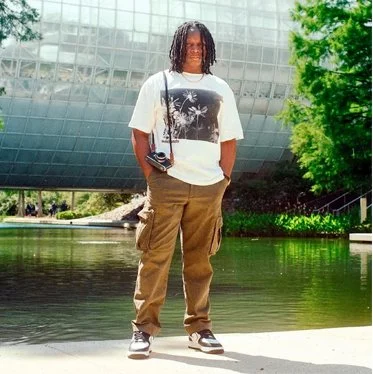
Marsalis Eason
Savannah, GA
Eason is a photojournalist and documentary photographer who specializes in the preservation of Black history and cultural life across the American South. Rooted in Brunswick, GA, his practice is shaped by a deep sense of community and the belief that photographers serve as keepers of time. His path to photography began as a personal pursuit before evolving into a professional career through internships at Harvard and Yale, street photography, and a role as photojournalist for The Savannahian. Influenced by the legacy of Gordon Parks, his work centers on documenting the fleeting, the familiar, and the historically significant — finding meaning in moments that might otherwise go unrecorded.
Eason has exhibited in Savannah at Telfair Museums’ Jepson Center, Cleo the Project Space, and ARTS Southeast.
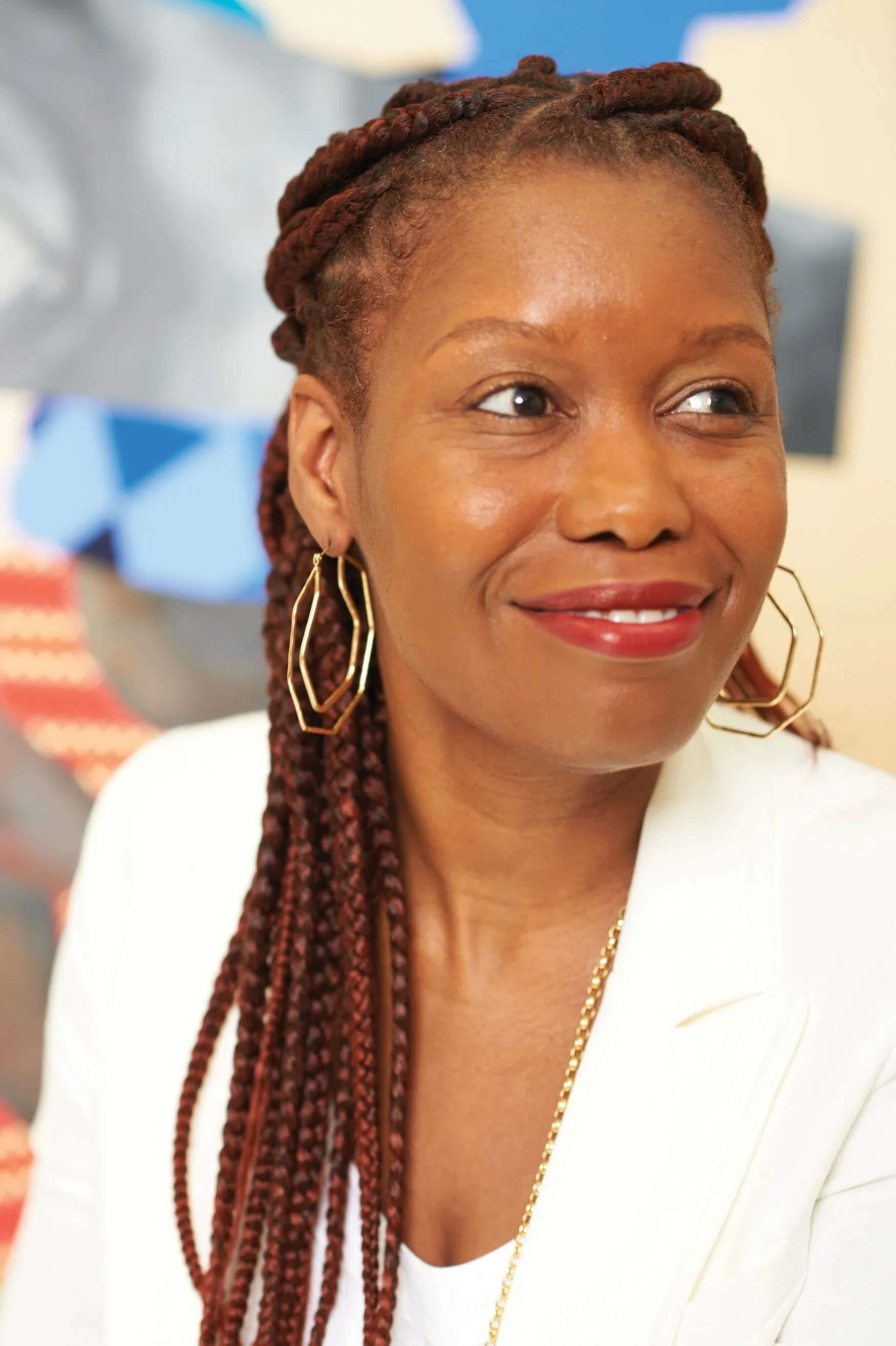
Shanequa Gay
Atlanta, GA
Gay is a storyteller whose work draws on the environment and spiritual symbolism of the American South. Blending motifs from regional life, she explores identity, culture, and power through storytelling, highlighting formidable female figures and intergenerational relationships. Her practice encompassing installations, paintings, performance, photography, video, and monumental sculptures challenges dominant narratives, reclaims space through personal memory and mythology, and creates immersive environments that invite reflection on self and belonging.
Gay is a Do-Good Fellow recipient, an Emory University Arts and Social Justice Fellow (2020), a Hudgens Prize Finalist (2022), and a recipient of the Radcliffe Bailey Award for Excellence in Visual Art (2023). She is an adjunct professor at Spelman College.
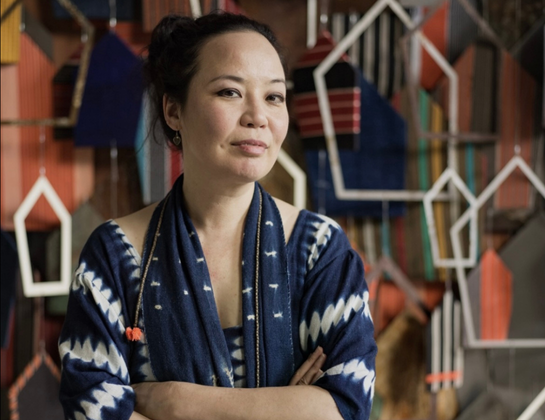
Sonya Yong James
Atlanta, GA
James’ practice explores cloth and fiber as carriers of memory, touch, and lived experience. Working from a personal archive of found objects and handwoven textiles, she examines personal history, systems of order, and the passage of time through processes of mending and connection.Through weaving, layering, repetition, and variation, the work moves between the physical and the mythic. Materials including cotton, Georgia clay, and horsehair connect her practice to the American South while supporting imagined narratives and sculptural forms.
James’ recent work expands the use of horsehair, a material associated with both strength and vulnerability. Woven into sculptural textiles, it becomes a vehicle for memory, instinct, mythology, and transformation, linking the body, the natural world, and the spiritual realm.
James received a BFA from Georgia State University, where she focused on printmaking and sculpture. She received the Artadia grant in 2019, was a nominee for the 2023 United States Artists Fellowship award, and completed residencies at Atlanta Contemporary and Mass MOCA. She is a winner of MOCA-GA’s 2026-2027 Working Artist Project.
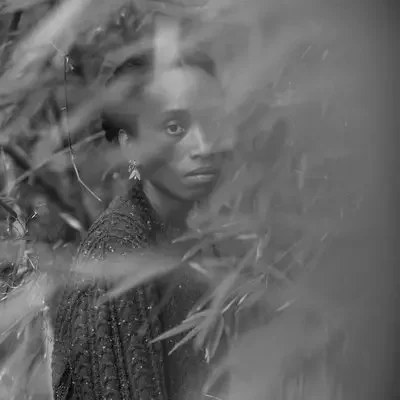
Dionne Lee
Columbus, OH
Lee has an interdisciplinary practice grounded in analog photography that examines the tension between recording and interpreting place. Through collage, video, and sculpture, her work challenges traditional views of the American landscape as distant, empty, and detached, instead focusing on the hyperlocal and the ground-level experience of land.
Historical narratives of survival and belonging are central to her practice. The work considers broad environmental issues such as extraction and climate crisis, as well as the specific ways enslavement and the failure of reparation have shaped Black relationships to the American landscape. A recurring question she asks is who is positioned to survive within systems designed to protect some and endanger others.
Experiential research plays an important role in Lee’s work. She has studied ancestral survival skills such as fire-making and star navigation, using these acts to connect bodily knowledge, history, and memory. Her photographs are often collaged with found images and reworked through silver gelatin processes, reclaiming and reframing landscape narratives. Lee views photography within an expanded timeline, linking the darkroom to fossilization, survival practices, and other physical processes. Across her work, these methods investigate how trauma shapes daily life and how resilience can be carried forward and returned to the land.
Lee has exhibited nationally and internationally, including at the Museum of Modern Art, New York; Storm King Art Center, Mountainville, NY; Swiss Institute, New York; Carnegie Museum of Art, Pittsburgh; The Barbican, London; SITE Santa Fe, NM; among others. Lee’s work was included in the 2024 Whitney Biennial. She is a 2025 Guggenheim Fellow.
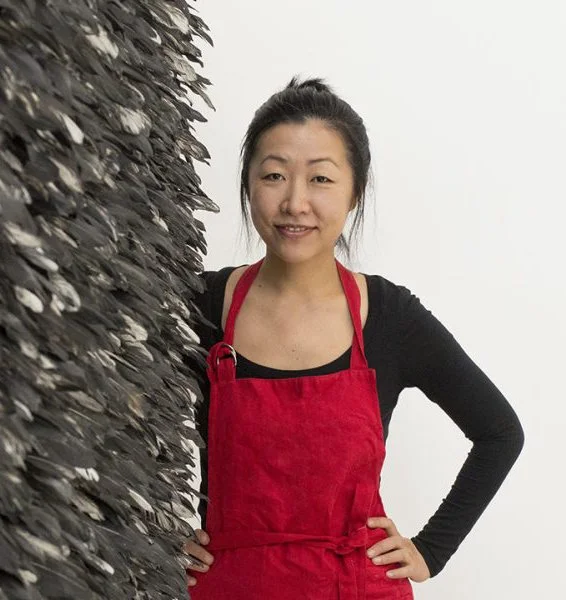
Beili Liu
Austin, TX
For more than two decades, Liu has created site-responsive sculptural environments and performances that explore migration, cultural memory, resilience, healing, and hope. Using humble materials such as thread, needles, tar, wax, and cement, her work draws meaning from accumulated labor and the passage of time.
Each project begins with close study of a site’s social history, architecture, atmosphere, and patterns of use. This research guides the materials, process, and final form of the installation. Liu is especially interested in spaces between cultural boundaries, addressing displacement, assimilation, loss, memory, and transformation.
Liu has received numerous fellowships and awards, including the Andrew Carnegie Fellowship (2022-2024), the Pollock Prize for Creativity (2022), the Fulbright Arctic Chair, Norway (2021- 2022), the Joan Mitchell Painters and Sculptors Grant (2016), the National Endowment for the Arts Challenge America Grant through the Museum of Southeast Texas (2014). In 2018, Liu was honored by the Texas Legislature as the Texas State Artist in 3D medium. Liu received the Distinction Award at the Kaunas Biennial, Lithuania (2011), and a San Francisco Mayor’s Award (2008) for her contribution to cultural exchange. Liu received her MFA from the University of Michigan, Ann Arbor (2003) and is the Leslie Waggener Endowed Professor in the College of Fine Arts and a Regents’ Outstanding Teaching Professor at the University of Texas at Austin.

Photo by Emily Earl
Jerome Meadows
Savannah, GA
Meadows creates large-scale public environments, sculpture, assemblage, collage, performance, and spoken-word works. His practice is grounded in history, community, and the African American experience, often addressing racial violence, collective memory, resilience, and the relationship between people and place. His projects frequently combine sculpture, landscape design, and community engagement to create spaces for reflection and dialogue.
Meadows earned a BFA from the Rhode Island School of Design and an MFA from the University of Maryland. Major public commissions include the African Burying Ground Memorial in Portsmouth, New Hampshire; the Ed Johnson Memorial in Chattanooga, TN; works in Savannah’s Yamacraw Square; and Of Communities and the Land and the Trees That Bear Witness to Them at Enmarket Arena, Savannah. In addition to his studio and public-art practice, Meadows has taught at institutions including Howard University, the University of Maryland, the Maryland Institute College of Art, and the College of Charleston. He previously operated Indigo Sky Community Gallery, a gathering place for exhibitions, performance, and cultural exchange on Savannah’s Waters Avenue corridor.
