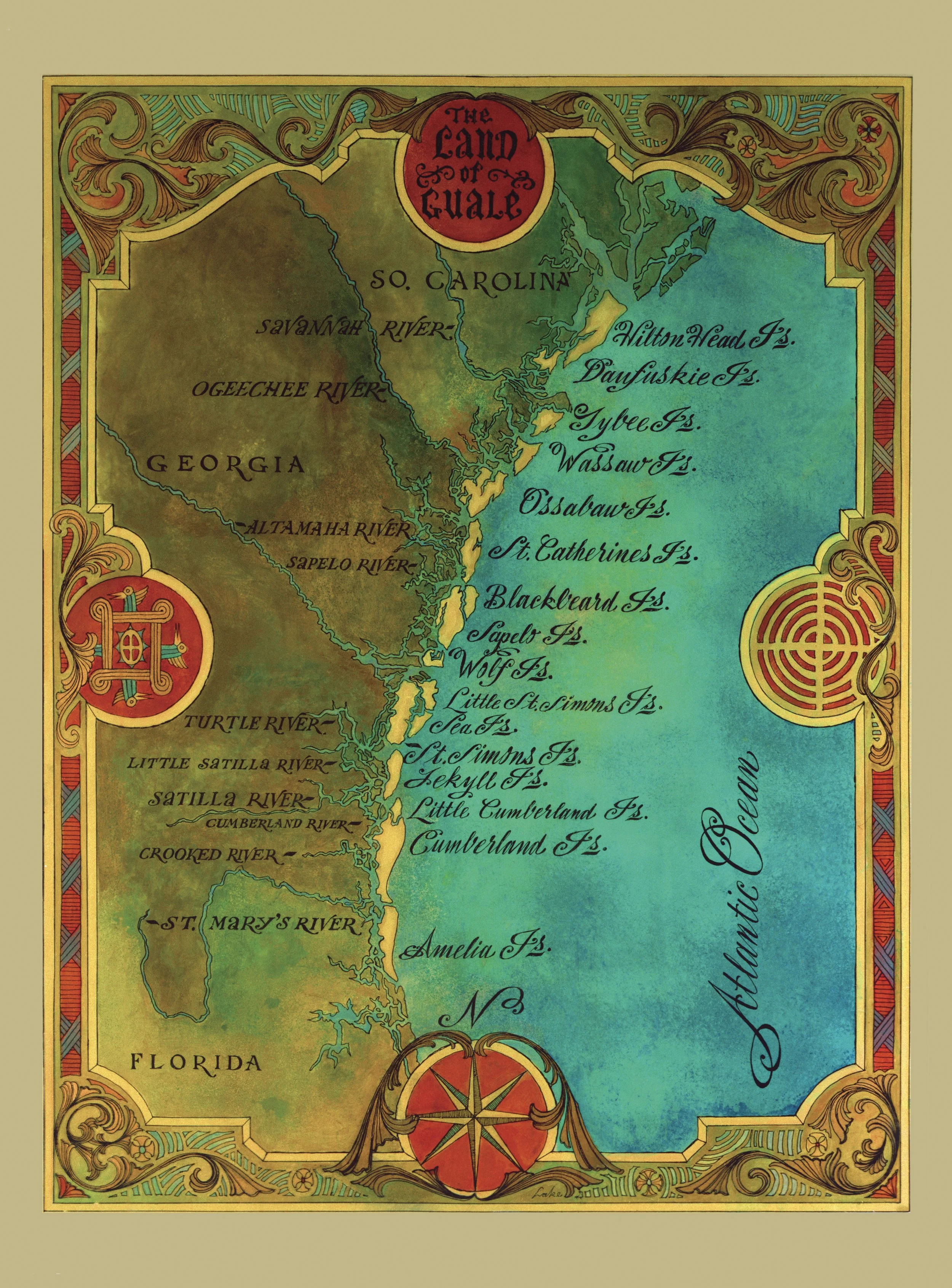
The Land of Guale by Skip Lake. Courtesy of The Earl Family
“Could this part of the Southeast become a nucleus for planning on an even more vital scale?” ¹
– Eleanor “Sandy” Torrey West
“You know what the world is like … I need you to be my constabularies! Will you watch with me? Will you be Ossabaw’s Army?” ²
– Eleanor “Sandy” Torrey West
In 1845, American naturalist Henry David Thoreau famously used the term wildness as a state of perception experienced when one is immersed in wilderness.³ By 1962 the groundbreaking environmentalist Rachel Carson made public the nearing demise of our planet at the hands of chemical pesticide manufacturers.⁴ Four Months earlier, in 1961 Eleanor “Sandy” Torrey West co-founded The Ossabaw Island Project (OIP) as a model for teaching wildness as perception through wilderness exposure off the coast of Georgia. Today both wilderness and the experience of wildness remain threatened by private development and park expansion. Remarkably, the opportunity to experience wild spaces as part of interdisciplinary exchange immersed in unpaved land, habitat, and histories remains at the heart of Ossabaw Island’s mission. Will we defend a small, wild, twelve-mile island, whose Creek Nation name refers to the Yaupon Holly symbolizing eternity and protection? Will we stop to pay attention to our most precious and vulnerable islands?
Eleanor “Sandy” Torrey West was the only woman presenter at a 1968 Conference on the Future of the Marshlands. Held on Sea Islands near St. Simon’s Island and convened in part by West and ecology pioneer Eugene P. Odum, this event felt urgent.⁵ Ossabaw, as well as the other southeastern, coastal barrier islands, were under threat for phosphate and titanium mining, as well as highway, housing, and golf course development.⁶ Despite a full roster of scientists, conservationists, and island stakeholders, Sandy West was arguably the fiercest voice of defense that day. Her speech provided the vision: “Whatever happens to one of these large islands involves the other islands, and as a consequence, the entire eastern coast of the United States.” ⁷ Sandy West’s lifelong quest was to keep Georgia’s Ossabaw Island wild as a teaching-island to emulate.
Four years prior, in 1964, wilderness was defined by the U.S. government in the Wilderness Act as “an area where the earth and its community of life are untrammeled by man, an area of undeveloped land retaining its primeval character.”⁸ But rather than wilderness, West, like Thoreau, playfully used the term wildness, by which she realized a place for getting lost in nature as fuel for inspiration.⁹ Sandy West insisted on Ossabaw as a teaching island for the next fifty years, with a multidisciplinary residency that she spearheaded.¹⁰ With a focus on bringing scientists together with artists, engineers with poets, mathematicians with composers, and so on, West noted: “We will bring these people to Ossabaw to give them a chance to regenerate themselves and through this to regenerate others when they return to their community.” ¹¹ By 1968, when the OIP was only a few years off the ground, Ossabaw and the Golden Islands were under increasing pressure from developers who envisioned them as “an unbuilt Florida.”¹² With clarity at the 1968 conference, Sandy West asked a visionary question: “Could this part of the Southeast become a nucleus for planning on an even more vital scale?” ¹³ This question is increasingly relevant today.
Her question, and all the actions it would generate, establish Sandy West as an environmental pioneer. She protected Ossabaw at great financial sacrifice, and not without contention, until her death at the age of 108. She dedicated her life for the public to immerse in a wild space, to wander within Nature and to scale-up a sense of wonder beyond the island’s edges. Recognizing West’s position and her pertinent question within an environmental timeline, we begin to see the southeastern coast as central to eco-awareness and even ecofeminism. Women have been especially active in this history-making, intuiting that the key to survival is to embrace the hyper-local as central to a vital scale. This essay begins to chart Ossabaw Island’s matrilineal stewardship. Following West’s mission to immerse within and to learn from the island, this essay also touches on a few of the leaders whose life’s work it is to scale up the eco-awareness and creative wildness the islands inspire, such as Carol Ruckdeschel, Cornelia Walker Bailey, Athena Tacha, Agnes Denes, and Betsy Cain. Their interventions, their words, and their art offer a creative first line of defense. The rest is up to us.
From Coosaponakeesa to Sandy West
Sandy West greatly admired another woman “owner” of Ossabaw Island, the part-Native, part-English negotiator, born Coosaponakeesa.¹⁴ Born in 1700 along the Ocmulgee River to the Wind Clan of the Coweta and Lower Creek Nation, she was mostly known as Mary Musgrove within Georgia, though Sandy West often referred to her by her indigenous name. Names matter, and Sandy knew this.
Known variously as Mary Griffin, Mary Musgrove, Mary Matthews, and Mary Bosomworth, she was gifted Sapelo, Ossabaw, and St. Catherines islands “on the fourth day of the windy moon” by revered indigenous leader Malatchi in exchange for her ambassadorial role in the peaceful founding of Savannah in 1733.¹⁵ The powers that be in the young British colony for decades contested this gift of land to an indigenous woman. Colonial women could not own land, but Creek women could, and the Creek Nation “…regarded property rights as usufructuary in nature [not owning but having the right to use and benefit from it] and invested in groups rather than individuals…” as biographer Steven C. Hahn notes. This difference may have been at the crux of Musgrove’s struggle. “Mary spent the whole second half of her life essentially trying to translate Creek concepts of property into English terms.”¹⁶ Multilingual, she worked toward British governmental recognition of native authorities including Creek (Muskogee), Yamacraw, and Yemassee land concerns.¹⁷ The fact that she never gave up on this effort is worth admiration. She died on St. Catherines Island.
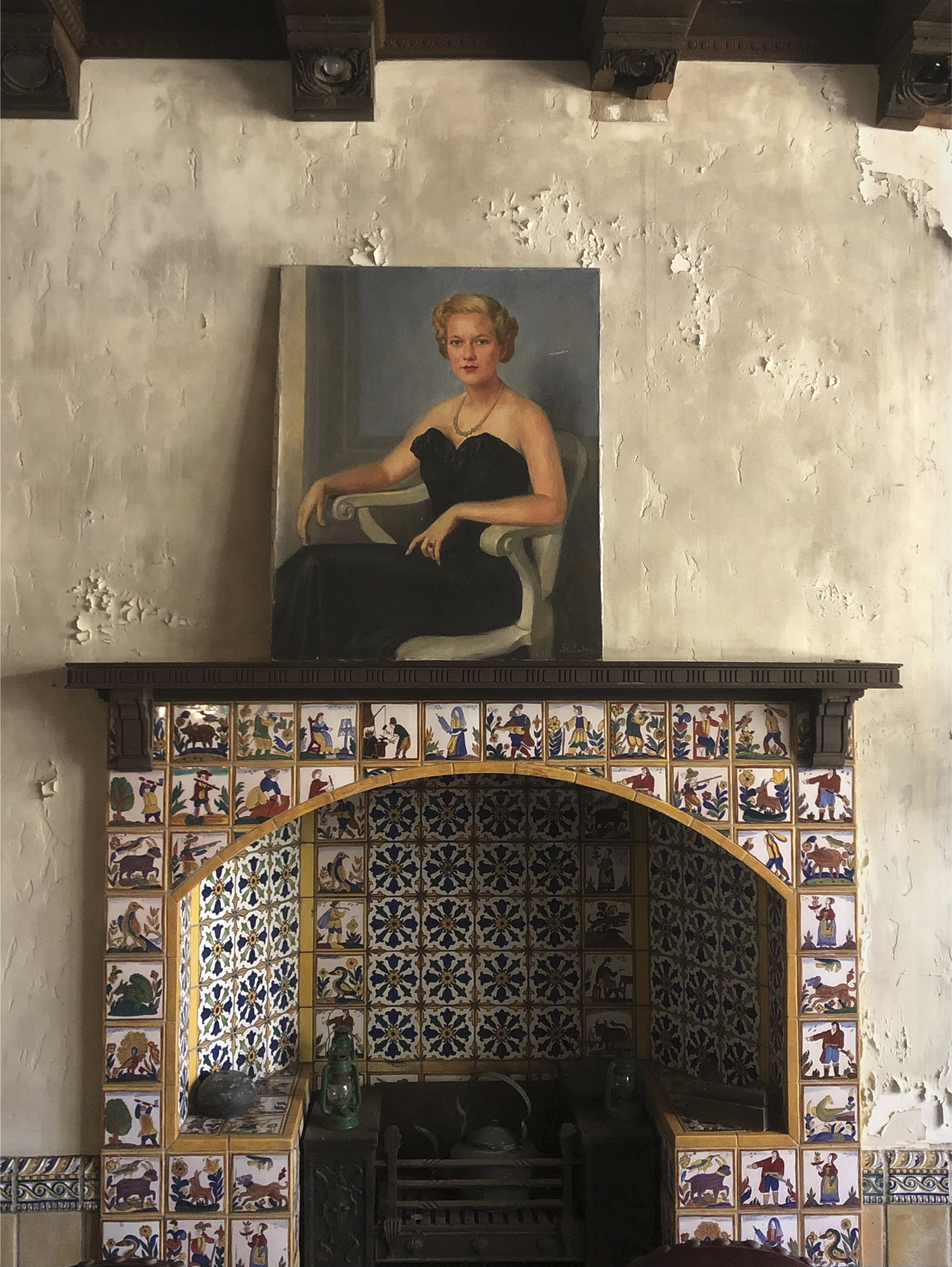
Portrait of Eleanor ‘Sandy’ Torrey West in the dining room at the Main House. Photo by Emily Earl
In women’s history, we see causality between changes of name, the changes in ownership of women through marriage, the lack of recognition of their children or property as their own, and our own lack of knowledge about their history. A woman, as powerful as this negotiator, had to change her identity five times. Is it any wonder she isn’t a household name? Her story, complex and contested, offers an alternative future in which indigenous and female heritage and land stewardship could have become a cultural priority for our young country. Perhaps if we call her by her name, we might begin to recognize the deeper historical roots of indigenous and female leadership in the Low Country, so essential to the founding of The United States.¹⁸ From Coosaponakeesa to Sandy West and beyond, Ossabaw Island, the Ossabaw Island Project, and the Sea Islands are part of a lineage of visionary women protecting the coastal region.¹⁹
But as controversial as it may be, forever land “ownership” is a fiction. Coosaponakeesa fought for her own native island recognition against the British crown and its colonial contracts, and in doing so, for validity as a female powerbroker of mestizo heritage. Two hundred years later, Sandy West kept the lions at bay, resisting monetary and personal gain, saving the island for animals and for people alike. Both lives attest to the fact that we only steward land temporarily. However, what if Coosaponakeesa’s voice had been recognized more widely within historical memory? What if her gender, her intelligence, and her valuing of the islands had been passed forward rather than passed over? Sandy West often referred to her. Perhaps she admired the negotiator’s sheer stubbornness. West once admitted: “When I started trying to save Ossabaw it was purely selfish. It remains so. I don’t think you can do anything well unless it’s selfish. If it’s you who loves and cares for something, then you’ll fight harder than ever.” ²⁰ We don’t know all the details of Coosaponakeesa’s life, but how we perceive history is powerful. West wrote and published a picture book for all age groups entitled Maria Bosomworth and William Rodgers. The character Maria, a reference to Mary, was a beloved island pig who thoughtfully noticed that there are “the people who go by and the people who stop.” ²¹ This character valued those who take time to stop and to perceive. Sandy perceived her island predecessor as someone who stubbornly insisted, who recognized land as not just power but as soul.
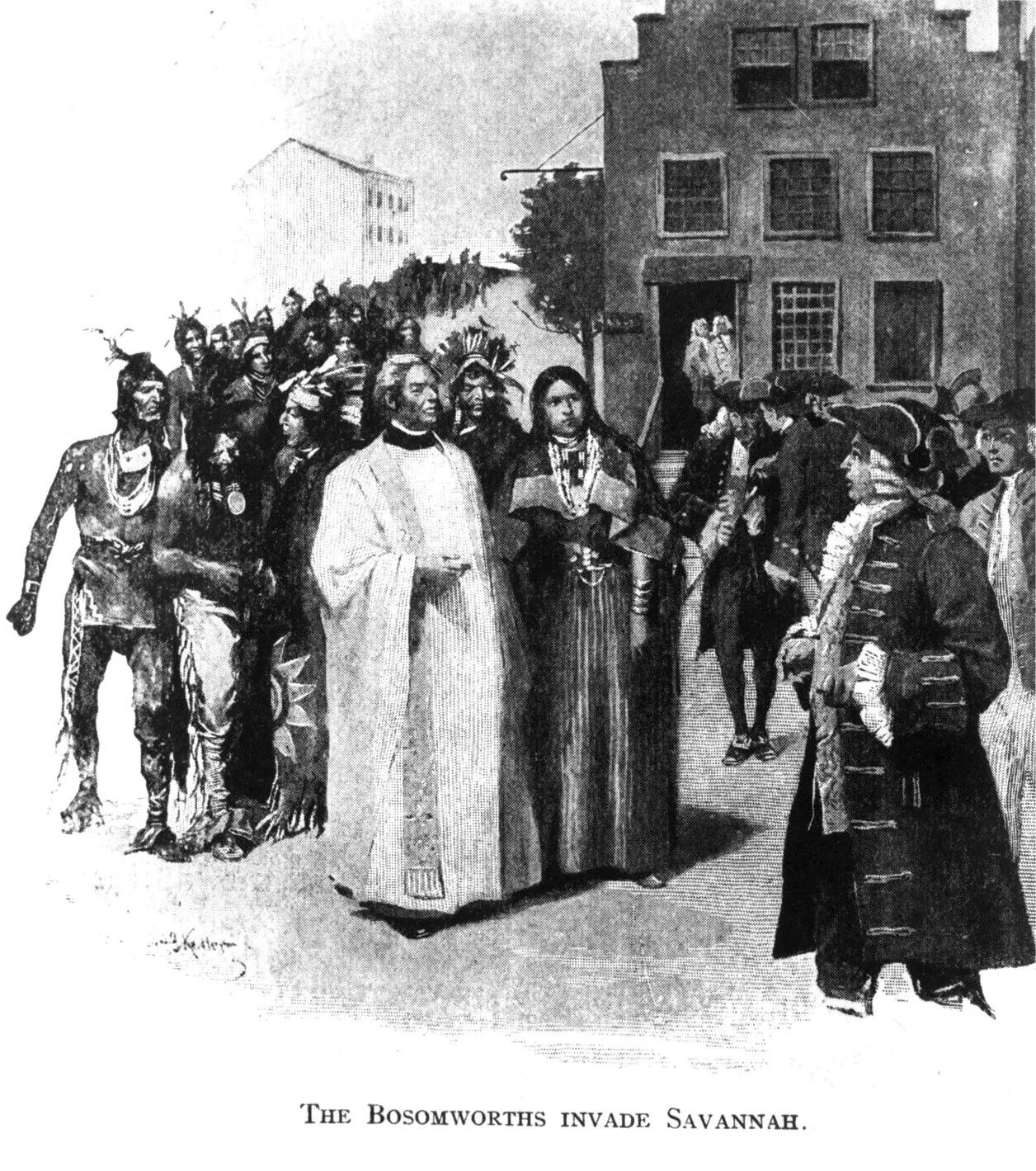
Coosaponakeesa, pictured with her third husband, Reverend Thomas Bosomworth. Courtesy Hargrett Rare Book and Manuscript Library, University of Georgia Libraries
Of course, to be a steward of wild places, especially as a woman, will not win popularity contests.²² It is complicated, dangerous even. In addition to natural threats such as venomous snakes and territorial alligators, conservation efforts are met with family disagreements, industrial fishing, monetary dead-ends, sexism, political backlash, and violence. There is a fierceness that visionaries share in the mothering instinct to protect indigenous authority, and to mother nature by protecting island ecology and the truth of histories. History footnotes numerous island owners and enslaved peoples and their families who lived and worked on the islands and worked to preserve them, on Ossabaw and beyond.²³ The female hero as visionary defender from Coosaponakeesa to West and into the 21st century is a throughline of this history.
Sandy West and Eco-Matrilineage
Sandy West was more than Ossabaw Island’s savior as she is often called.²⁴ She was an author, an artist, a wordsmith, a collaborator-filmmaker, a woman of immense family privilege, a child of northeastern industrialization, and a warrior whose idea for a residency, at first unpopular, became a foundation for eco-consciousness.²⁵ Growing up in Michigan and on Ossabaw, West, in 1959, together with her brother’s children, inherited the island which her parents had purchased in 1924, partially with funds from the Pittsburgh Plate Glass fortune. For years, potential developers and miners pressured her to sell it. Uncompromising, she knew that it would take an army to preserve a wild island. She assembled one in the form of the Ossabaw Island Project (OIP). Every person invited by Sandy and Clifford West, who stayed on the island from 1961 until 1980 (and beyond), became an island defender, sharing ideas, teaching in their respective schools, making art, composing music, publishing scientific research, and writing articles and books. The Wests invited people from different disciplines. Sandy wrote: “We just let them stay at Ossabaw and didn’t tell them what they were going to do or … anything. And the thing that happened then is what made the Ossabaw Island Project successful: that Ossabaw is a total catalyst.” ²⁶ West was perhaps most excited about allowing people to find their own serendipity, having once said bluntly,“My idea was to…leave them completely alone.” ²⁷ Even after 1980 with a revived mandate through The Ossabaw Island Foundation, West compelled accomplished individuals from separate disciplines to stop and wonder. She united people who are siloed from one another by a culture that divides us and separates us from nature through the constancy of noise pollution, excessive manmade light, consumerist priorities, and pavement.
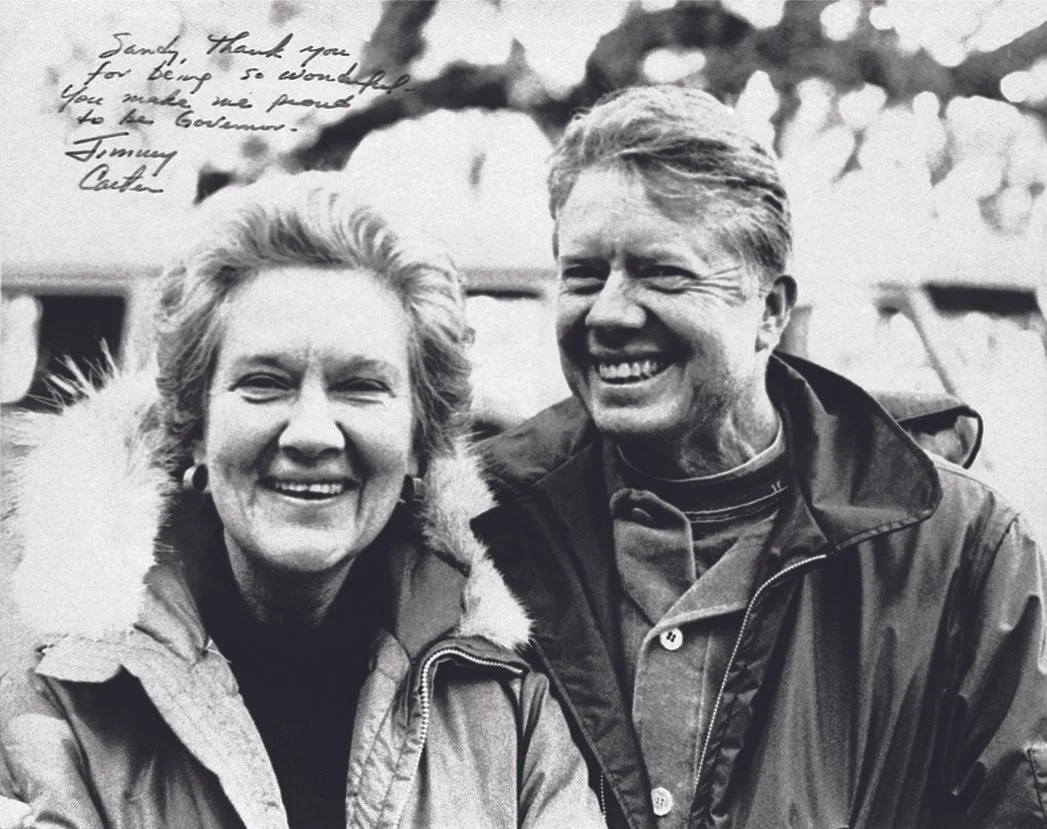
Eleanor ‘Sandy’ Torrey West and then-Georgia Governer, Jimmy Carter
Coterminous with West’s 1961 insistence upon uniting interdisciplinary minds through wilderness experience, Pittsburgh-native Rachel Carson published Silent Spring in 1962. Like a megaphone, this book broadcast chemical doom and stirred environmental awareness, scaling up her highly resisted observations of manmade and greed-driven, pesticidal river and land pollutants.²⁸ From the smog and steel city, she ignited a second American environmental movement that had rumbled one hundred years earlier when Thoreau advocated naturalism alongside civil disobedience. Following in Carson’s wake, The Clean Air Act was passed in 1963, The Wilderness Act in 1964, Sierra Club victories took shape in 1966, The Environmental Defense Fund began in 1967, and Redwood and numerous National Parks were added in 1968, just to name a few landmark moments. By 1968, Sandy West’s invitation to see Ossabaw as an exemplary object lesson had momentum. We were beginning to recognize our inseparability from one another and from our planetary body. By Christmas Eve 1968 the world saw the “most influential environmental photograph ever taken” by William Anders from lunar orbit on the Apollo 8 mission.²⁹ This “Earthrise” photograph, as it came to be known, snapped into perspective for millions of viewers an immense sense of the earth as a delicate, beautiful home. Floating in a vast darkness, the fledgling blue planet jumpstarted protective instincts.³⁰ Fifty years later, Anders noted: “We set out to explore the moon and instead discovered the earth.” By 1970, Earth Day was initiated alongside a growing call for “women’s liberation.” ³¹
Questions about access, fragility, and liberation through a love of Nature on a vital scale, posed by West at the 1968 conference, remain at the heart of ecofeminism, which is the idea that “women’s subordination and ecological degradation are linked.” ³² Ecofeminism emphasizes that there is a gendered nature to environmental destruction and just as bodies need to be nurtured, so too does the earth. West’s persistent guardianship connects with this. After decades of supporting creative research on the island, funds became scarce. Worried she would have to sell the island to the highest bidder at one point, West understood that urgent action was required. She worked with her army of friends and island protectors, and directly with President Jimmy Carter, to establish Ossabaw as Georgia’s first ever Heritage Preserve in 1978, selling the island to the State of Georgia at half its assessed value. She stipulated that the island can only be used for “natural, scientific and cultural study, research and education, and environmentally sound preservation, conservation and management of the island’s ecosystem.” ³³ This agreement is a unique and essential chapter in an American history of environmental consciousness largely guided by a woman visionary.³⁴
By 2003, when Sandy West was ninety, she was honored by the Garden Club of America alongside the Rockefeller family for her “outstanding achievement in environmental protection and the maintenance of quality of life.” At the time, President Carter wrote of her: “Instead of exploiting the land and selling the island to developers, she and her family made a priceless gift to the people of Georgia and the nation.” Earthwatch Institute founder Brian Rosborough added: “Long before planners, politicians and media spoke in terms like ‘sustainable development’, Mrs. West invited young people to create an ecological designed community on Ossabaw, in harmony with nature…” ³⁵ Protection of wilderness and recognizing interconnectedness remains our most enduring struggle. Ecocritical writer T.J. Demos argues: “Ecology … functions similarly as a site of indissoluble relationality that highlights, and indeed is constituted by, interaction.” ³⁶ This sense of relationality is at the heart of West’s vision. Today, ecofeminism shines “a light on social and environmental justice … as an expansive strategy for survival in 21st century life.” ³⁷ Ossabaw, and the other Sea Islands nearby, remain vulnerable bodies, teaching opportunities.
It Takes an Army
Sandy West was by no means alone in defending the islands. To save a few miles of wildness requires countless men and women and constant vigilance. Folkloric with tenacity, on nearby Cumberland Island, Carol Ruckdeschel is another warrior for wildness, defending threatened habitat with her life. On Sapelo Island, Cornelia Walker Bailey protects land and heritage by amplifying stories.³⁸ Although West inherited her island, Ruckdeschel squatted one to protect sea turtles, and Walker Bailey gives voice to the multi-island Gullah-Geechee history, all three women championed one another’s protective instincts.
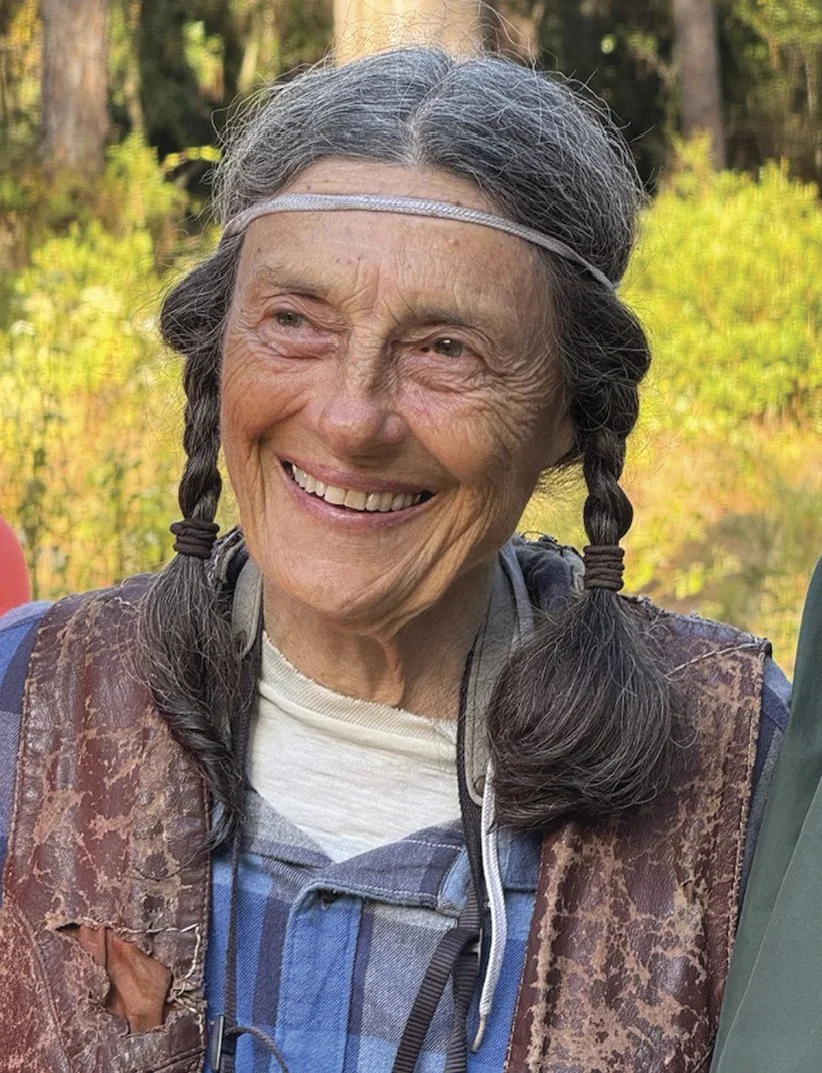
Carol Ruckdeschel, 2025. Photo by Hugh Woodall
Carol Ruckdeschel has been vilified as is often the plight of women protecting wilderness. After a long friendship with the multi-generational matriarchs of the Carnegie family who owned much of Cumberland Island, there was a falling out over the Carnegies’ desire to preserve family homes and history, and to establish controlled tourism, versus Ruckdeschel’s insistence on leaving a large portion of the island wild.³⁹ Labeled as “radical,” “not one of us” and an “eccentric whackjob,” her response to this reverberates. She contended that “trying to save the last one percent of wild places is not radical. Radical is wiping out half of the world’s species in less than a century.” ⁴⁰ Ultimately, Ruckdeschel spearheaded The Cumberland Island National Seashore in 1972 designating it as wilderness. Like Sandy West, she worked with President Carter on the River Protection Act of 1973, saving the island (temporarily) from unchecked development and mining.⁴¹ Eco-activist and biographer Will Harlan notes her influence: “Women have dominated Cumberland ever since its first inhabitants settled here thirteen thousand years ago” as this island’s Timucuan people were a matrilineal society in which women held important positions.⁴² Connecting their destinies, in a March 1994 letter to Ruckdeschel, Sandy West emphasizes a matrilineal protectorate: “Because of all you have done, because of the way you think, you have always been my heroine.” Carol responded, in a July 1994 letter to Sandy: “…Your battles are our battles … what counts in the long run is the protection of the resource; our respective islands. Government personnel come and go; rape and plunder, but it is a love of the land that fosters long-term protection and planning. It is our job to see that that is not forgotten.” ⁴³
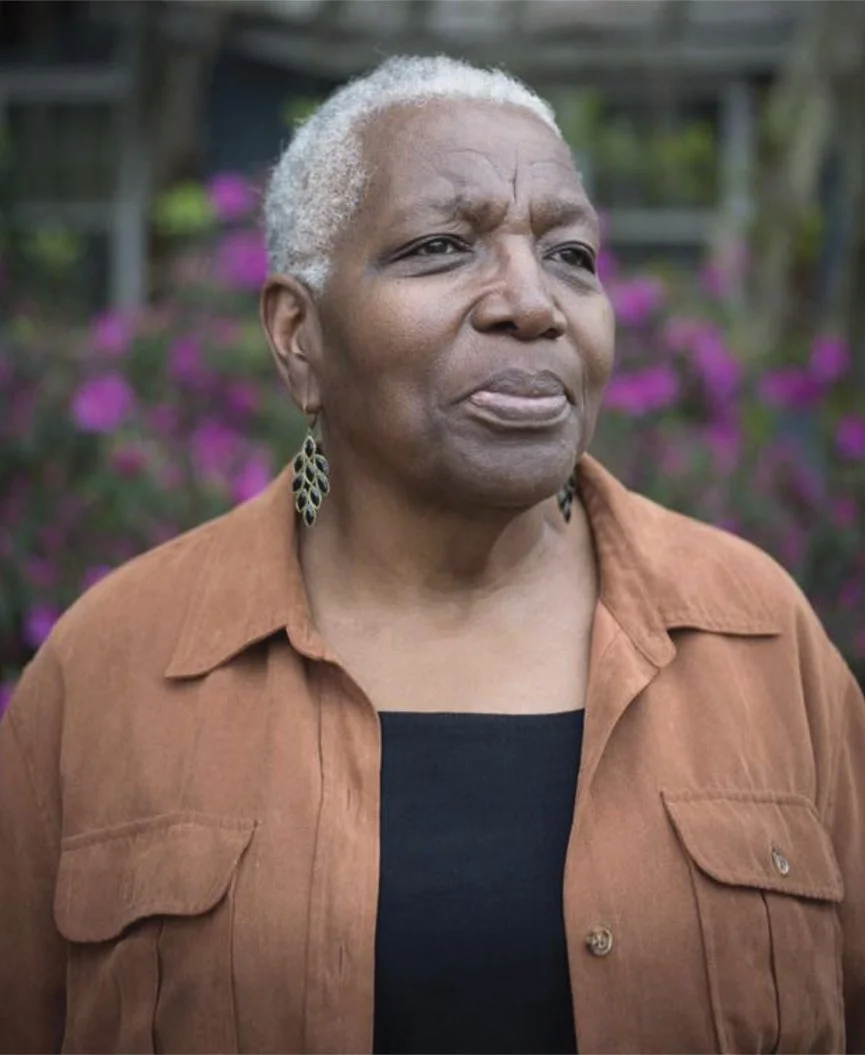
Cornelia Walker Bailey, Photo by Imke Lass
Cornelia Walker Bailey, whose family has lived on Sapelo Island since 1803, preserves land by honoring history in “the last majority Geechee/Gullah population living on a major island unconnected to the mainland.”⁴⁴ The maintenance of cultural record is another essential form of island protection. Bailey understands that memory, land, and language are integral and so she shares stories about Gullah-Geechee terms like Watch Night, good root, Life Everlasting, shouts, buzzard lopes, and dayclean (a beautiful word to describe the newness and potential of each morning). Her oral and written histories poetically link wildlife and community life. Sandy West was one of the most prolific correspondents. In her letter to Mrs. Bailey (October 14, 2020), she addressed her as “Queen of Sapelo!!!!” and signs off as “Queen of Ossabaw!!!!!!” Having just finished reading Bailey’s book God, Dr. Buzzard, and the Bolito Man, Sandy wrote to Cornelia: “It made me laugh, and it made me ponder, it made me hate and it made me love. But most of all it made me mourn… Our changes were not like yours on Sapelo as no one forced anyone to do things they didn’t want to do.” ⁴⁵ Walker Bailey’s voice is essential today as Sapelo Island fights yet another battle against development and familial land loss. Her words reverberate in a painting by Savannah-based visual artist Suzanne Jackson who spent time on both Sapelo and Ossabaw. Having met Bailey in the mid-1990s, Jackson’s image Belali’s Memory Song (2010) engages with Sapelo’s depth of place while honoring an island ancestor.⁴⁶ Soft purple-brown tributaries of mind and body weave around greens and blues of land and water, mapping historical memory with the suggestion of fluid sounds of tide and wind. Her watercolor-collage Origins (2010) made on Ossabaw similarly blends the aqueous blues and browns of water and land with the direct gaze of a face, youthful but unspecific, as if the embodied land itself were confronting us. The haunting face reminds us of the shared obligation to perform memory and safekeeping, the deep tissue between origin stories and future survival.
Athena Tacha
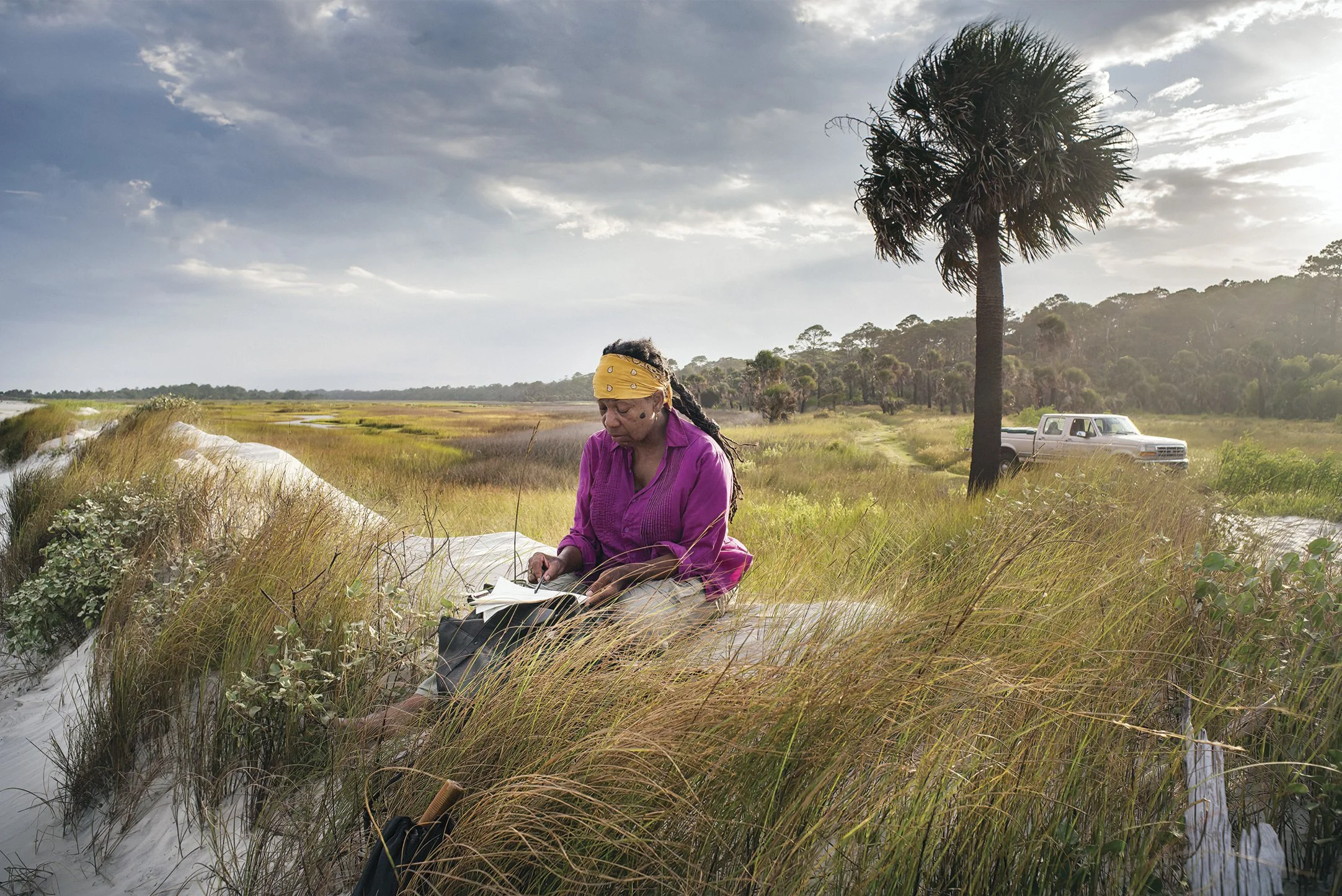
Suzanne Jackson on Ossabaw, photo by Imke Lass
Sandy West’s army rippled outward with protection and continues to do so. During the decades of OIP, accomplished artists, some with intact eco-conscious artistic practices, were drawn to Ossabaw. Greek-born multimedia artist and OIP participant Athena Tacha aligned with West’s vision. Her Land Art practice, developed in the early 1970s, oscillates between studying the infinitesimal and the monumental. An educator, curator, and writer, Tacha worked for decades in dialogue between scientific theories and earth’s visual rhythms. Her career points us toward ecosystems as answers to interdisciplinary questions and often provides “a much-needed place to stop and rest, perhaps even to contemplate.”⁴⁷ Around the time of a 1980 Ossabaw visit, her work focused on ripples, mud cracks, rock-waves, and erosion. Her rag paper pulp reliefs, made on Ossabaw, are both titled Tide Beach (1980-81). Each casts time impressed upon sand by tidal waters, embodying organic repetition without geometry. One recalls the licking flames of fire, while the other suggests the deep blues of indigo ocean waves that through biomimicry morph into arial typography, the mirroring patterns of micro–and macro–organisms and actions in nature. Relationships, and stopping to perceive them, are everything in Tacha’s work.⁴⁸ Windtracks (1980/2005) photographed on Ossabaw, grasps this ever-expanding sense of nature’s similarities without sameness. Tacha photographs the infinite variety of tracks made by wind upon sand and then scales it up by collaging the views into a grid, suggesting the mathematics of infinity. No single pathway or sculptural curve repeats and yet they are knit together with likeness. In this sense, Tacha’s “tiny landscapes” prototype her large-scale outdoor sculptures found worldwide from Oberlin to Athens. Inspired in part by Ossabaw, her contemplative spaces offer a place to stop and perceive nature as art. Her Ossabaw patterns amplify island perception to the wider world. Ellen Johnson described Tacha’s work as “avoiding right-angle relationships” and I can’t help but imagine this as a phrase that Sandy West would have adored.⁴⁹ Engaged in ecology and the vast constellation of Greek mythology, Tacha’s interests embodied Sandy West’s mission to protect what nature teaches: power to perceive and patterns to emulate.
Agnes Denes
At the suggestion of Athena Tacha, the Hungarian-born American Land Art pioneer Agnes Denes visited Ossabaw in 1979. Just a few years later, Denes completed her ground-breaking investigation on another island, the island of Manhattan. This mammoth, iconic Land Art “happening” entitled Wheatfield – A Confrontation is perhaps influenced by Ossabaw’s marshy grasslands, wide-open fields, and beaches. Or maybe this island-to-island timing of Wheatfield is just a coincidence. Either way, Wheatfield was a direct conversation about land management. It was a David-and-Goliath confrontation, adopting two acres of valuable land near Wall Street to hand-seed, grow, harvest, and distribute worldwide waving, golden wheat, suggesting we rethink priorities as land-stewards.⁵⁰ Incongruous with the concrete jungle surrounding it, this island within an island is rebellious and disruptive in the shadow of The World Trade Center. Wheatfield cemented the artist’s trajectory, moving her works from seed to monument in later earth reclamation projects.⁵¹ Like Sandy West’s mission for OIP, Denes’ work is guided by nature to find solutions to human-made problems. She recently shared reflections about her time on Ossabaw and her words echo her prints as if the images could whisper:
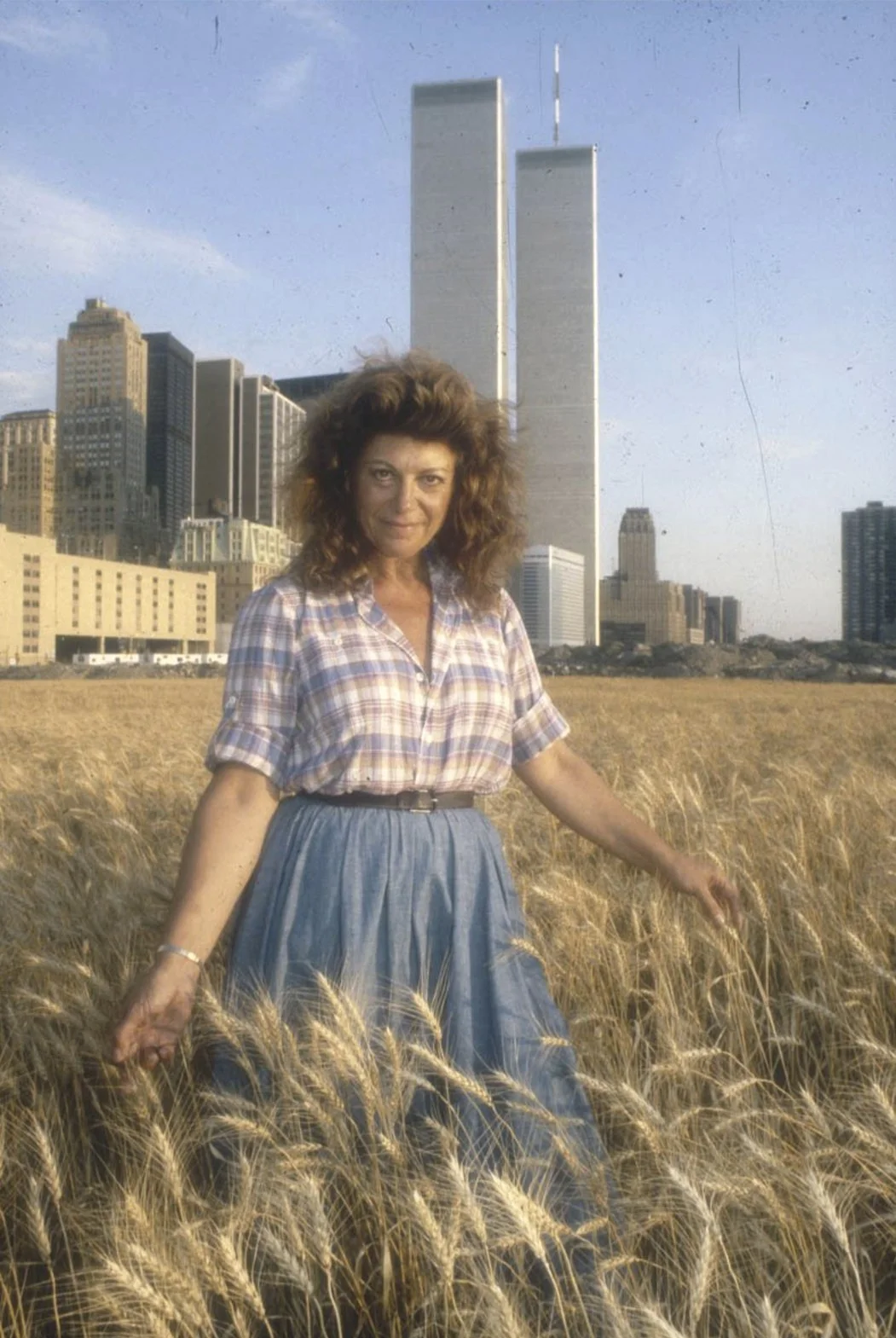
Agnes Denes, Wheatfield – A Confrontation, 1982. Battery Park Landfill, Downtown Manhattan
“There seems to be a constant light coming from the moon, moving shadows and the ground’s slight bobbing up and down from ocean currents … nothing special. But adding them together on an abandoned island with bugs shushing and ground movements add mystery.
“What secret did the island hold? What secrets are there?
“I was taken with a subtle feeling of nostalgia, a bit of sadness mixed with an invisible cause. Hard to describe. Like a veil, you know it’s there but can’t see it, it’s not something or someone… it’s like you are suddenly feeling good, or sad, or hopeless, without cause.” ⁵²
Denes’ Ossabaw words and images share the constancy of “ocean time” mixing with the palpability of the island’s secret histories, as if land bears emotion. Many things are striking about her reflections, such as the importance of moonlight without streetlights, the clarity of moon shadows on the island, and the idea that land holds secrets. Perhaps tragedy, mystery, and history are absorbed by our bodies on Ossabaw through the sand and soil because it was never paved over.
Each of Denes’ archival pigment prints included in Telfair Museums‘ exhibition focusing on Ossabaw’s OIP contain small-scale repetitions without variations, insinuating grand-scale views. Sand grains, striations, and glistening currents take naturalism to the nth power of abstraction. Her “subtle feeling of nostalgia” intuits the loss of open spaces and the powers of perception they avail. Denes’ lifelong practice developed in the 1960s as one of the first eco-art responses radiating alongside West’s OIP mission for the possibility of creative interdisciplinary dialog while immersed in wilderness. Her Book of Dust: The Beginning and the End of Time and Thereafter is the most ambitious art book as interdisciplinary study of everything from entropy to greenhouse gasses, from stardust to genetic engineering.⁵³ Not unlike West’s vision, Denes recognizes that moving toward “global consciousness” encompassing multidisciplinary and multi-national cooperation is the only way out of our predicament.⁵⁴
Sandy West wanted to foster the multidisciplinary, blurred edges of knowledge, trusting this to take root beyond the island as a fertile ecotone. Denes’ book is coincidental to the wildness of an island and what it offers:
“The closer one ventures to the edge, at the fringes of knowledge, the more intense the excitement. Having risked leaving a safe world where one has learned to function in order to seek the thrill of unknown territory, one is unsure and vulnerable, working in areas where information becomes vague, definitions blur and answers thin out. In this strange land of possibilities and ambiguities, one is alone with one’s faith, curiosity and the hope of a new connection or some insight. One must break through membranes and eliminate boundaries to enter this land. It is new, transparent, pure, and unspoiled, where nothing can hide – a realm where one can place one’s dream and vision, as though it were an incubator, and watch it take root and develop.” ⁵⁵
Betsy Cain
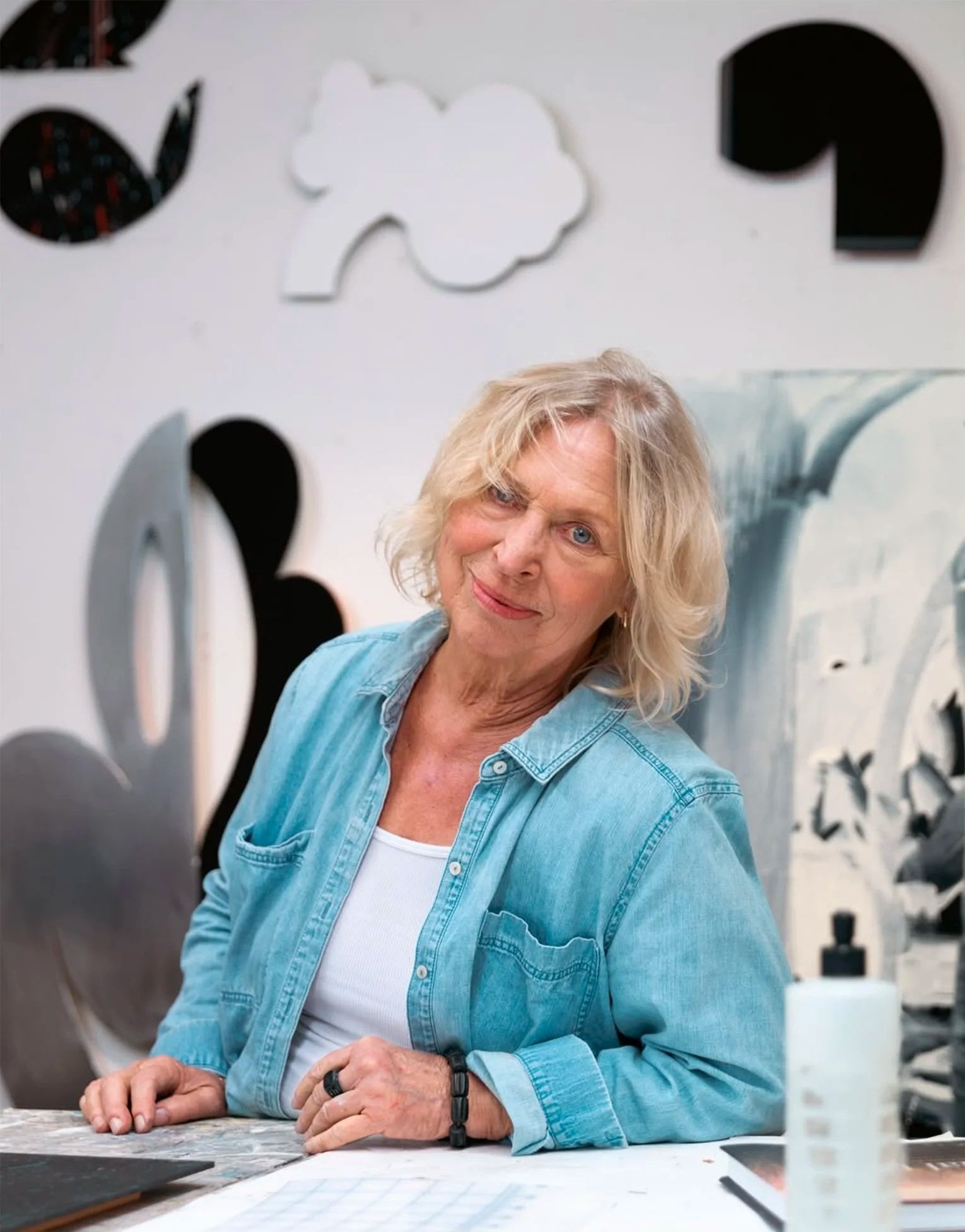
Betsy Cain, photo by Jacob Edenfield
When I finally made it to Ossabaw, I remember thinking that I was too late to the island. What can I possibly offer beyond the contributions of countless researchers, artists, writers, and lovers of the island, from Coosaponakeesa to Sandy West to Margaret Atwood to Annie Dillard to Sally Mann? I raised this aloud to artist and friend of Sandy West, Betsy Cain, one evening on the island around moonrise. She answered as if it were obvious: “That’s like saying that one can be late to noticing negative space.” I love this response. The connection between Ossabaw’s wildness and one’s experience of it is not something you can be late to discover. All who connect deeply with the wild island are West’s “constabularies.” Cain herself spent countless hours talking, walking, and painting with Sandy West and organizing artist retreats on the island.⁵⁶ With a daily practice of photography, drawing, and painting that begins and ends with the sunrise and the moonrise, her work engages with what she calls “places that speak.” In Fire Tree (2010), oil on Yupo paper, marsh grasses rise in unison to greet willowing branches, sparking a symphony of reflectivity ignited by the horizon. In her work, we feel the island’s intertidal pluff mud rather than see it. We sense her walnut wash drawings as literal “earthworks,” made on and for Ossabaw, the ultimate in site-specificity. Cain’s Cabbage Garden Road (Looking into the Forest), 2022, cracks open a path to enter. Nature’s linework, her positive and negative spaces – trunks, wrack, branches, and horizon point the way, asking only for curiosity and protection in return. Cain’s own practice, along with her 2024 initiation of an artist-scholarship fund through sales of her drawings contributing to the newly established Ossabaw Island Residency (now administered by ARTS Southeast), manifest Sandy West’s vision to enter your own path while expanding its scale to include others.
Emergent artist-defenders continue today to take up the sword and shield to protect Ossabaw. Tobia Makover has been making photographs on Ossabaw since 2008. Her photo aura (2023) from her series Sky Woman Falling inspired by Kimmerer’s book Braiding Sweetgrass elicits the resolve of the buddha. The figure (Betsy Cain as model), is a warrior for the kind of peace that only wildness knows. Eyes closed and hands both receptive and offering, the seated figure is seeded within yellowed grasses. She fades into the cabin’s tectonic tabby plates of weighted history. The image reminds me of a photo of my youngest brother at age four at my grandmother’s, eyes closed, hands in anticipation of a treat, seated below a wallpaper mural of the whole world, the time and place of photography slipping through his child’s grasp. But in Makover’s image, Cain’s grasp is loose and open, and yet ready. Both photographer and sitter are united in their consciousness of this precious slippage, the required protection of island time and place, and its irreducible role within the wider world.
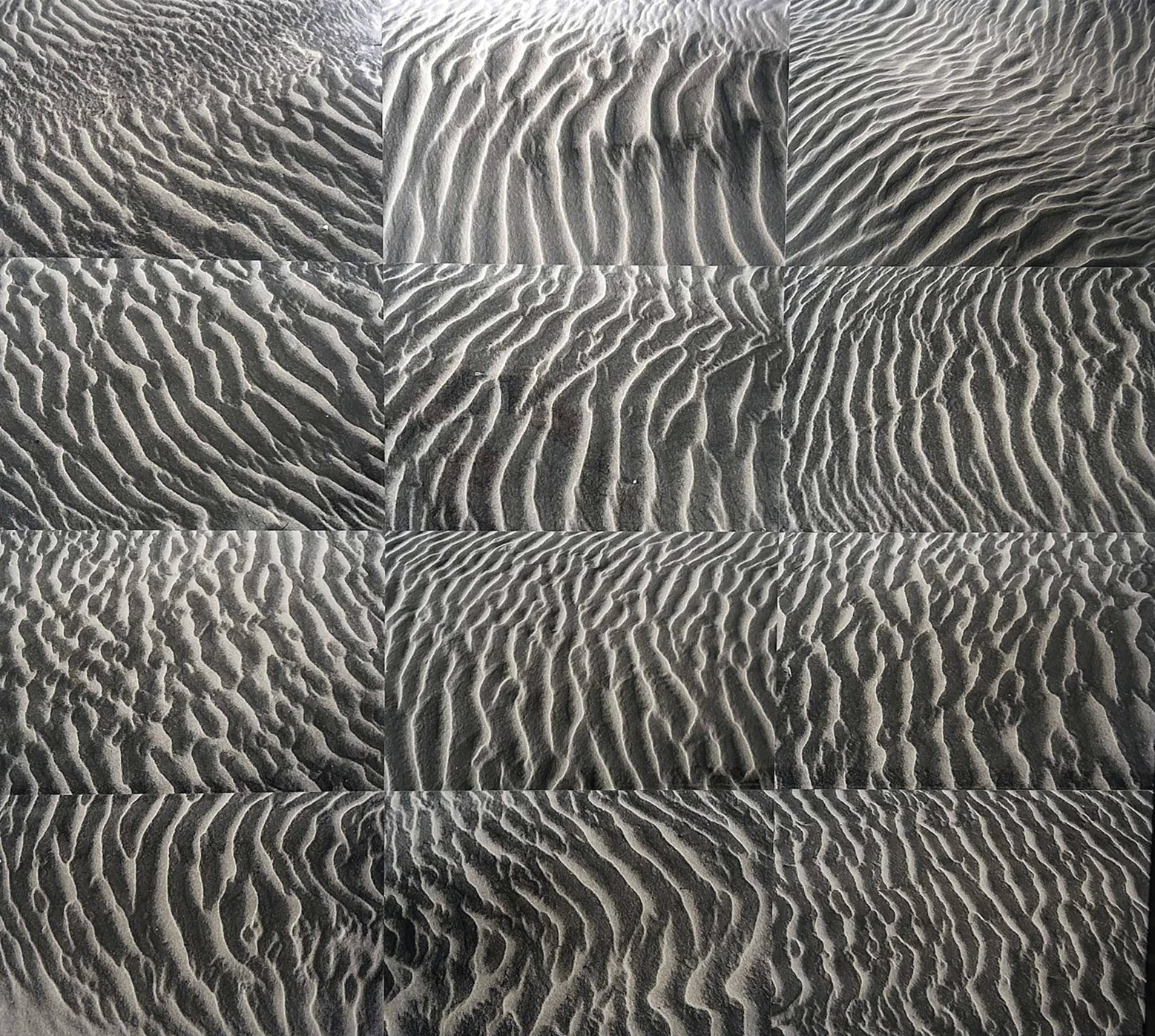
Athena Tacha, Windtracks (Ossabaw), 1980/2005. Chromogenic digital print on metallic photo paper, cold mounted with UV protective film, 37.5 x 42 inches
In Liz Sargent’s unruly entanglements inspired by Ossabaw time, there isn’t a right angle in sight. Inspired by daily practice and fueled by the island’s linework and layering, her watercolors and drawings in space, emerge from the poetry of noticing. Sargent’s work has an attentiveness at home within the long-on-time landscape of Cane Patch, the island’s largest prehistoric oyster shell midden. Sargent’s work pays close attention to the island’s color and movement, as if to protect the little we have left, and to share whispering visuals; artworks as a call-and-response for others to perceive with newborn eyes.
Responding to Ossabaw’s tidal detritus and tiny wonders, Rebecca Braziel’s practice is protecting through collecting. She returns fragments of Ossabaw to share on the mainland by hunting and gathering everything from wrack to ruin. Art about wild spaces could be as healing as forest bathing and her work perceives with wonder: washed-up buoys, algae, the glorious rainbows of lichen, the real and symbolic clinginess of barnacles. Man-made, nature-bound, and woman-found, her collage fragments move from island and external as a site to interactive installations as a kind of non-site.
Inspired by visionary heroes like Ursula Le Guin and Octavia Butler, Dana Richardson’s film Endless Landscape 2023-2024 is Ossabaw as mantra. We move with the gentle camera, inhaling and exhaling with a disembodied protagonist as if we are one with the wind, as we are certainly one with our breath. We float with the camera, as if outside but still inside the mind’s eye, exploring from dappled sunlight to deep dark nightlight, from the mysteries of controlled burning to the histories of driftwood roots. Richardson’s film doesn’t bring Ossabaw back but seems to take us there, encouraging each of us to breathe and to bear witness.
Ossabaw and all the southeastern islands remain threatened by unchecked development. Guided by female voices on the islands, Sandy West understood a version of ecofeminism. Though the island may be quiet, she did not take the submissive path. To love a place and its soul, to understand creativity as united with observation of nature, is to be a soldier for peace, a constabulary. I fully recognize over-optimism in the face of reality. We can’t wind the clock back to 1733 nor to 1968, but we can see Ossabaw Island as central to our eco-conscious past and future. It is not pristine. Ossabaw is complex, tragic, creative, familial, experimental, and wild, a history of eco-visionaries, many of them women, who dared to think on a vital scale.
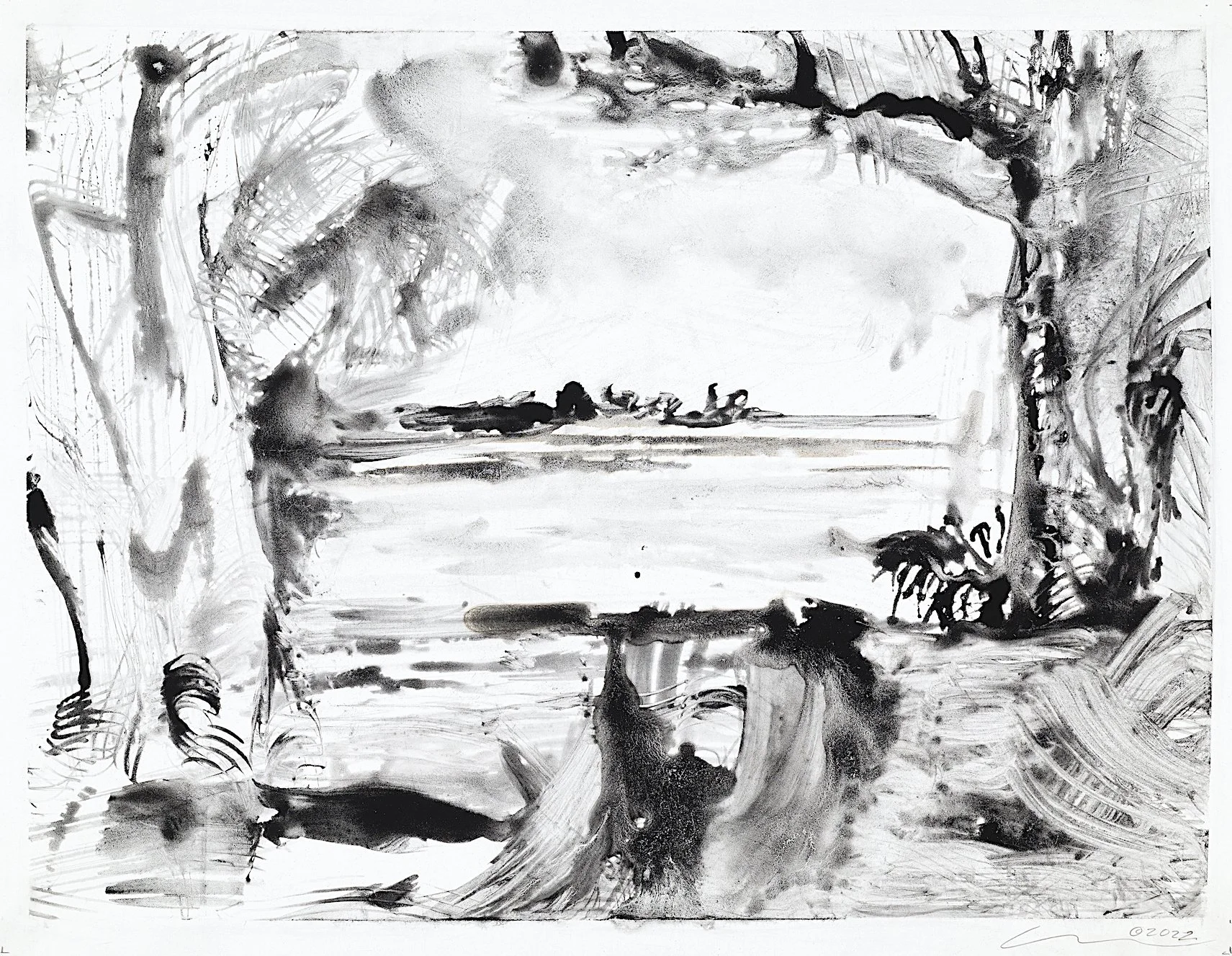
Betsy Cain, Cabbage Garden road (looking to the marsh), 2022. Liquid graphite on Yupo paper, 9.25 x 12.25 inches. Courtesy of the artist and Laney Contemporary

###
READ MORE FROM IMPACT …