ARTS Southeast is pleased to present
ROOTED
Curated by Lisa Jaye Young
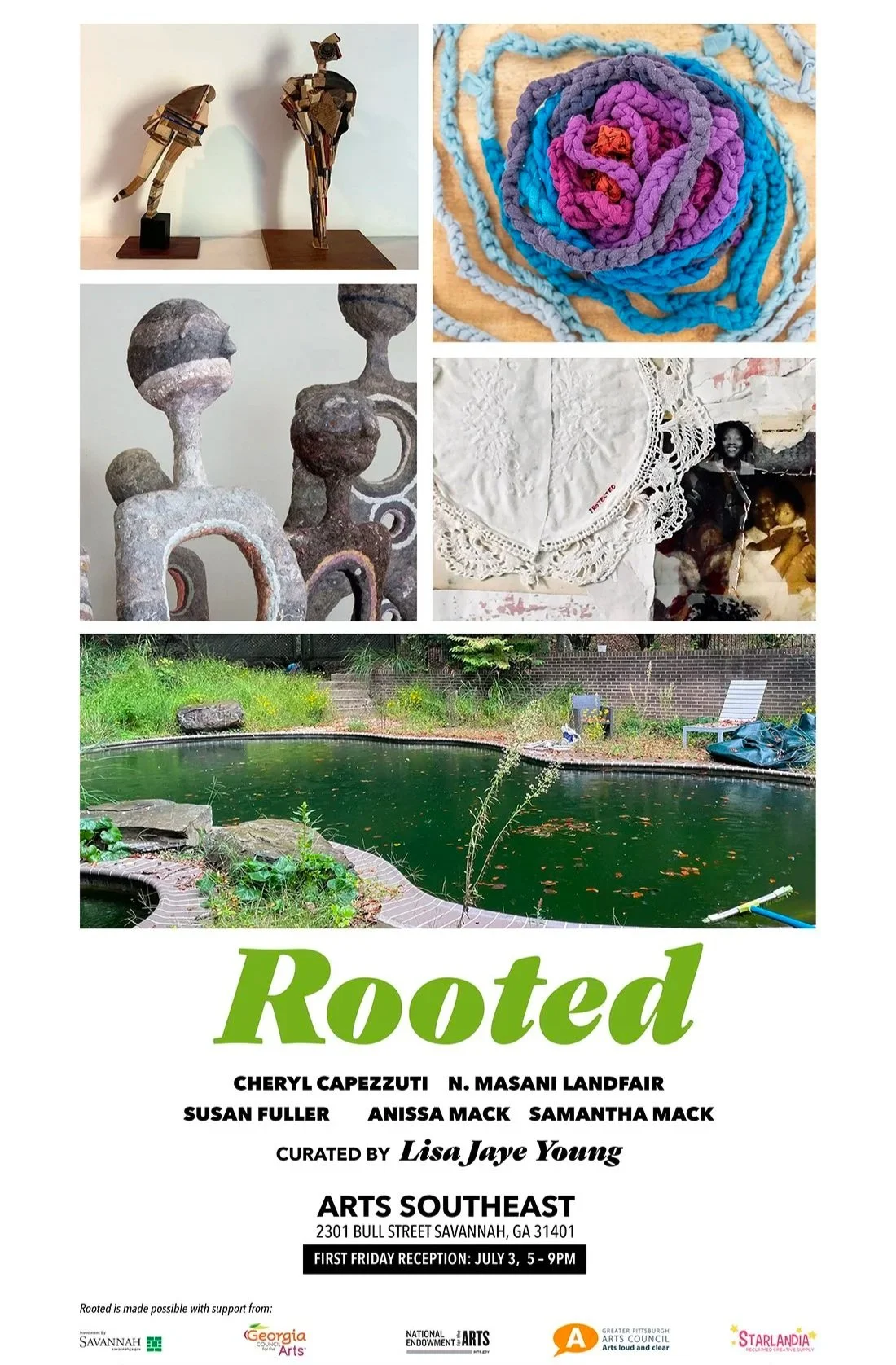
The Ellis Gallery at ARTS Southeast
July 3 - September 12, 2026
Opening Reception: Friday, July 3 from 5 - 9PM
In Conjunction with Starland First Fridays
with continuing receptions each First Friday through September 5, 2026
Curator Talk: Wednesday, September 9, 6:30PM (Doors at 6PM)
Curatorial Statement:
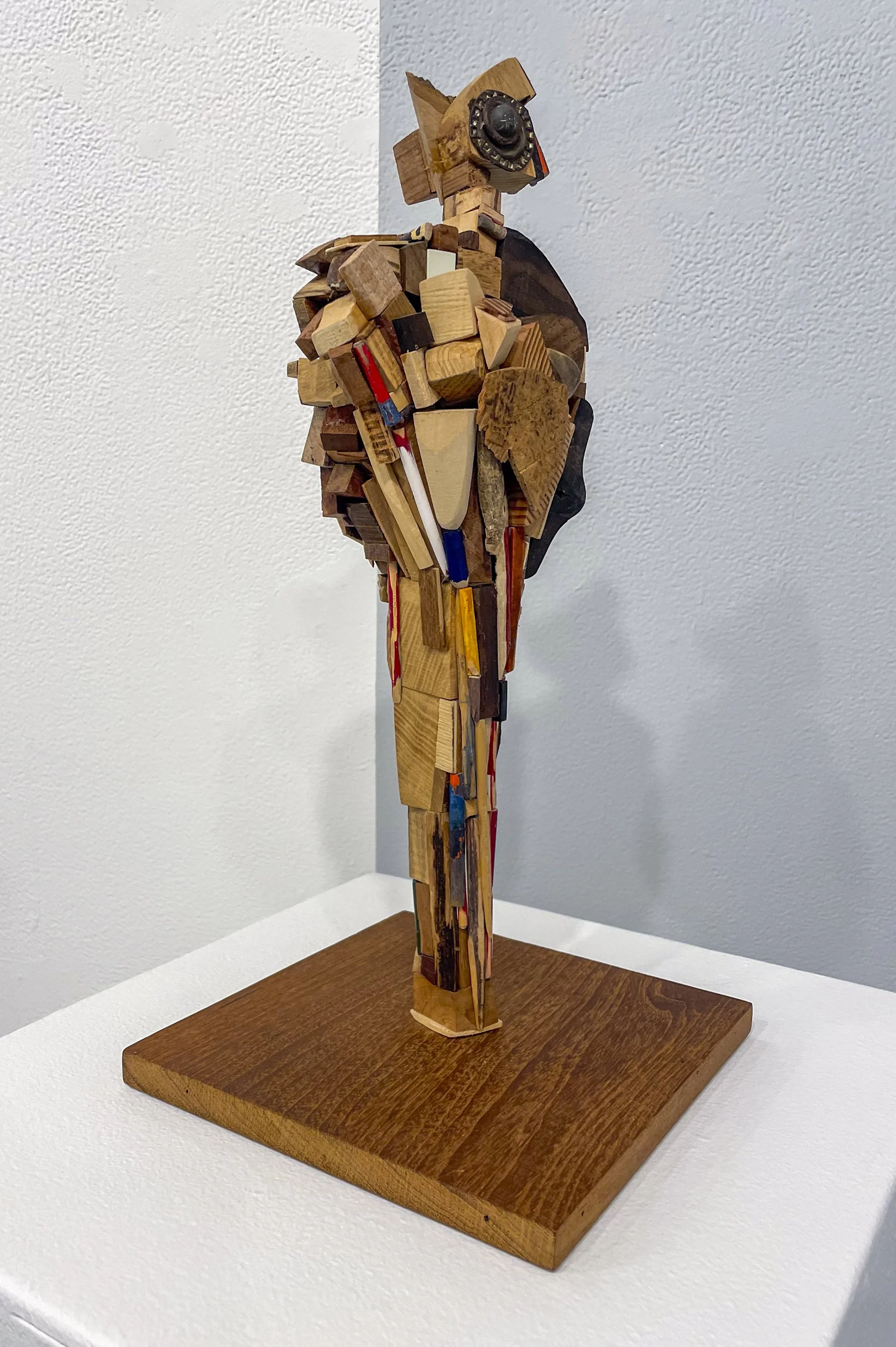
The kitchen table is often the place from which artistic consciousness emerges. Dinner table dynamics (or lack thereof), and the home with its textures, smells, objects, photographs, cast-offs, legacies, and detritus are central to burgeoning creative awareness. The history of art is full of artists who later in life realized that their passage from childhood to studio was determined by a singular (or repeated) family experience. As a child my aunt used to send us pastels, fabric scraps, and wooden offcuts, fragments from her own Bay Area studio that ignited kitchen table creative energies, transforming the refrigerator into the gallery space and the cousins into working artists keeping busy before the meal. In art history, the family and the home are often relegated to footnotes, outshined by conceptual or explicatory statements about socio-political context, process or feeling. The five artists presented in Rooted: Cheryl Capezzuti, Susan Fuller, N. Masani Landfair, Anissa Mack, and Samantha Mack diverge in their unrelated variation: familial objects, photo-based collage, the legacies of leftover materials, domestic spaces as loaded with memory or as guiding a freshly considered skill or interpretation. A familial or maternal inscription is embroidered like an under-stitch lending structure, form, or content to the practices on view.
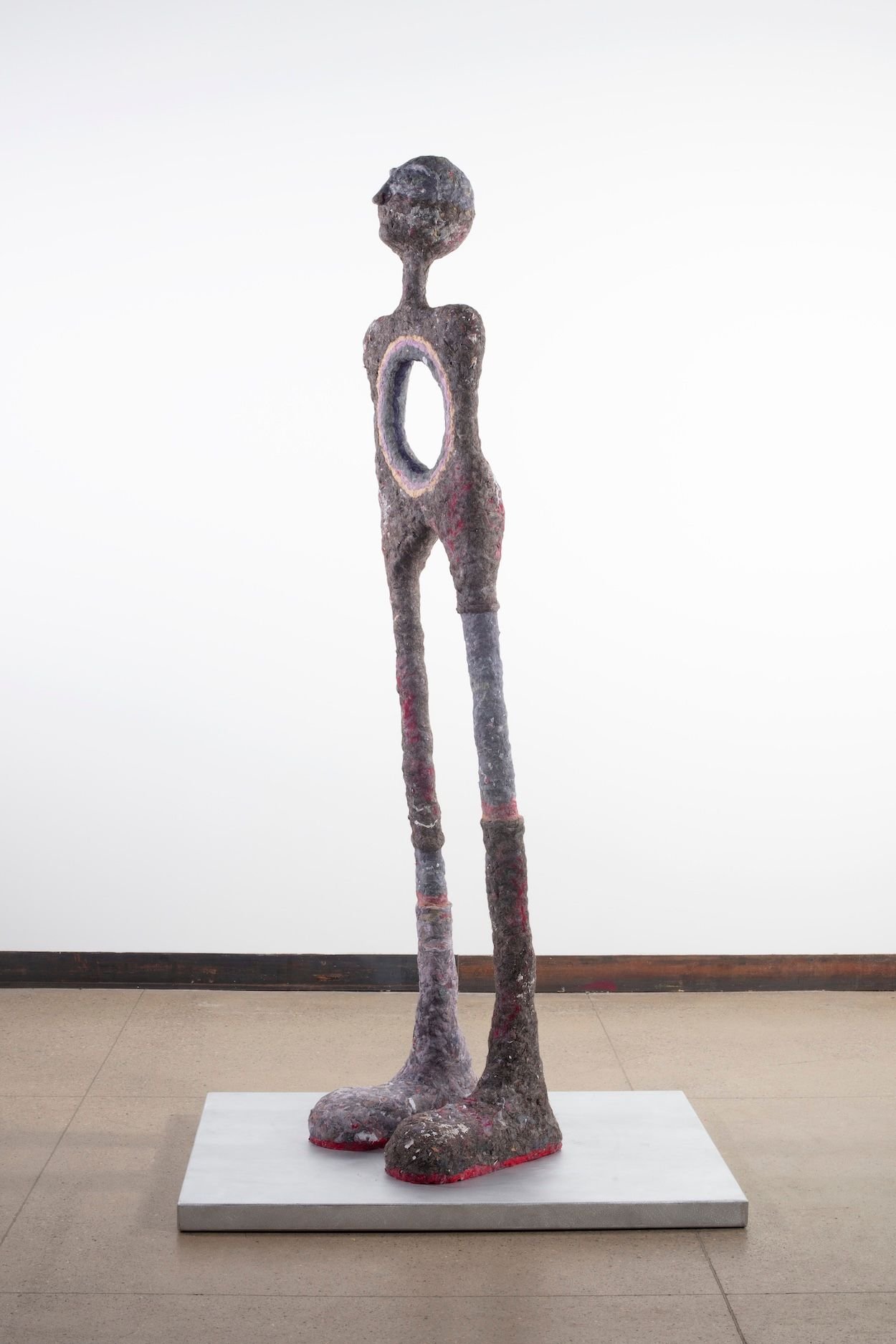
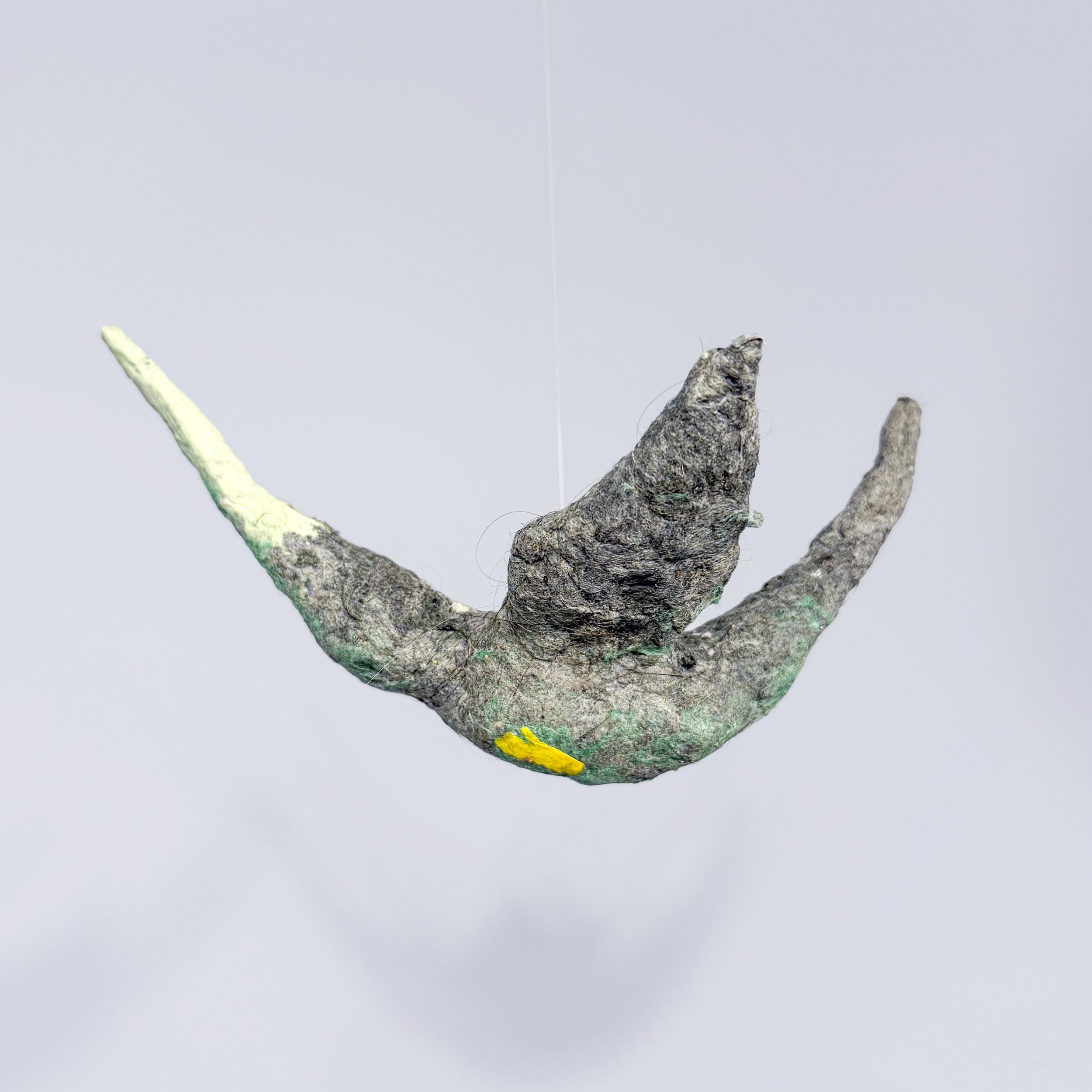
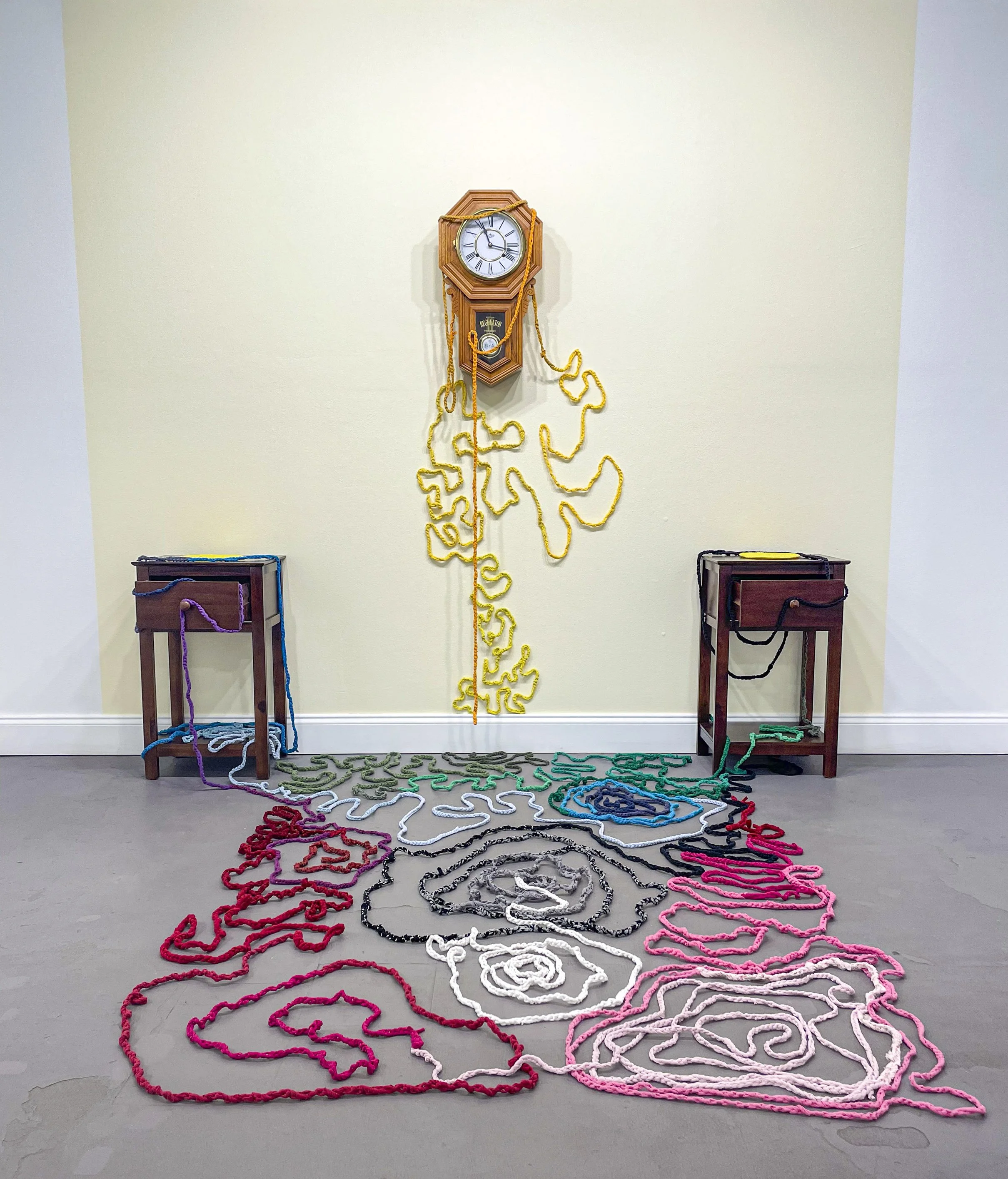
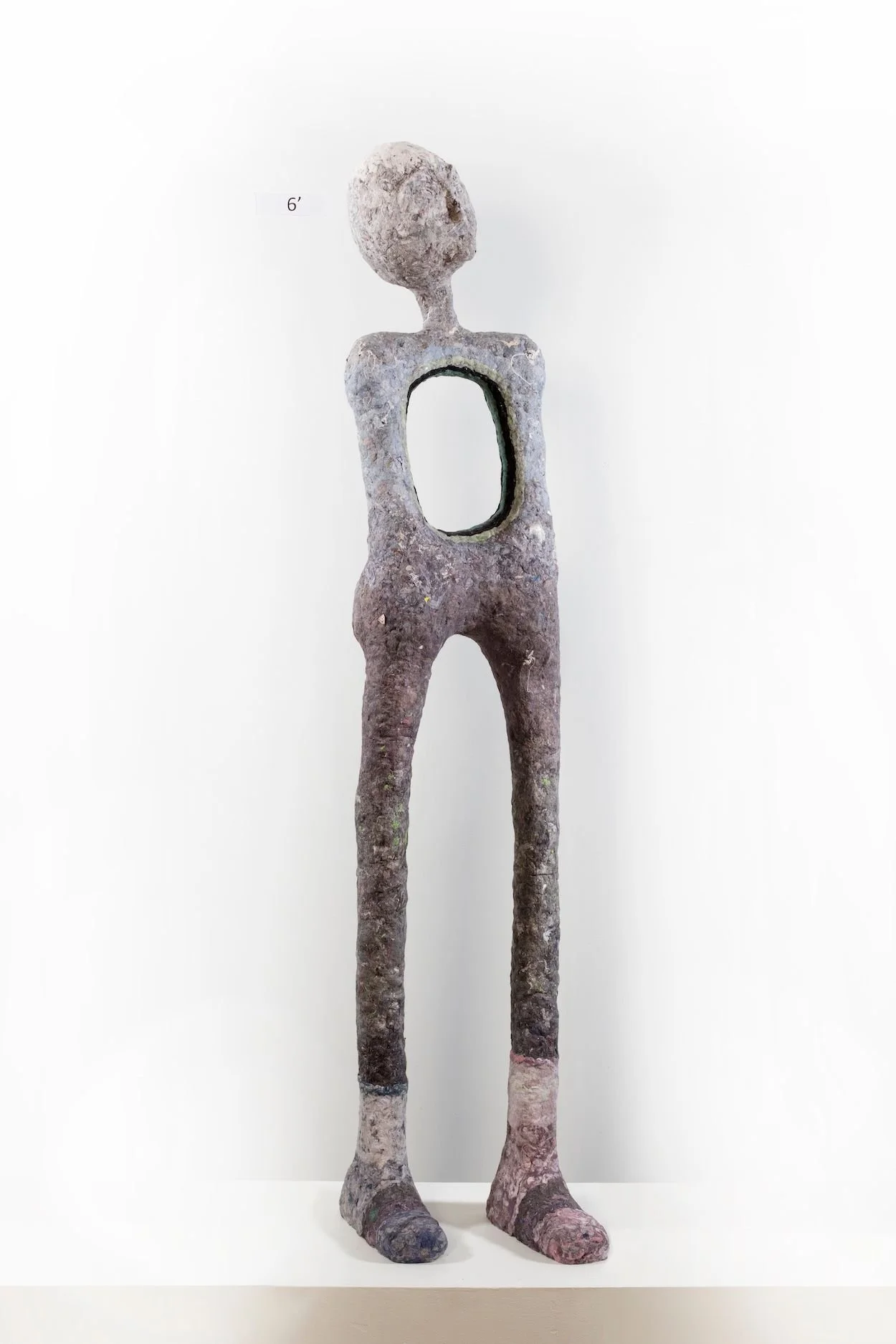
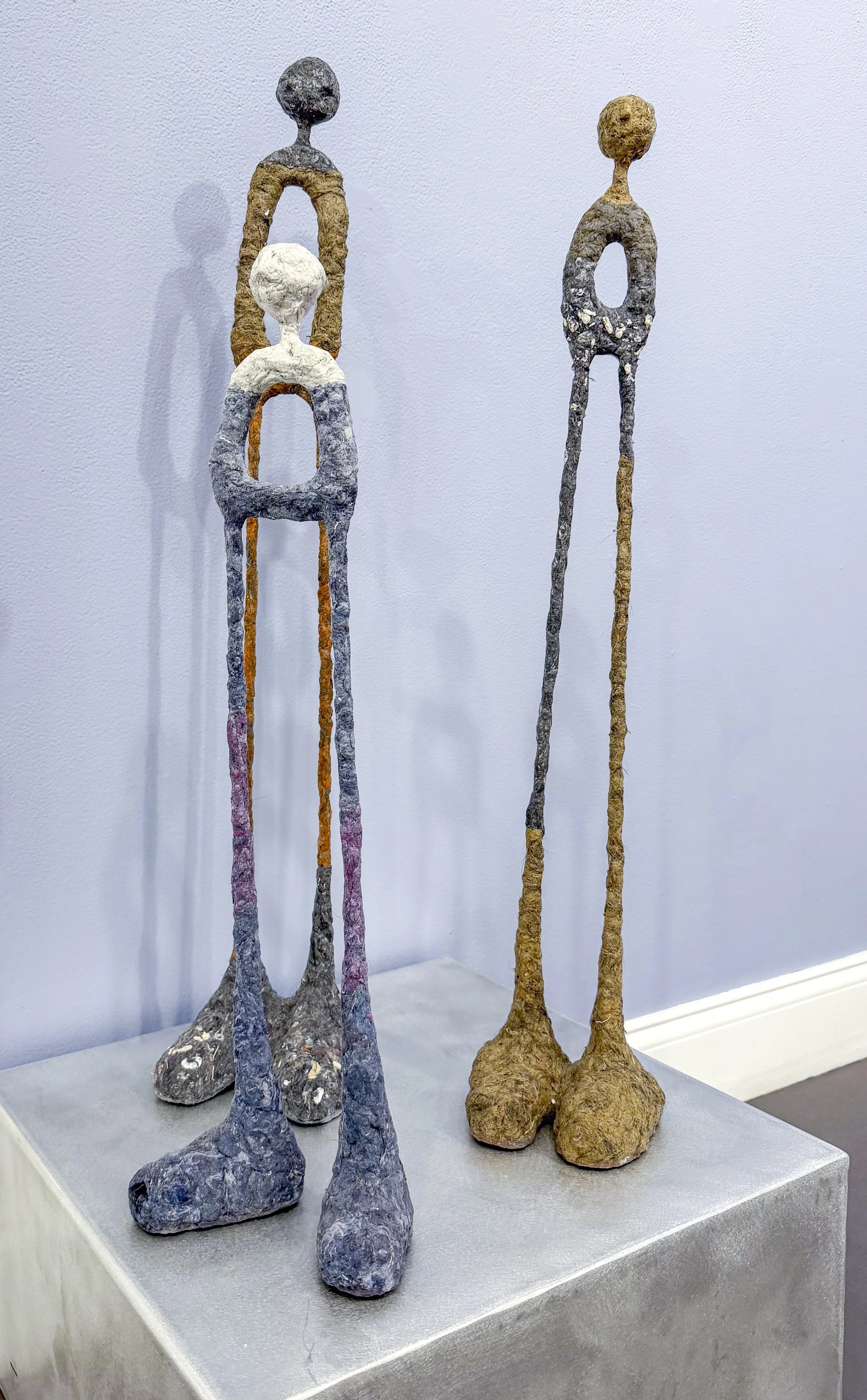
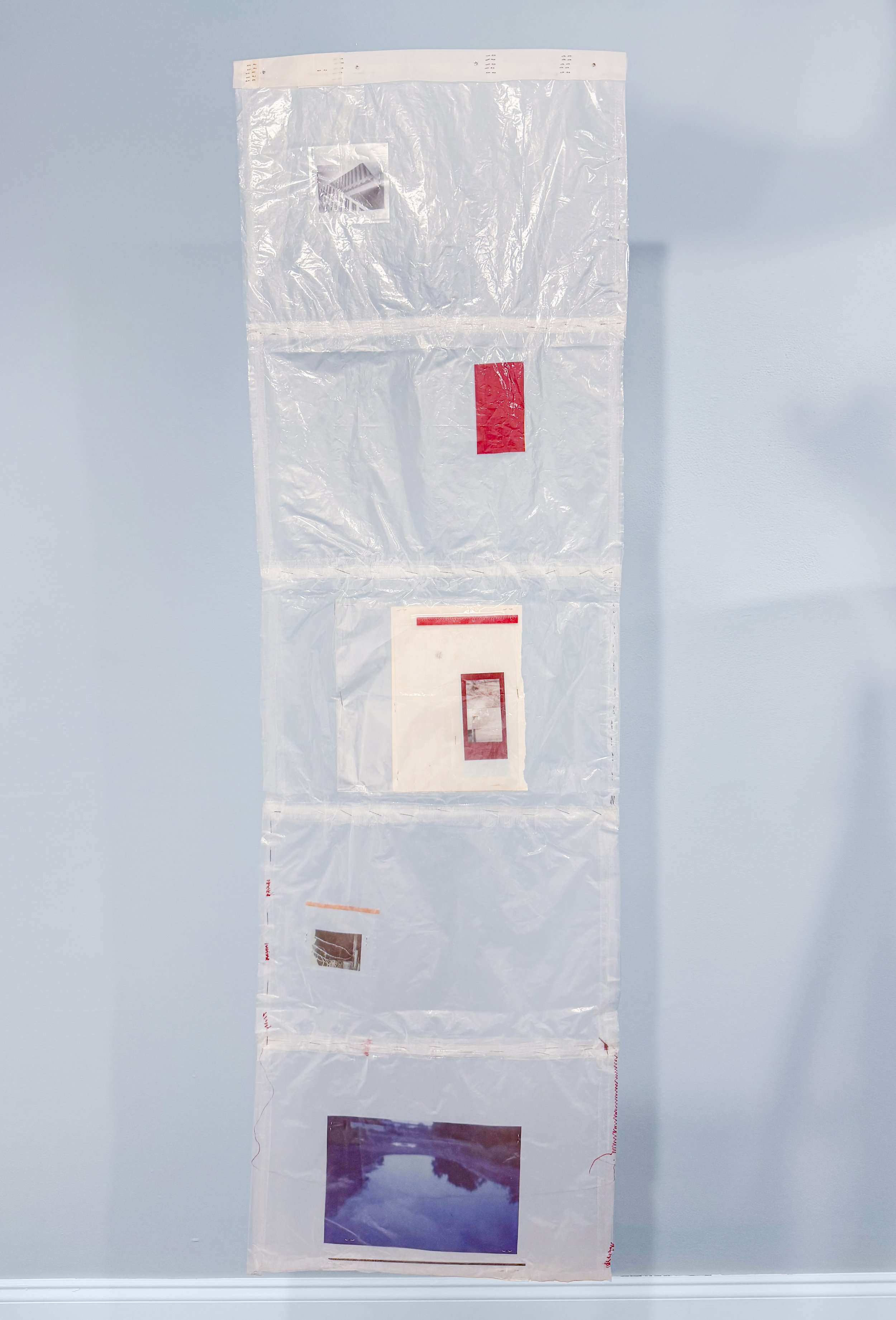
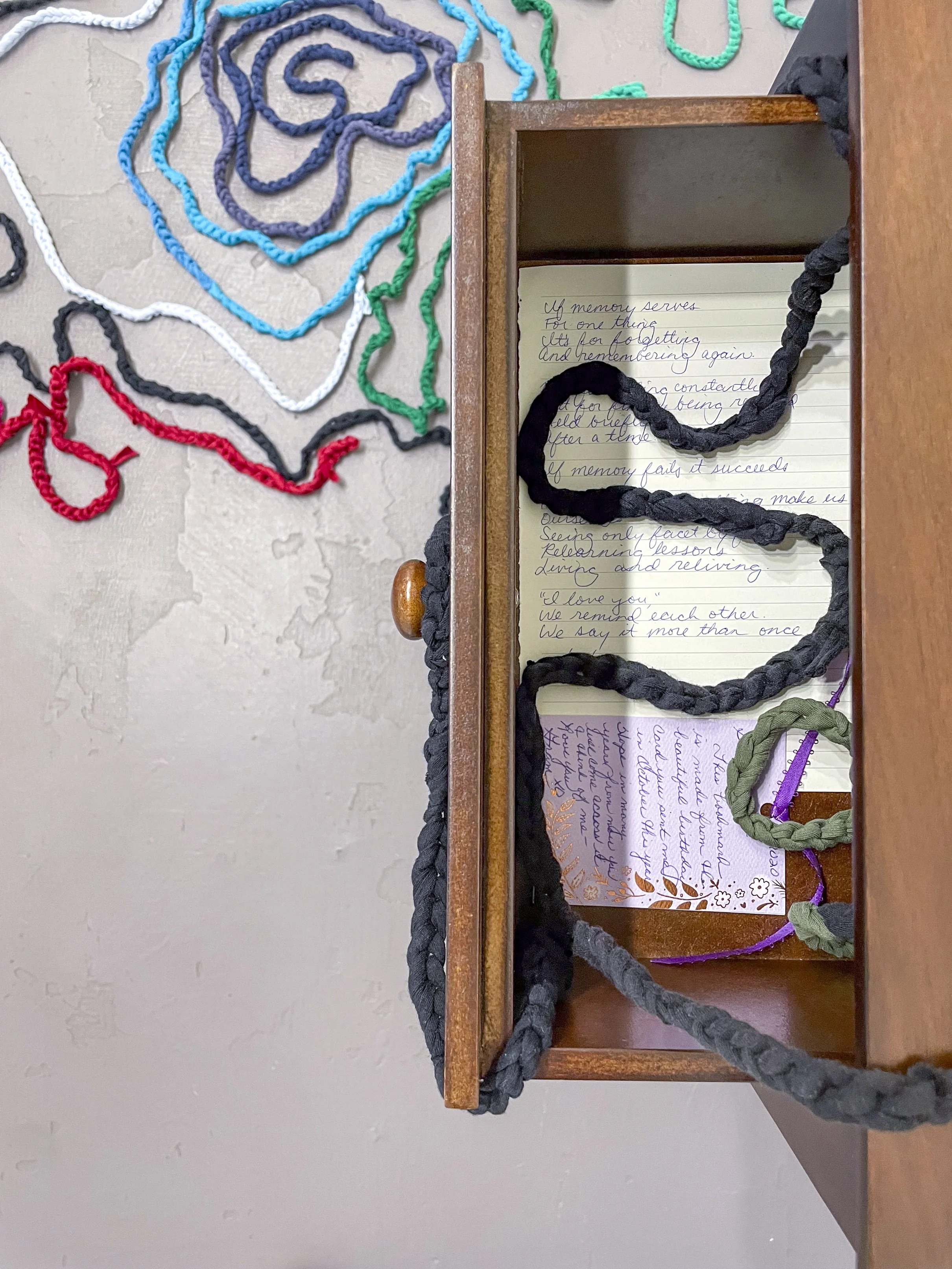
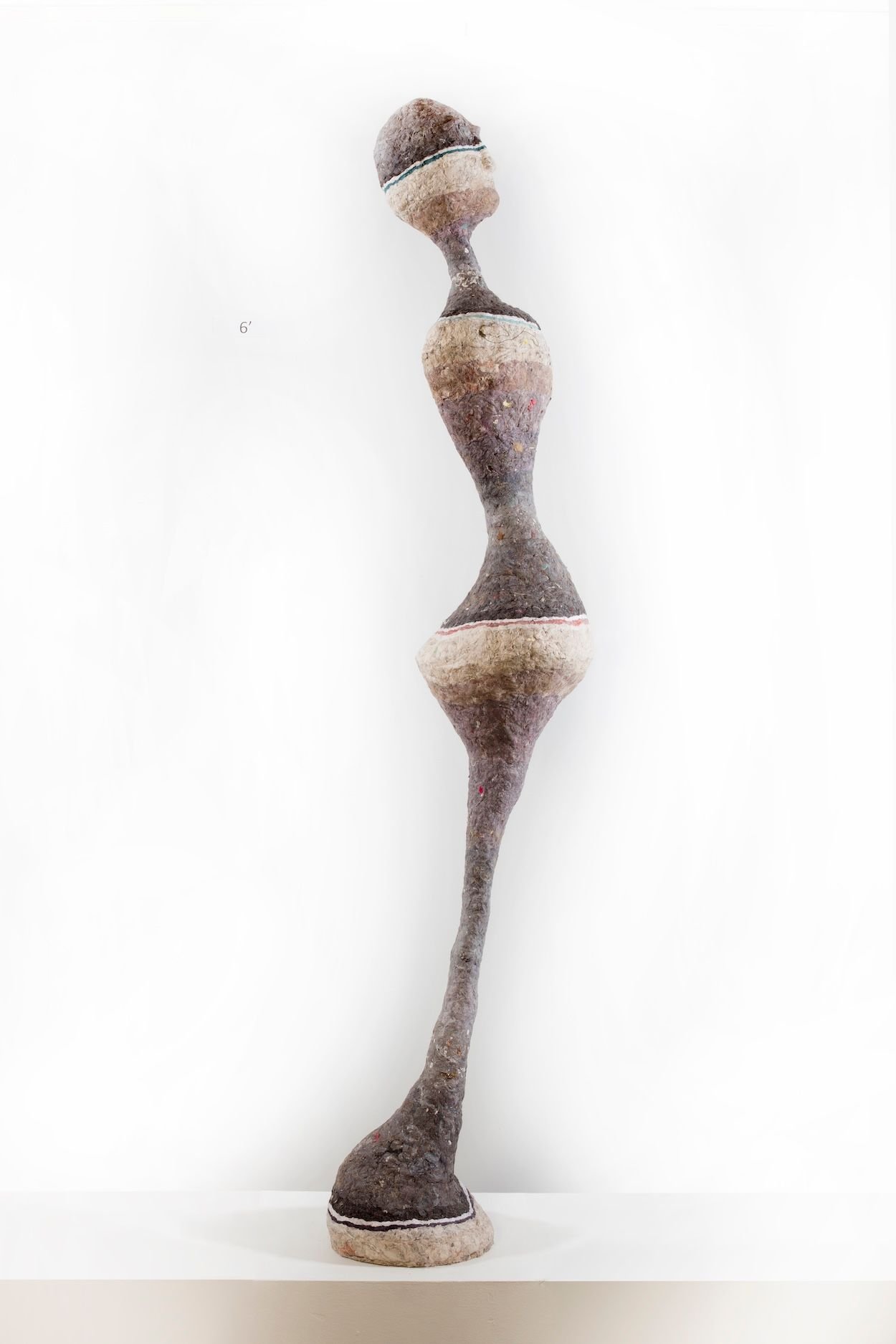
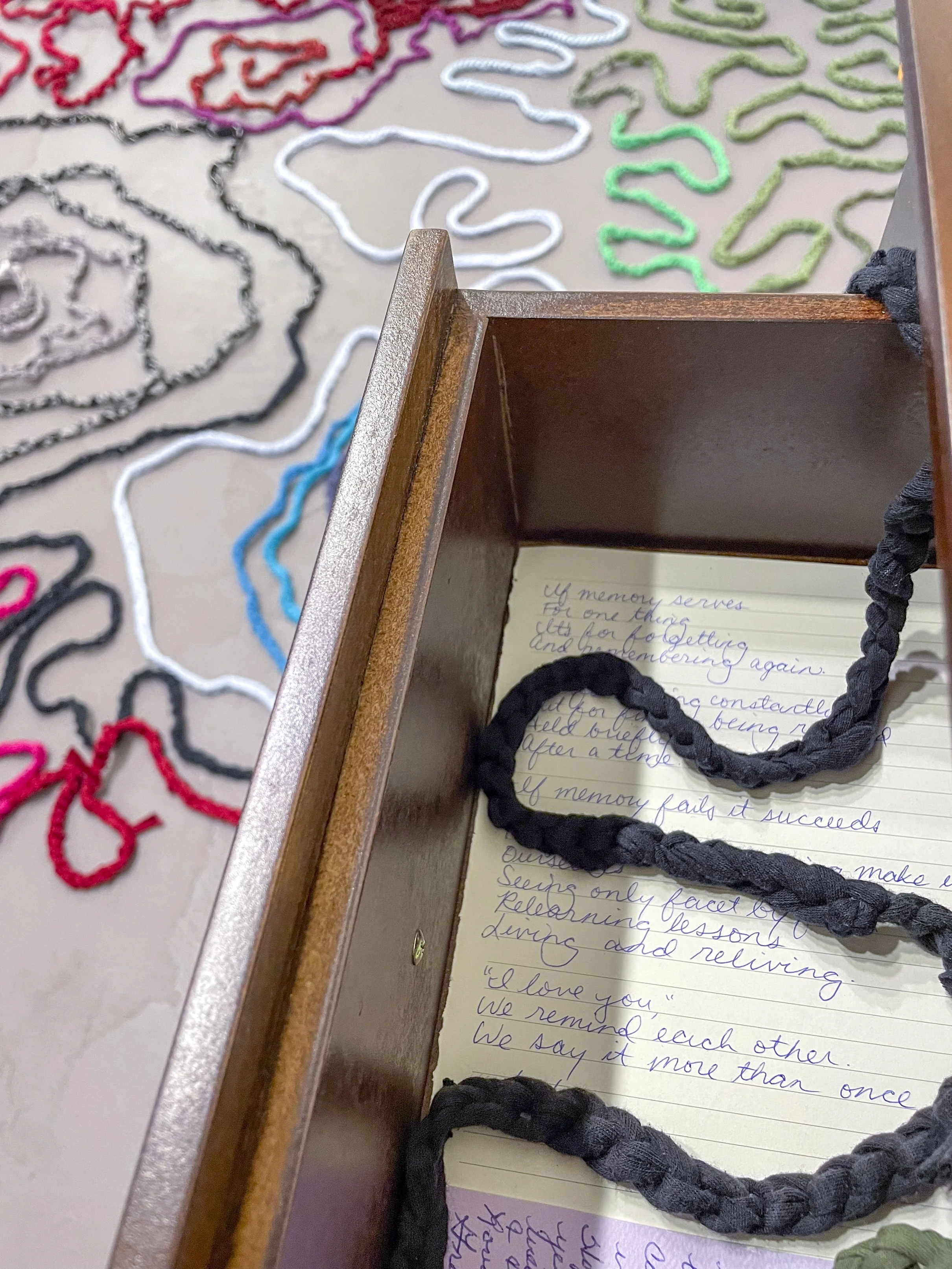
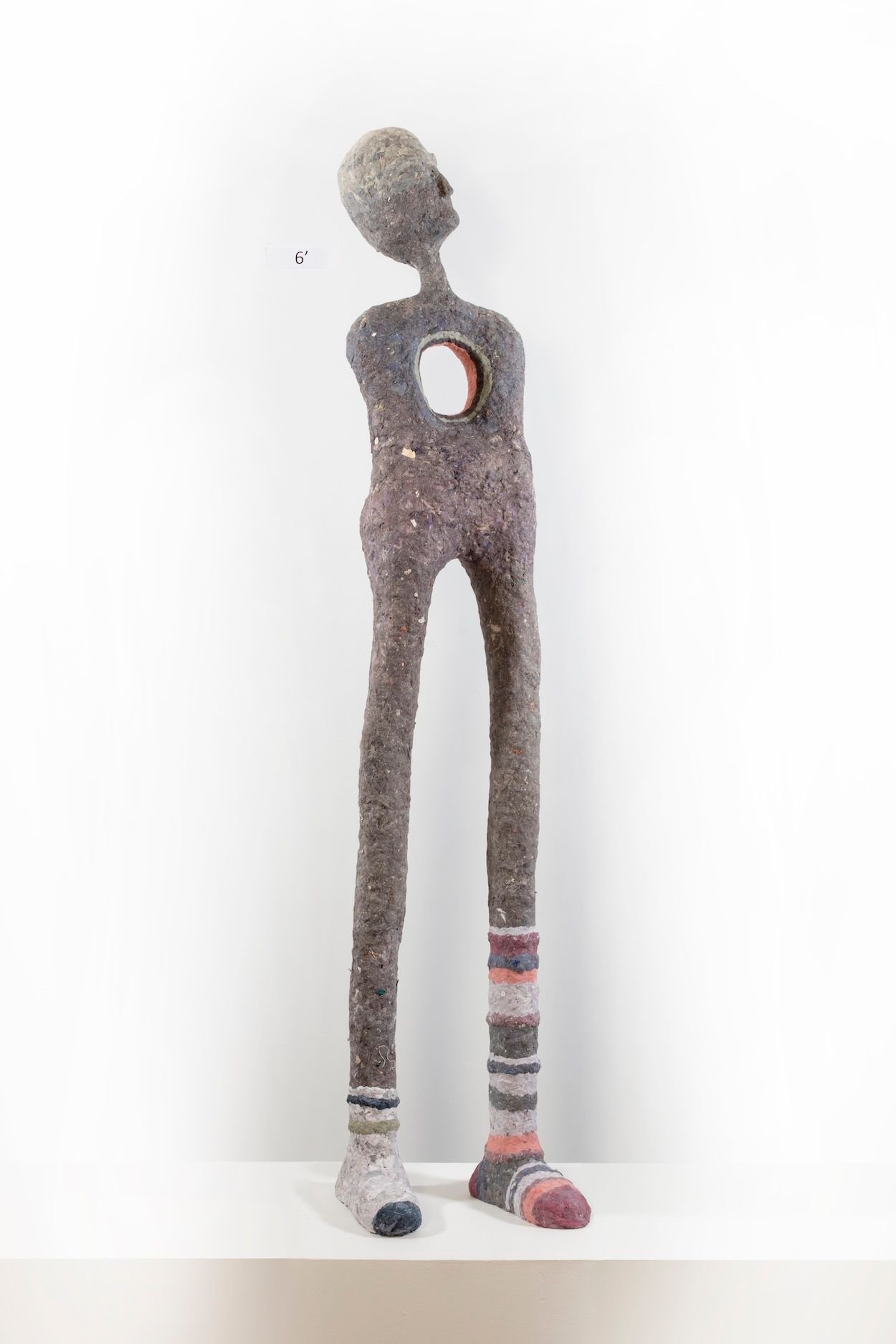
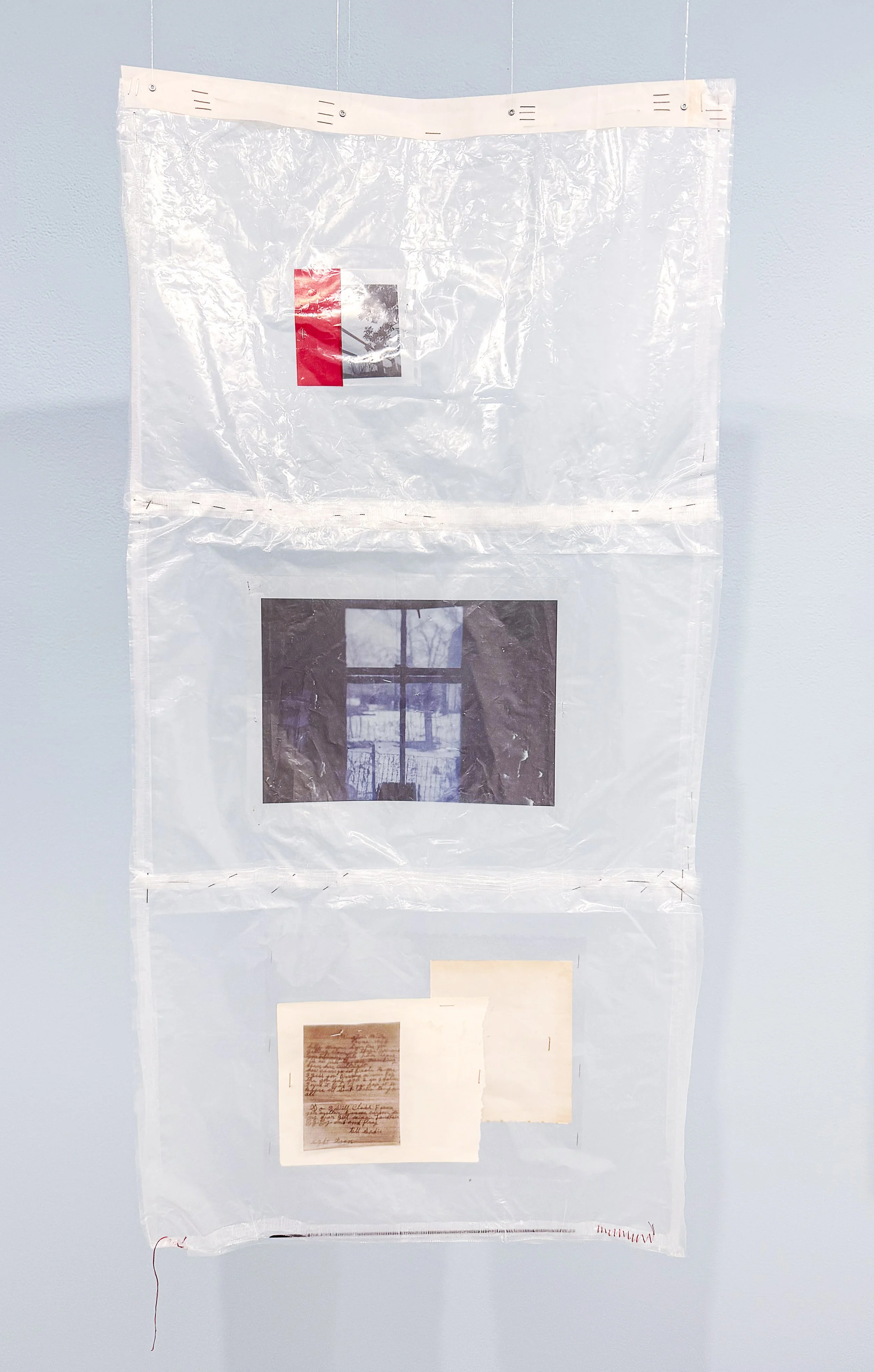
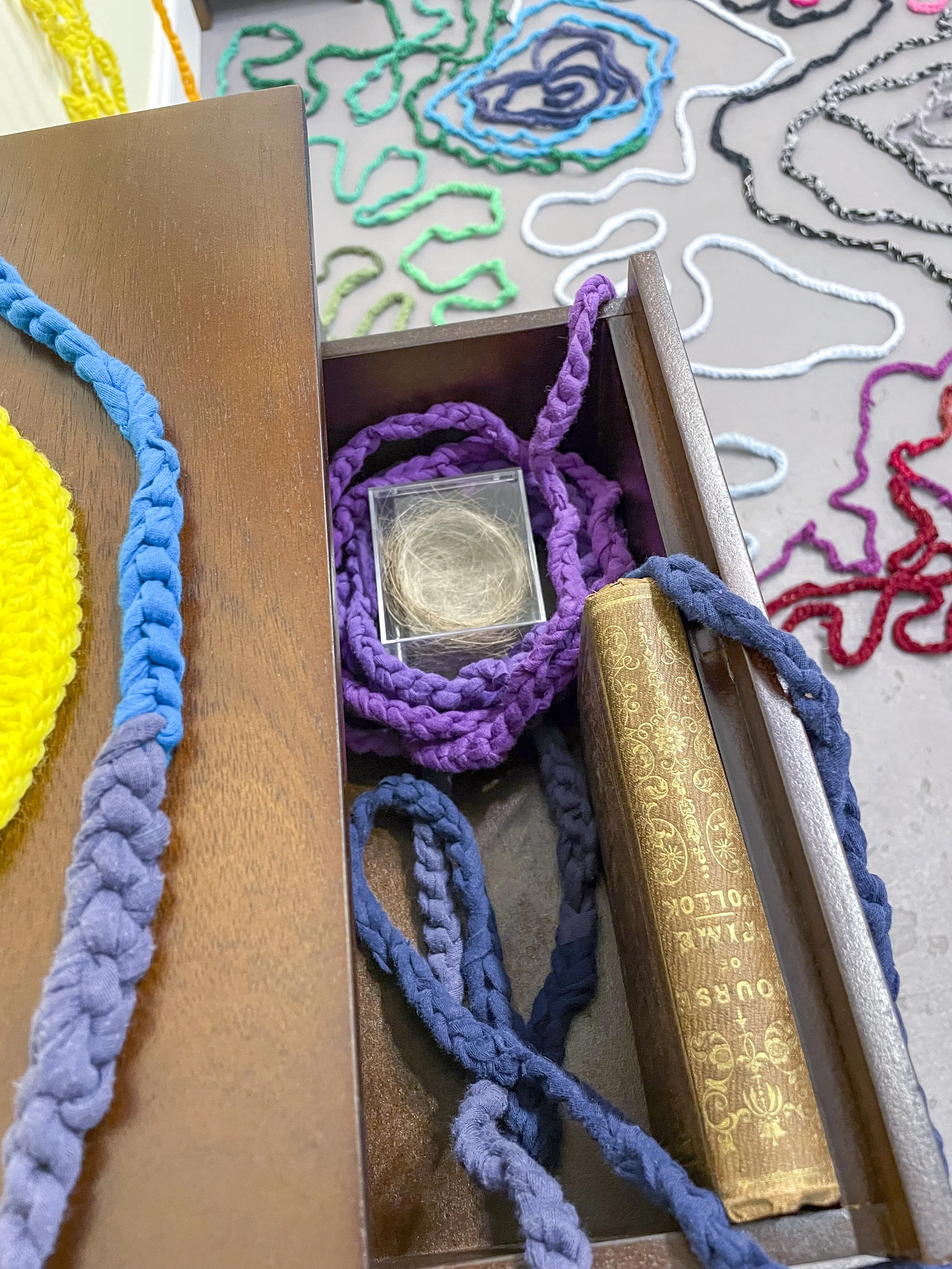
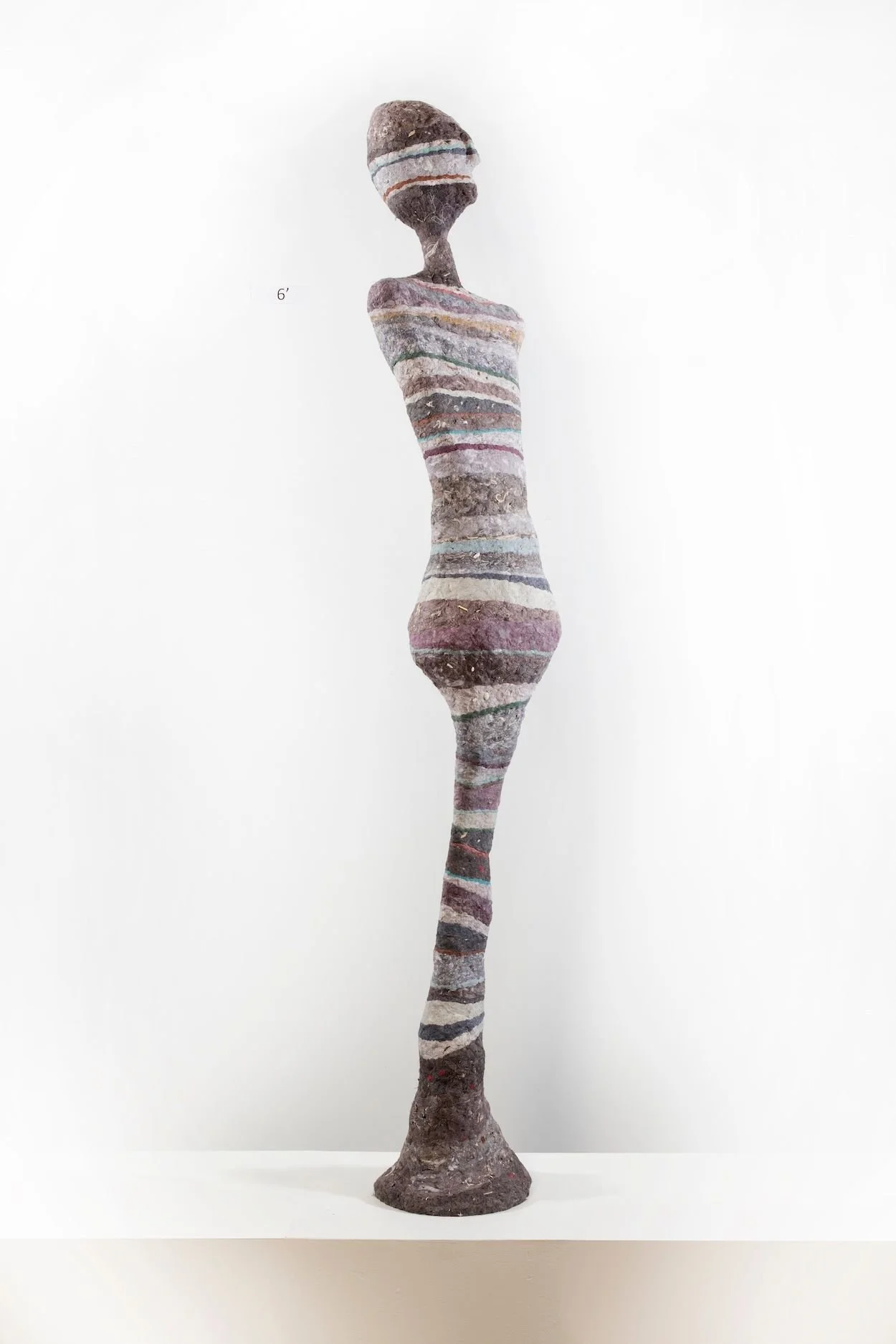
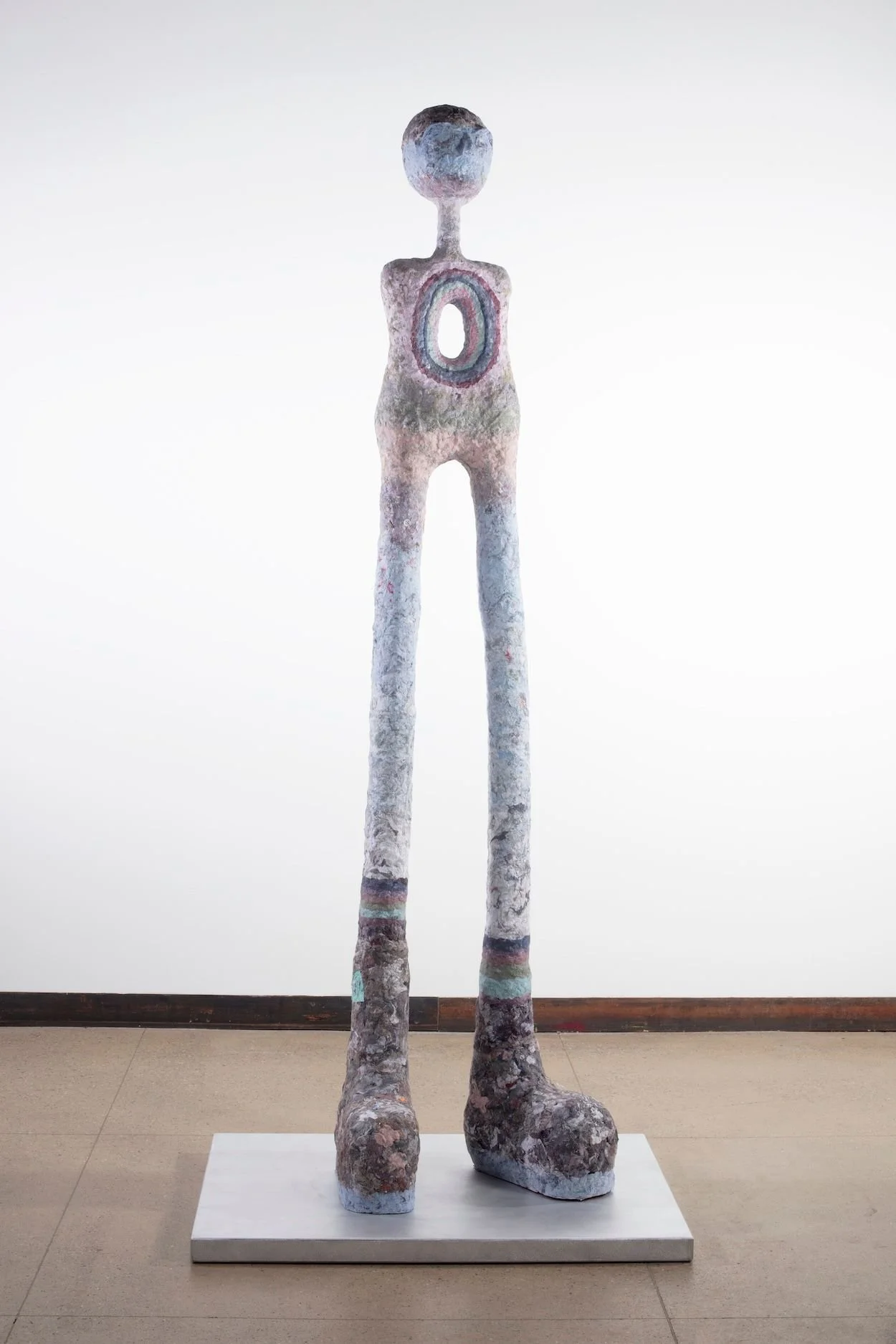
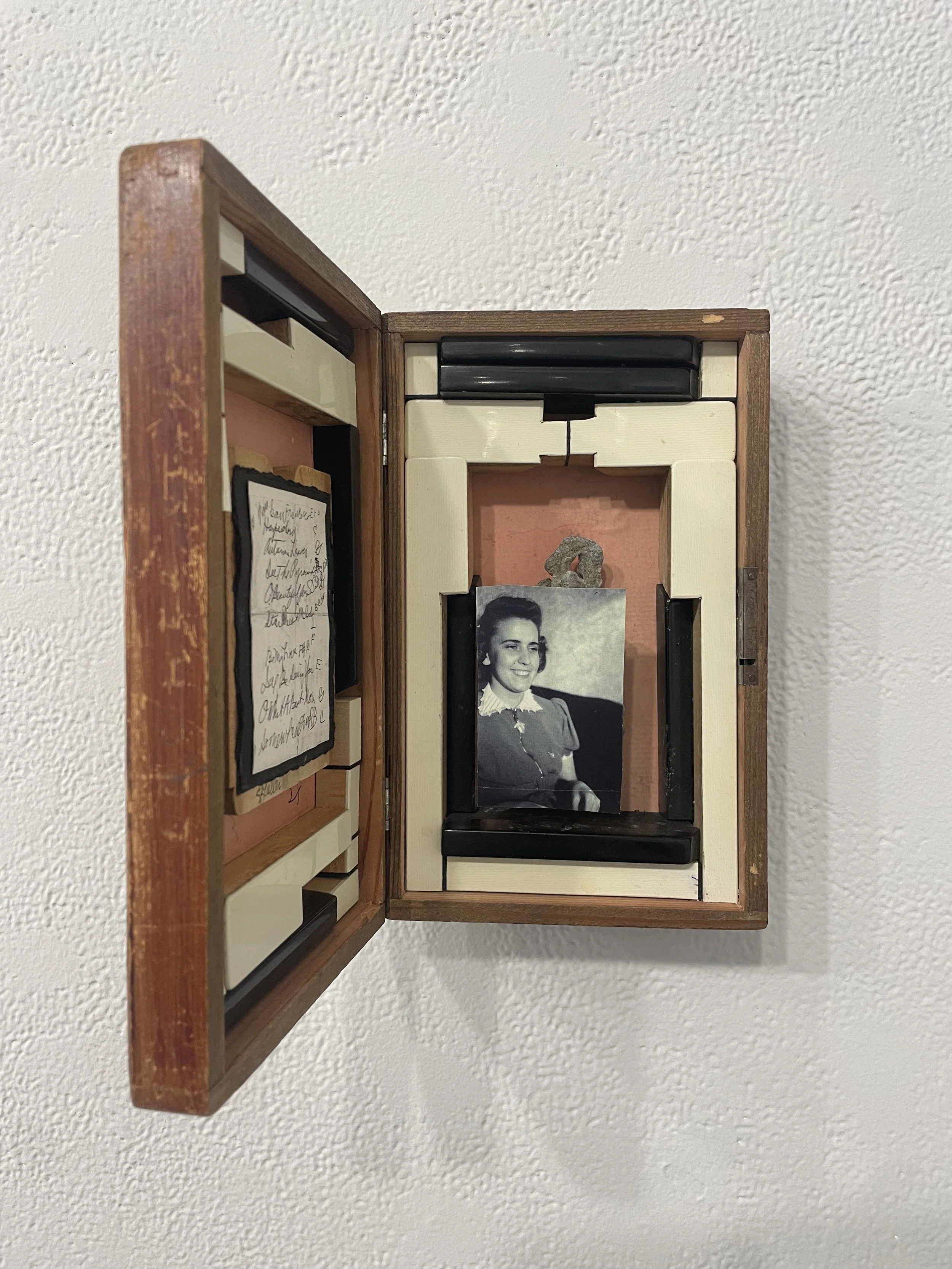
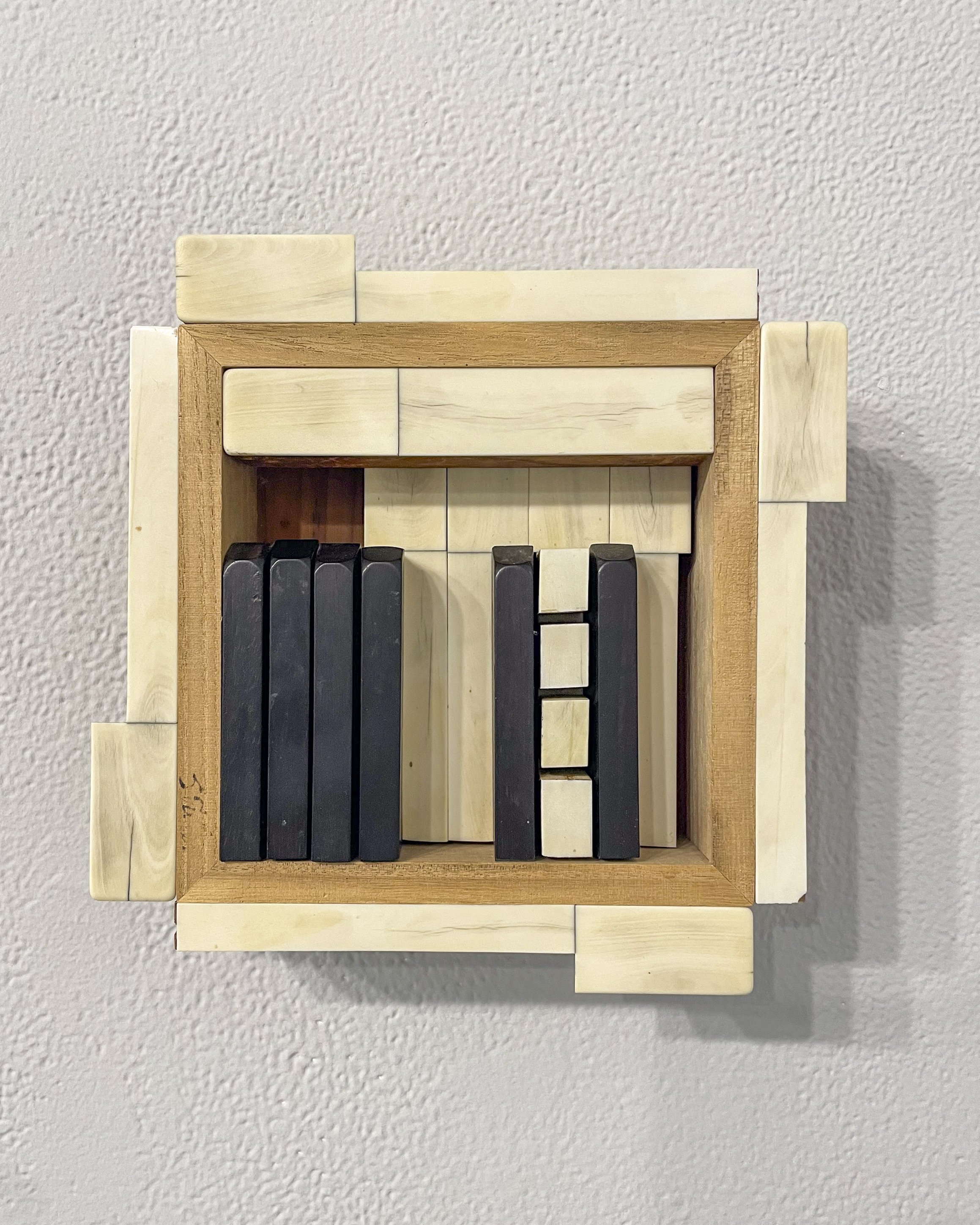
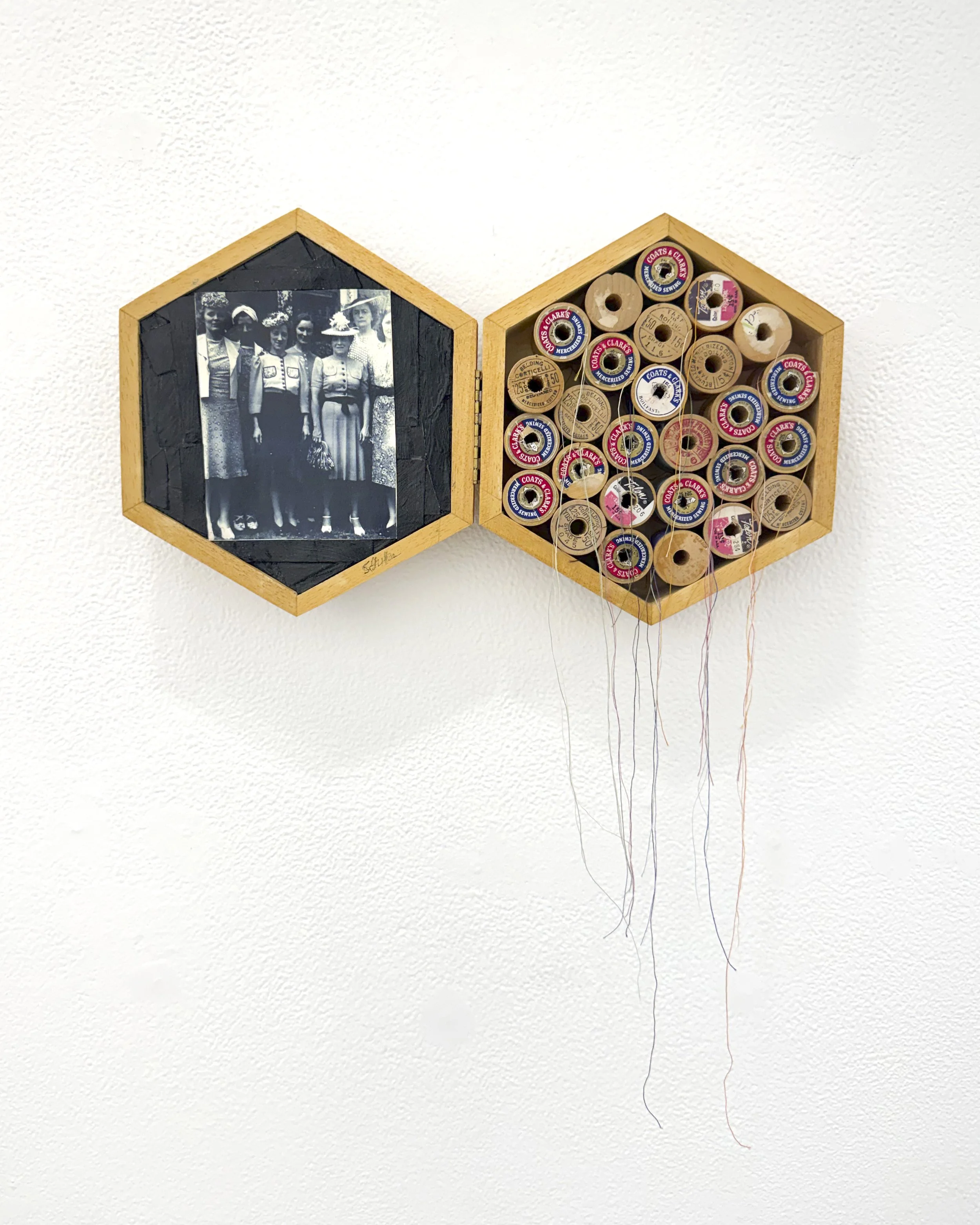
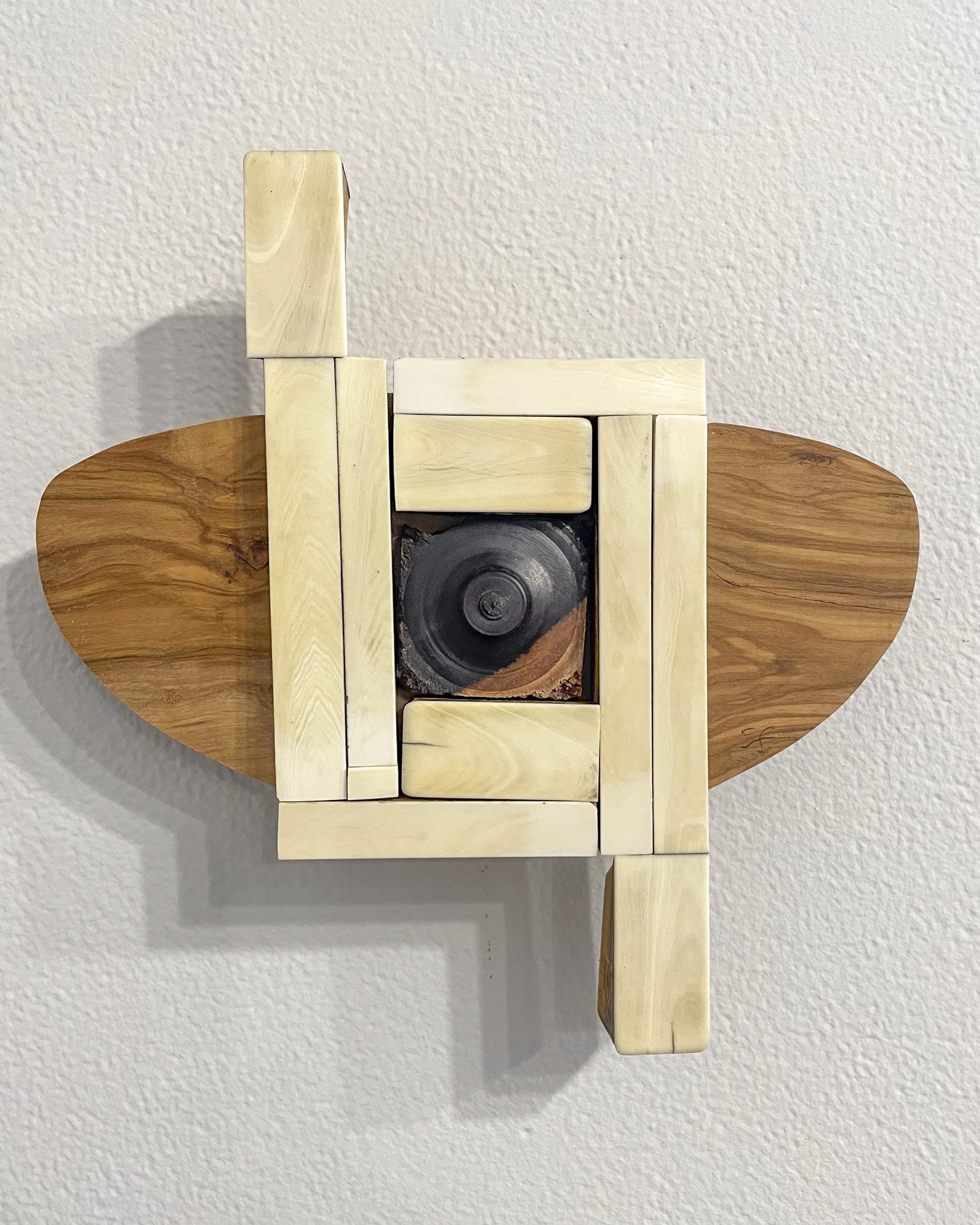
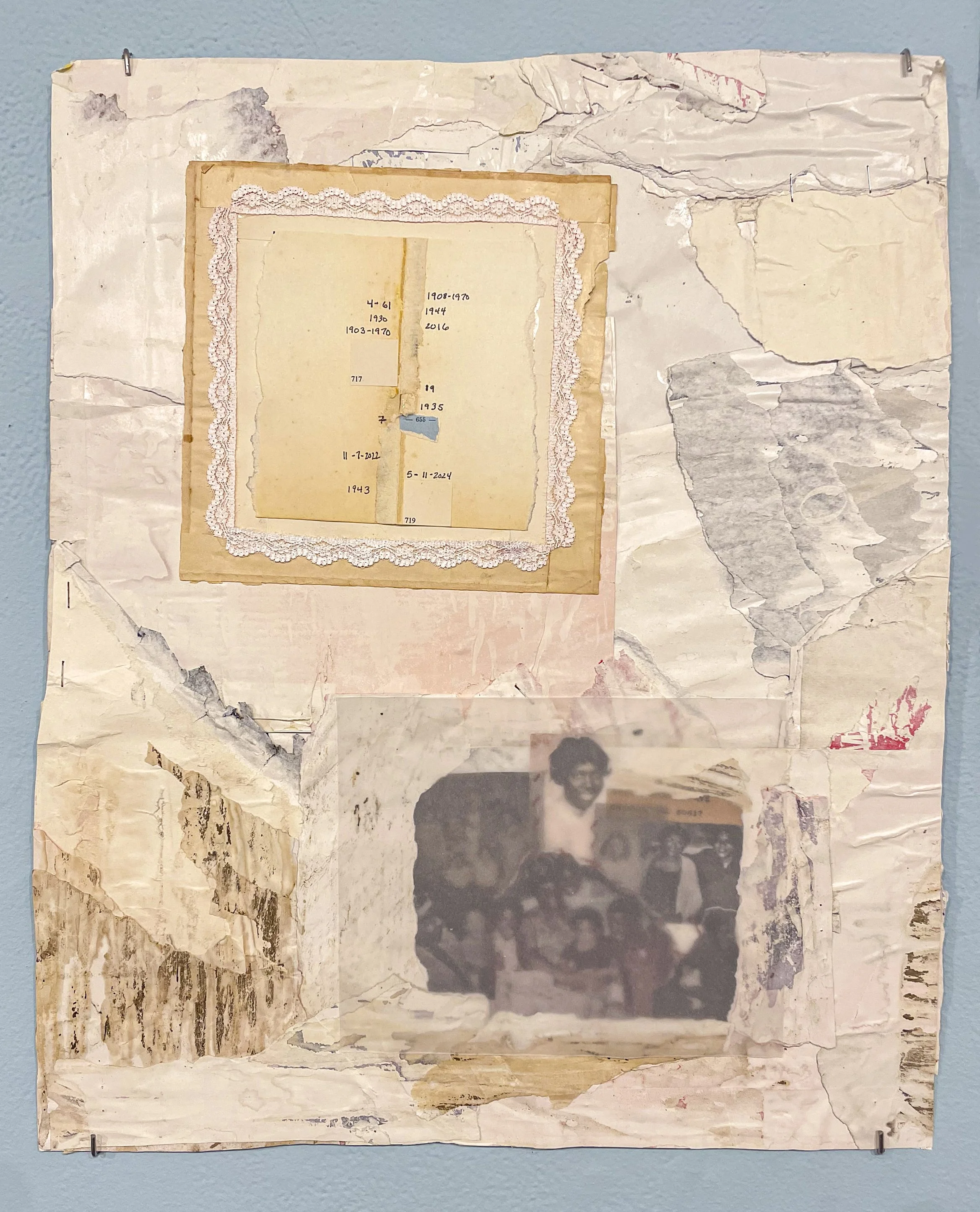
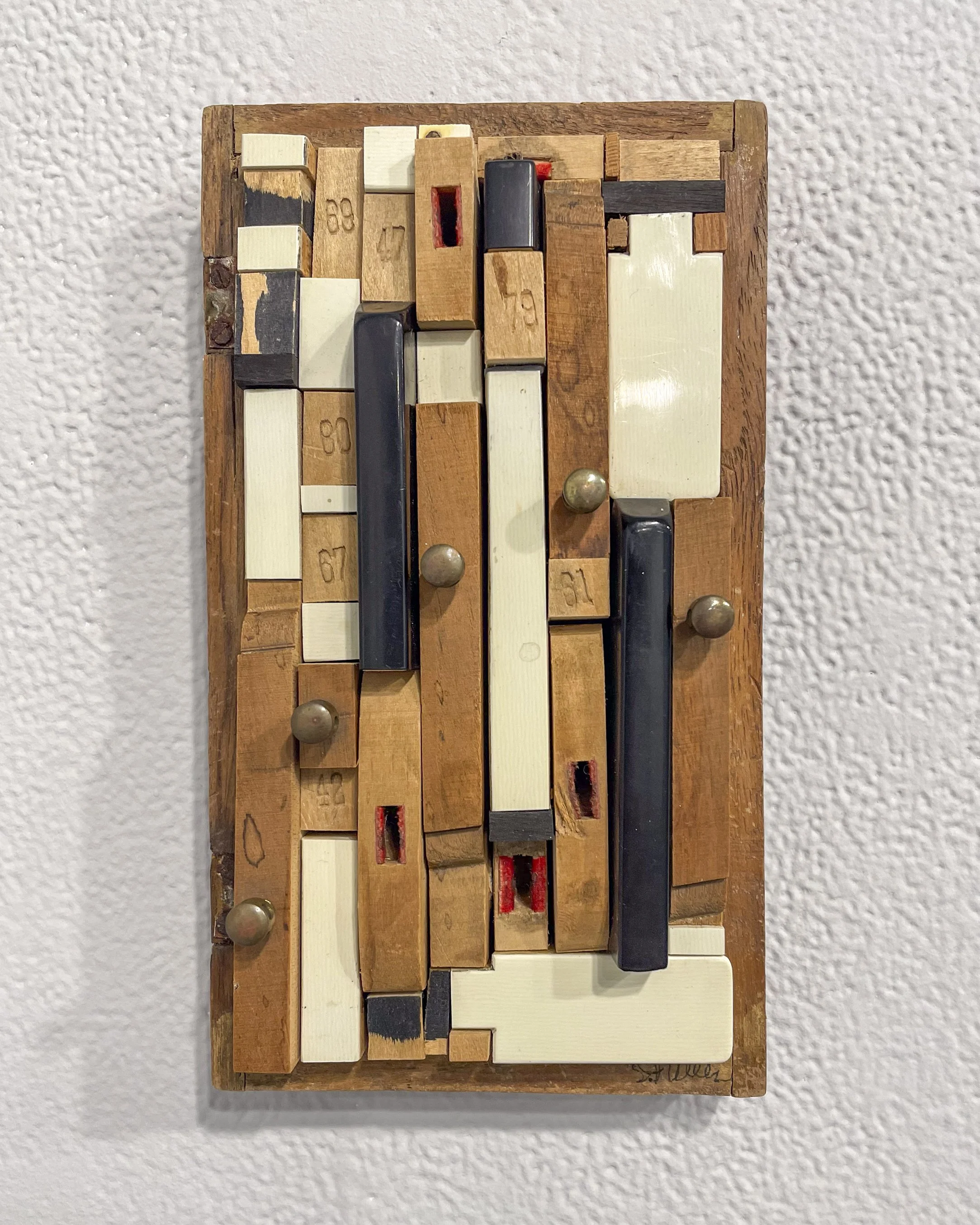
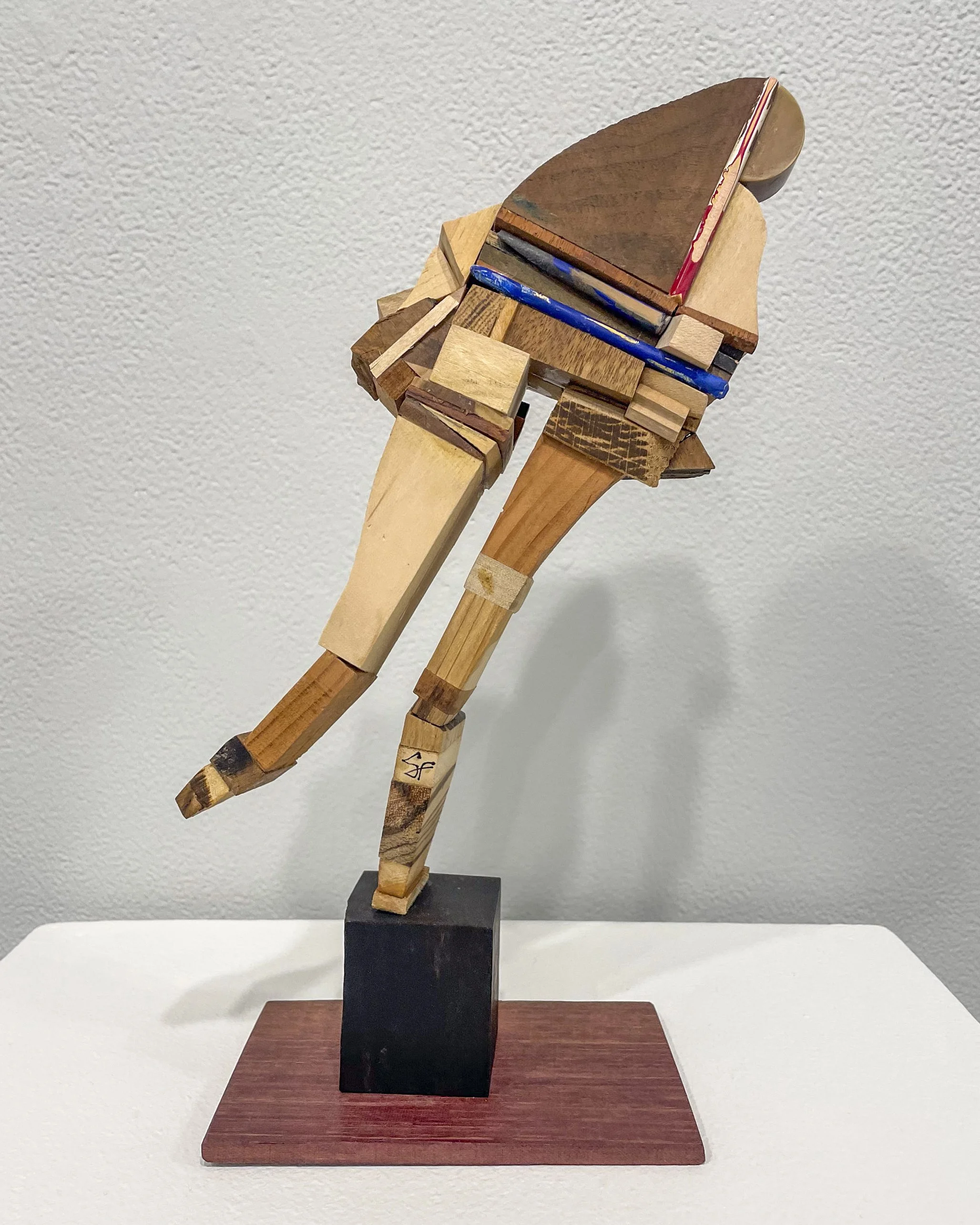
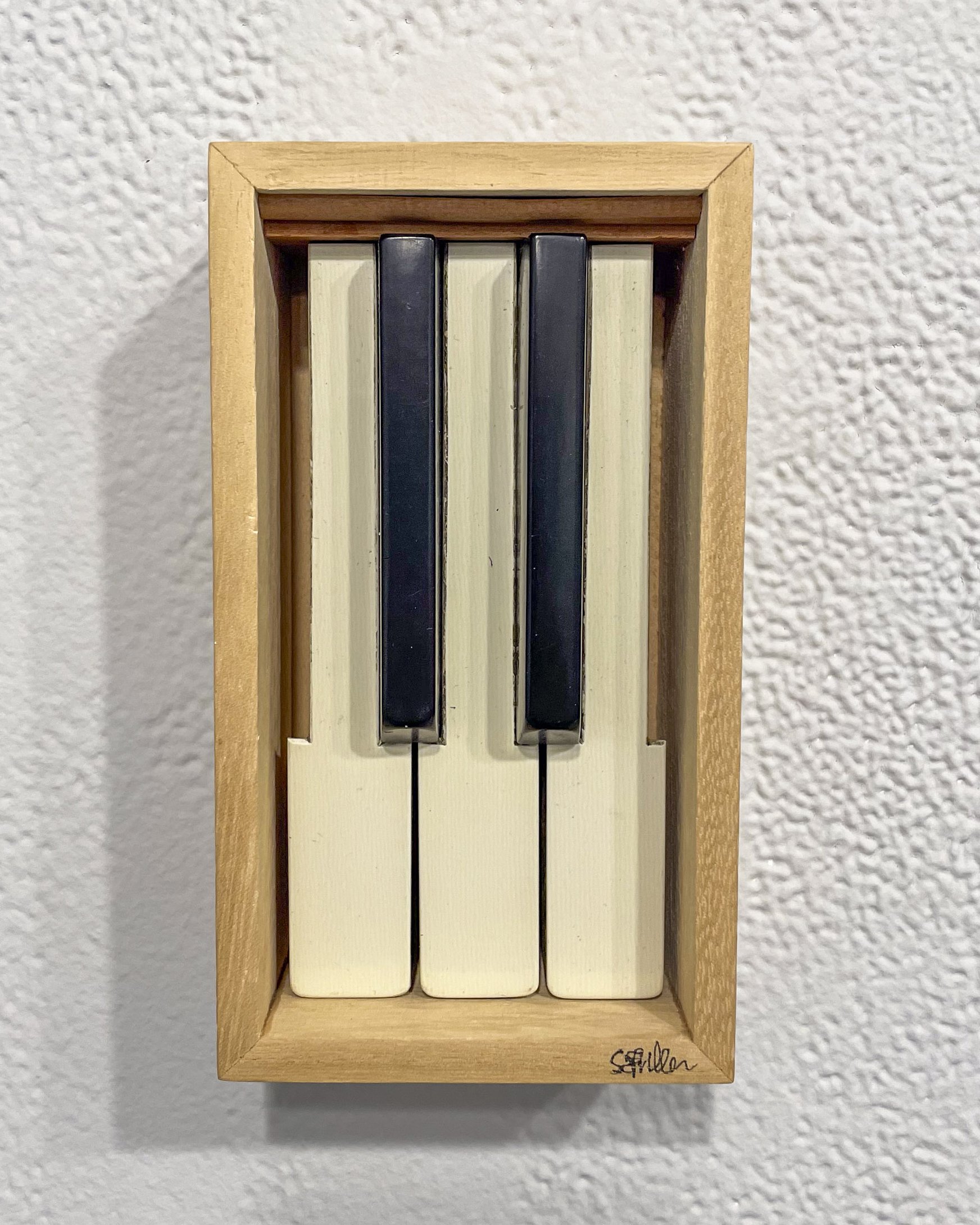
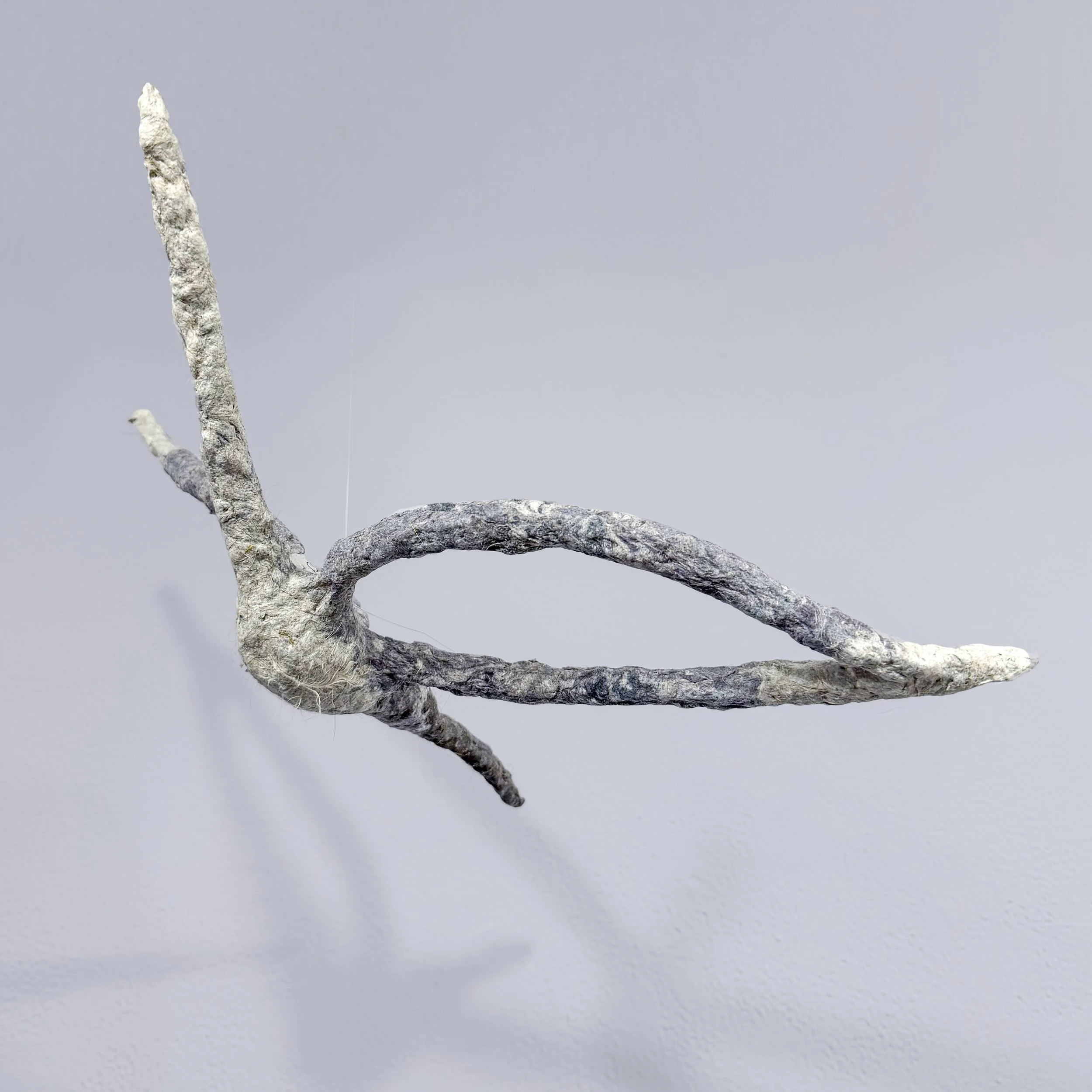
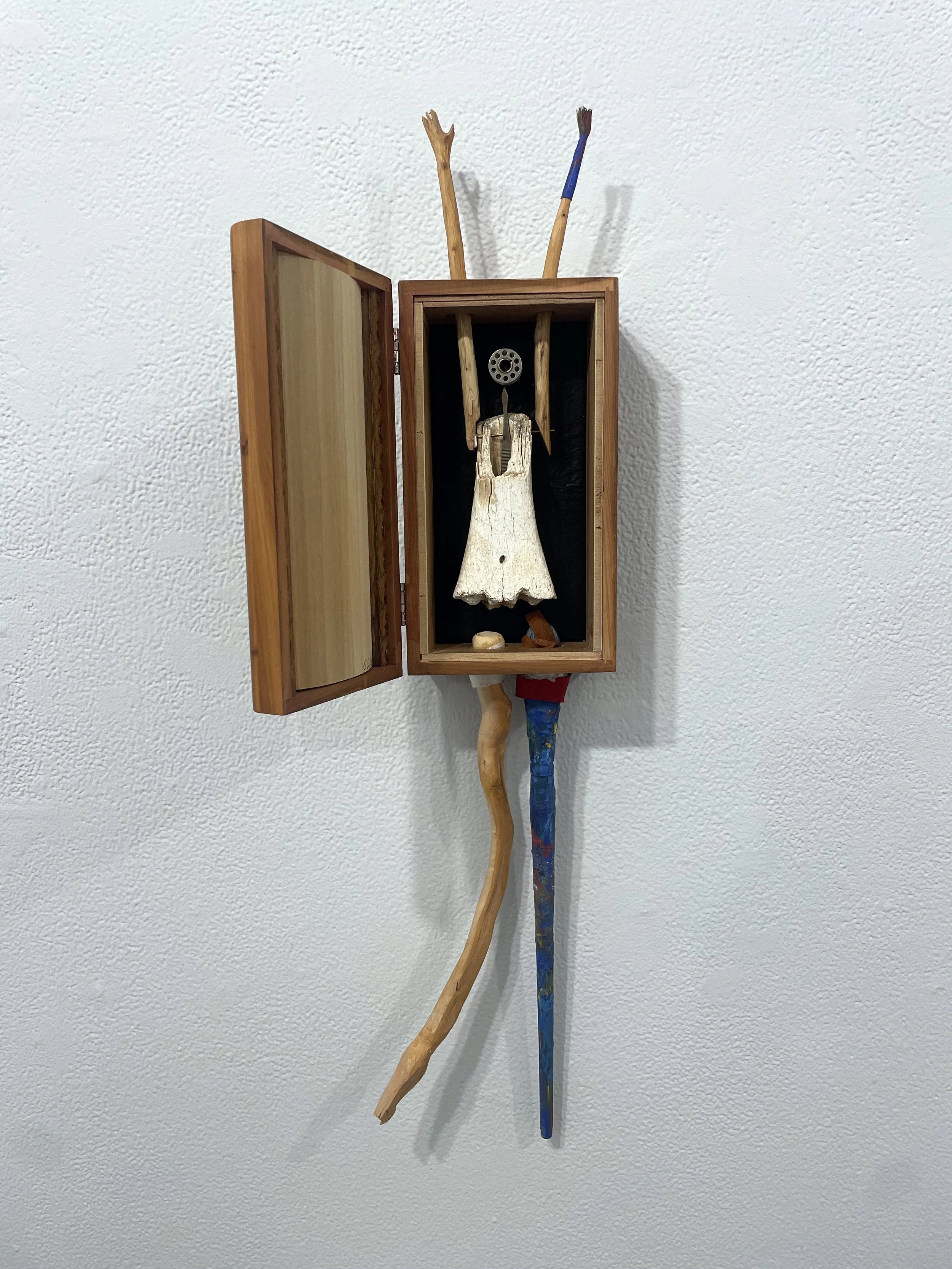
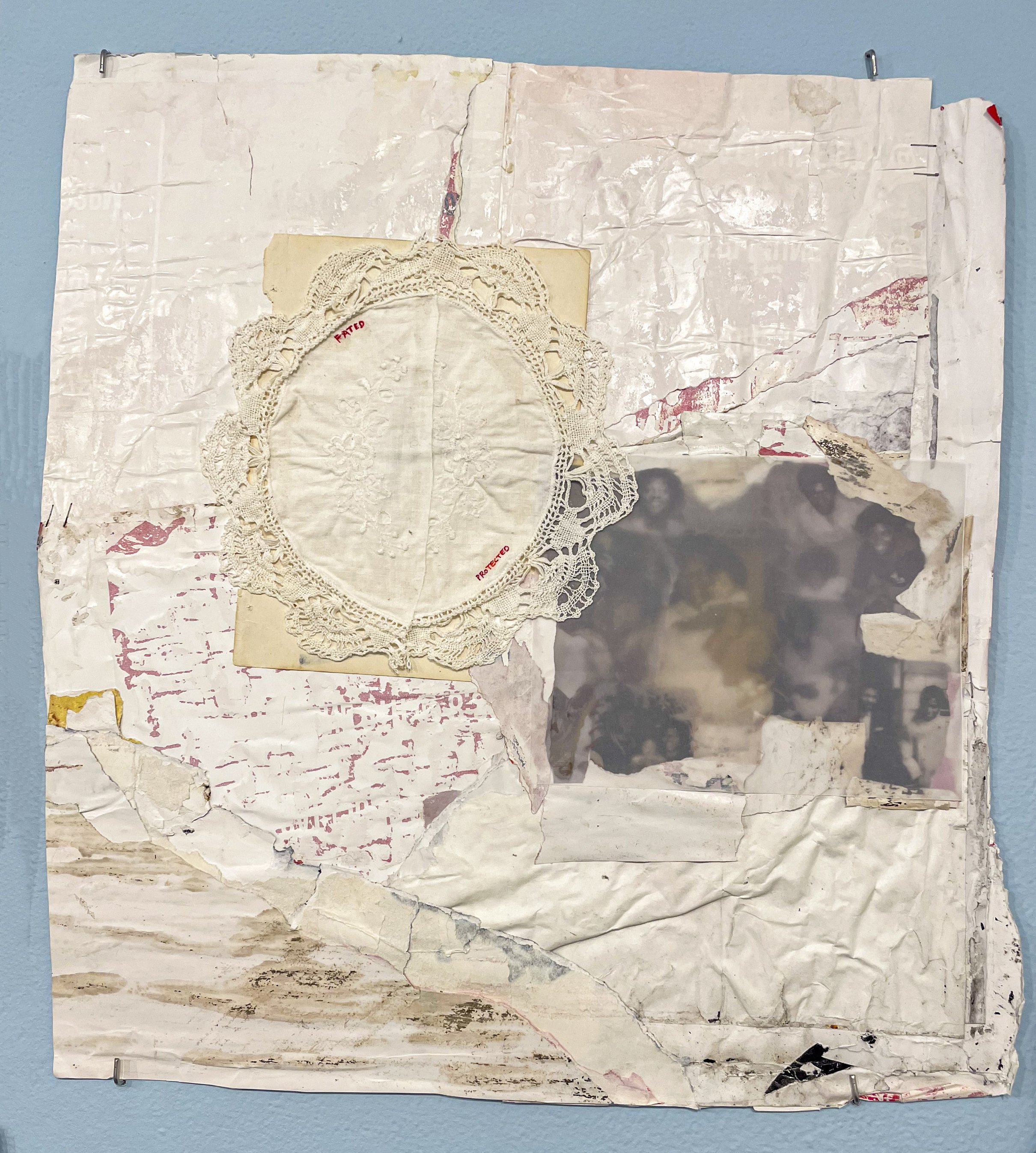
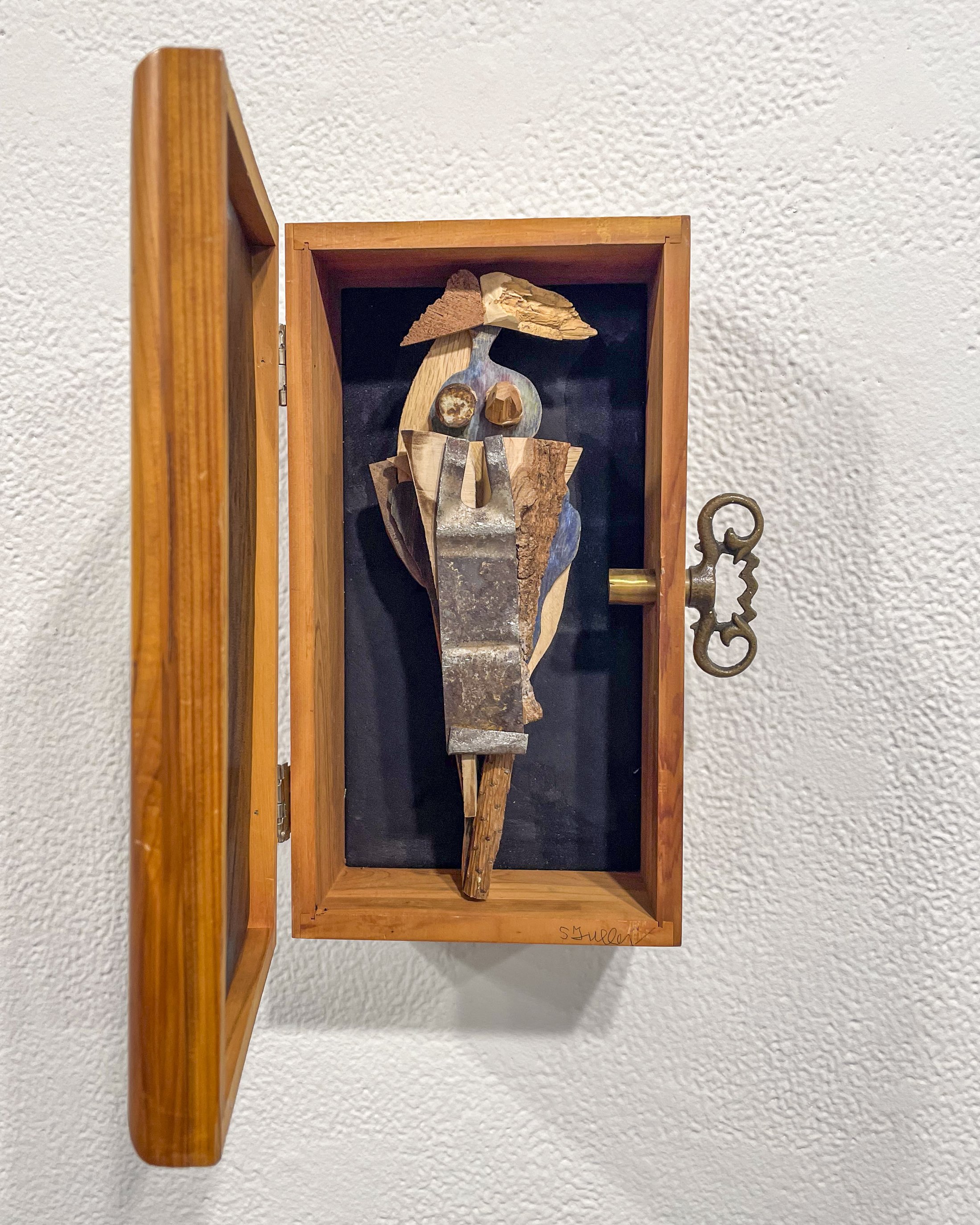
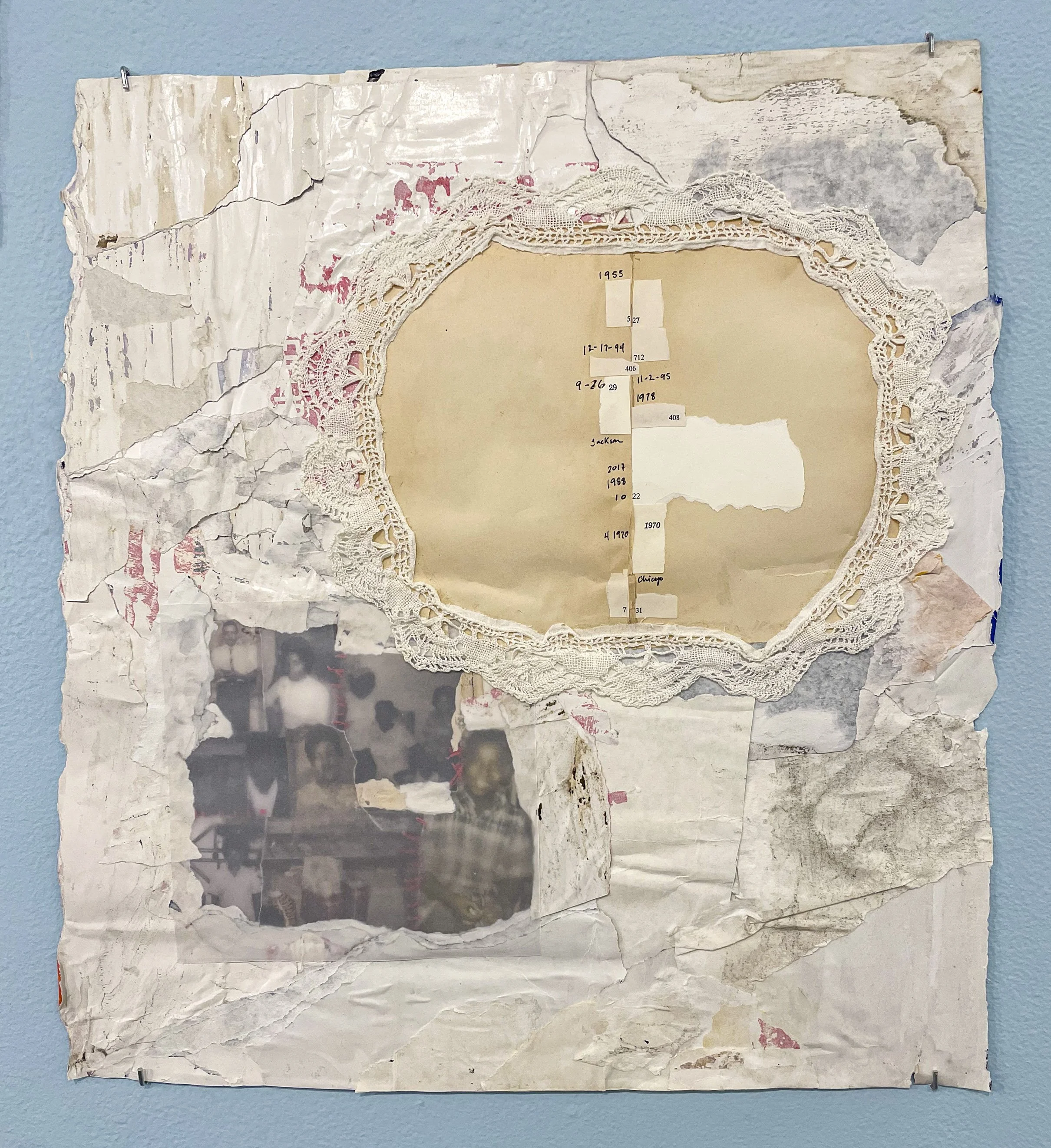
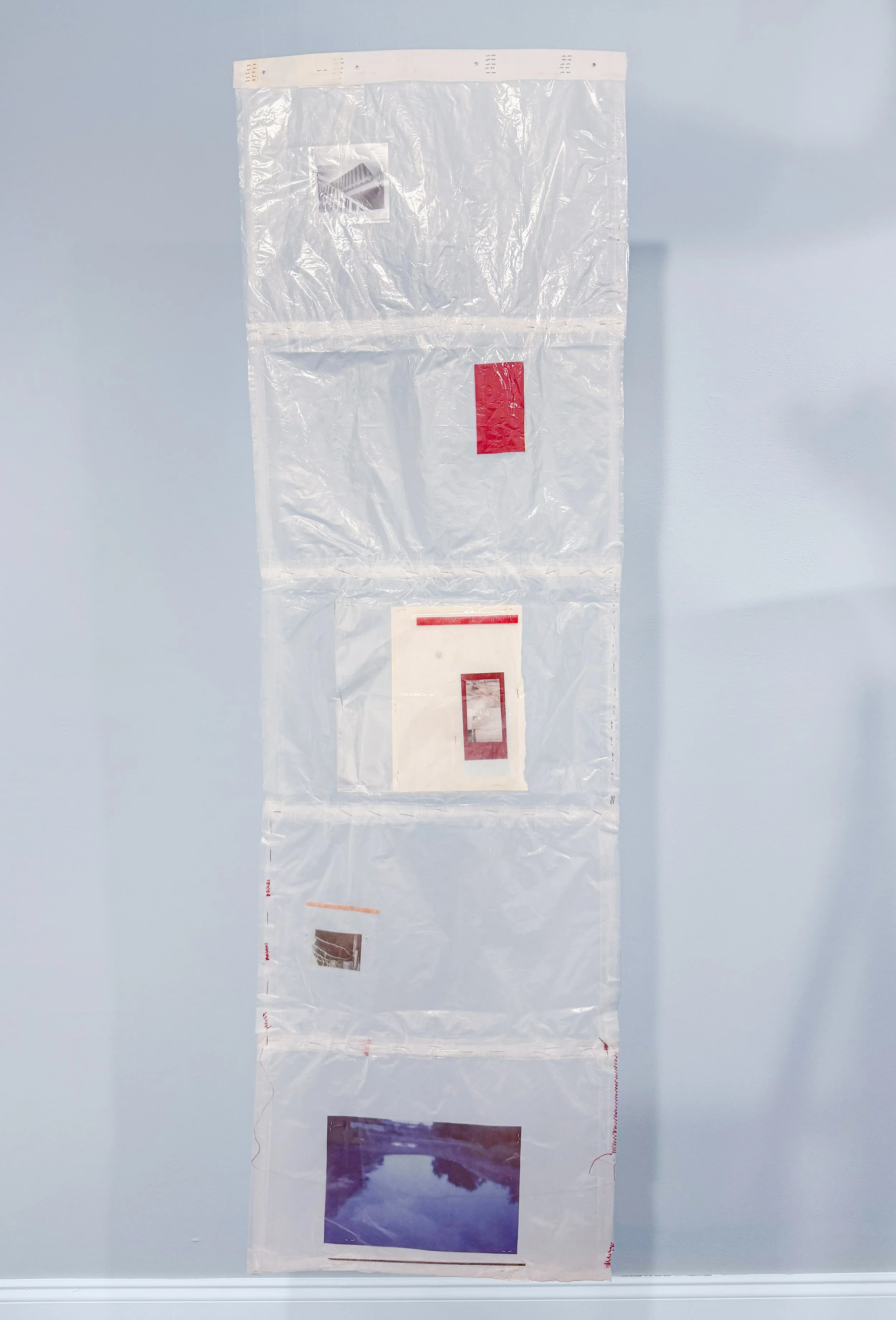
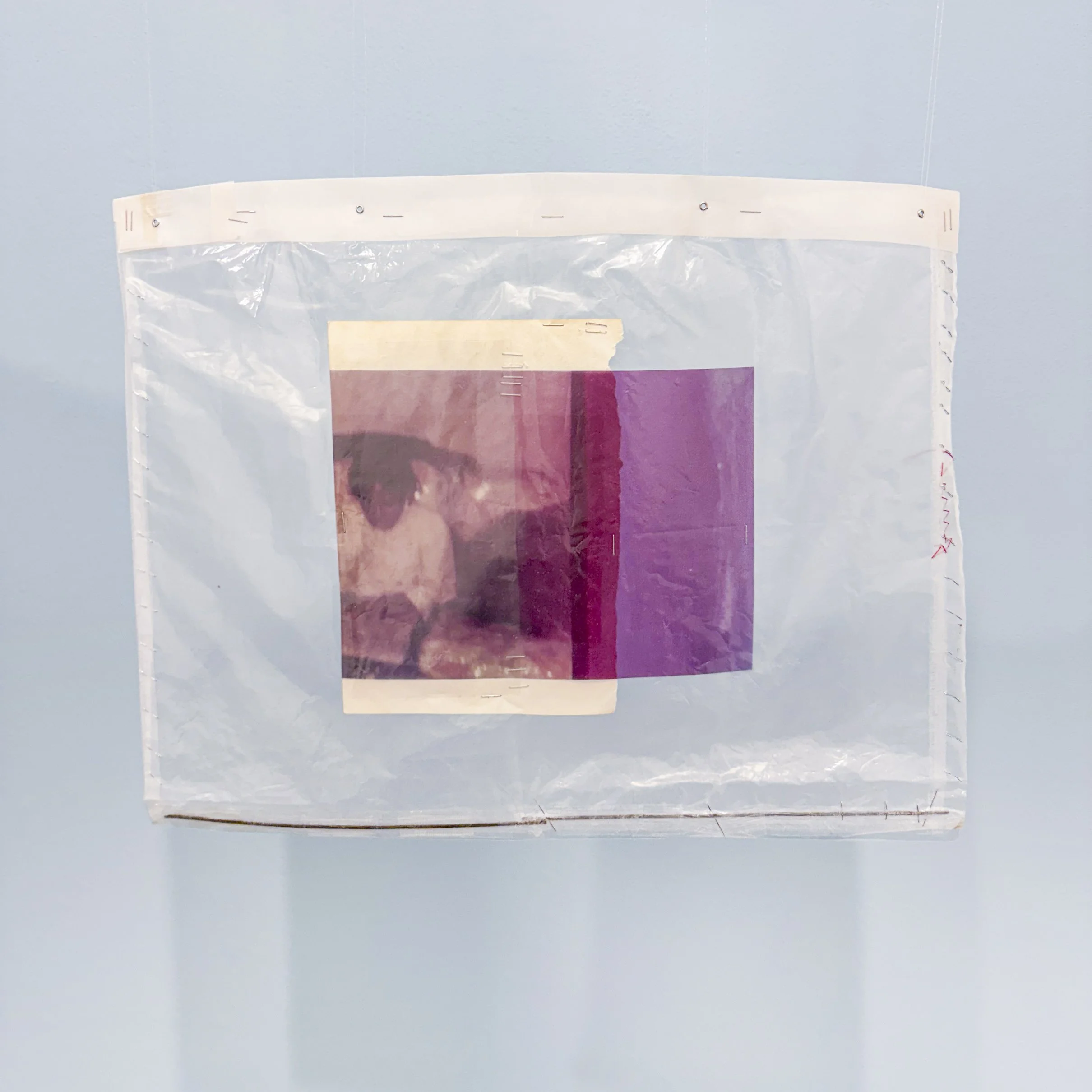
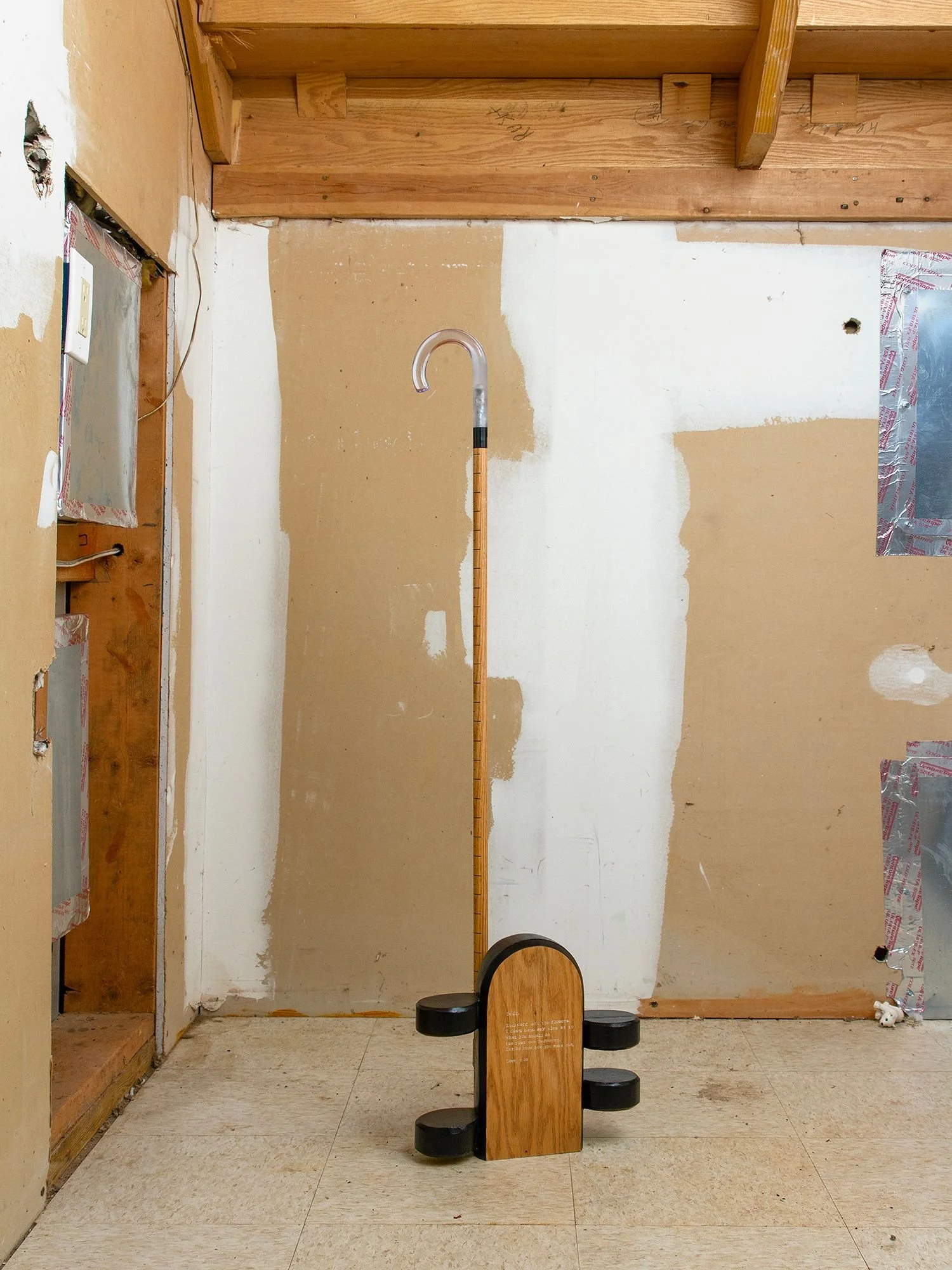
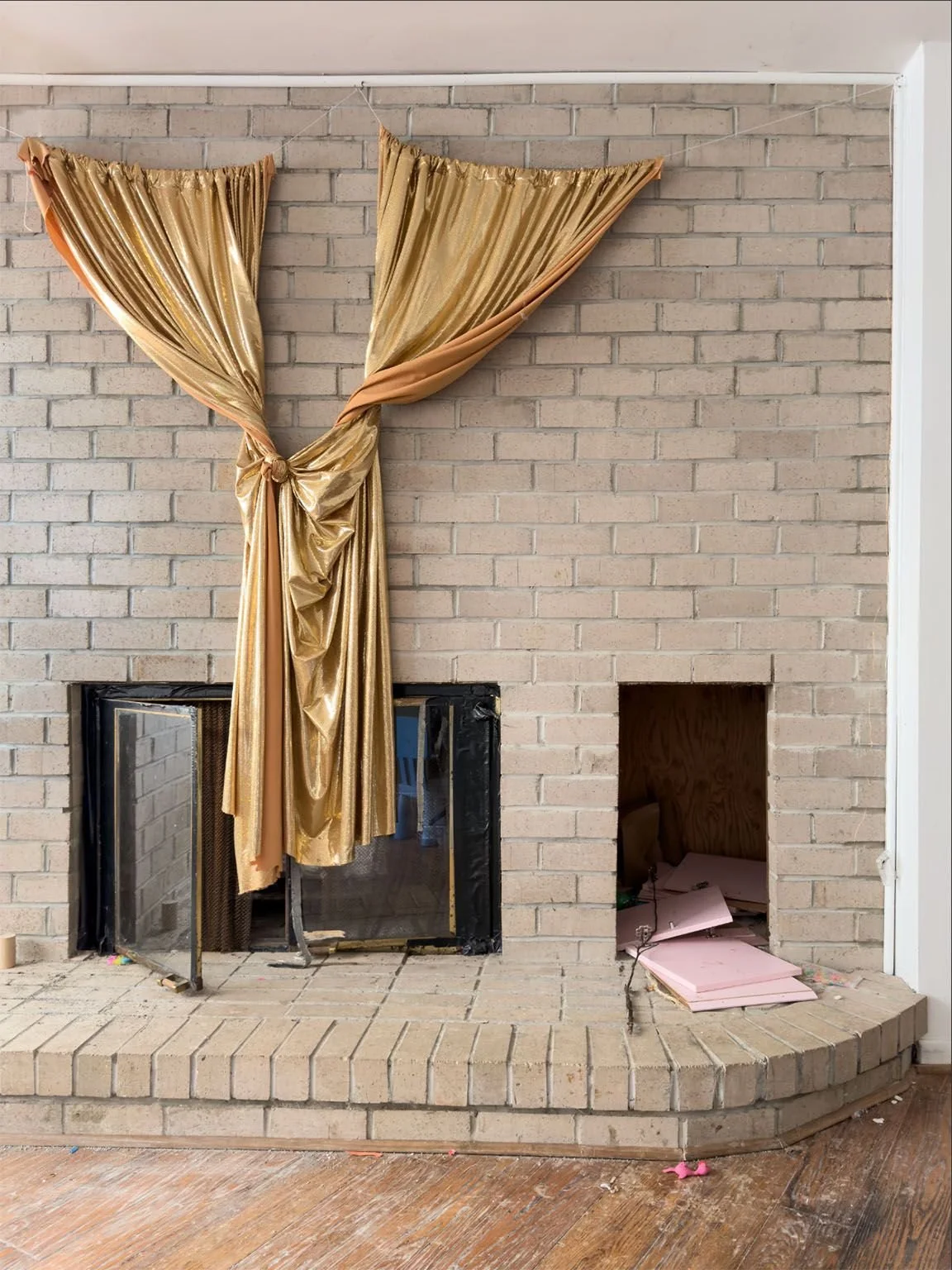
Cheryl Capezzuti is a studio artist, art teacher, and long-established community puppeteer in Pittsburgh. Her multi-scaled figurative sculptures build bodies of the unexpected: dryer lint. This contemporary material is more physical than we notice, forever sloughed off the armor of our daily lives. Elongated figures in the vein of Alberto Giacometti or Leonora Carrington’s mythical bodies, these gentle giants gather and cluster; some of them become tiny, curled up sleepers, or smallish thinkers. The lint links with the narratives of love and loss, emerging from the material physicality of our shadows. Susan Fuller comes to Rooted with a decades-long painting, sculpture, teaching, and poetry practice near San Francisco. Her fragment, box, and “hope chest” sculptures, informed by many mother figures in art history such as Betye Saar, forge memory and material. Her ivory key assemblages are a kind of proxy for the mother’s body, the keys implying both hand and sound as memories of a long-since-passed playbook of songs embed themselves in the abstraction of black and white. N. Masani Landfair has a studio at The Goat Farm in Atlanta. Originally from Chicago, Landfair employs an intuitive, emotional, and historical understanding of her collage aesthetic with an interest in artists like Robert Rauschenberg and Renee Snout. She sews, glues, and pieces together “a non-linear dialogue” when working with everything from needlework to installation and from family photography to film. Her floating collages foster openness and a dialogue between photo-manipulation and history. Landfair’s site-specific panels encourage back and forth movement as we follow red threads loaded with symbolic lineage. Raised in Connecticut, Anissa Mack has an enduring studio practice in Brooklyn, conceptually originating with family experiences of State Fair competitions and a kind of “handmade readymade,” craft-based curiosity about objects of Americana. Loosely inspired over the years by artists like Rosemarie Trockel, in this new installation, Mack pairs found objects with found photographs of girls and women, merging object and photo into a third entity. In combination they become freshly charged, revealing a transformative glimpse into an uncertain interiority. Samantha Mack is based in Savannah and uses meditative repetition to make contact with the craft of intergenerational tradition. Employing crocheting, found objects loaded with meaning, and skills passed down (informed by 19th century modes of making and artists such as Louise Bourgeois) her work plumbs the depths of family connectivity. The presence of time and the absence of the body converse with both handmade and found objects in Mack’s installation, leaving behind the idea that art is a trace of a much wider set of lived and missed experiences.
The show overall suggests that a familial or a “maternal inscription,” is more commonly imprinted on art history than is usually shared. A history of conceptual art sought to erase the personal. A more recent history of identity politics tends toward a reflection on the Self as individual. Artists as varied as Andy Warhol, Robert Irwin, Bill Viola, Alison Saar or Rose B. Simpson, just to name a few, made or make work that starts with family, yet the familial connection is usually relegated to a footnote, a side-observation, or a biographical paragraph. The maternal inscription suggests that the maternal or familial impetus to make art in the first place is a much wider phenomenon throughout art history. Family is often embarrassing or hidden, distanced or complicated, but it is central to how we emerge from the domestic cocoon into the studio of meaning-making.
Janine Antoni’s Moor (begun in 2001) is a handmade and growing rope composed of the fragments of loved ones such as a friend’s hammock and a grandmother’s dress. This rope which she calls “a lifeline” acts as a curatorial spirit guide for Rooted. This selection of work is about being moored or anchored, but it is also about the possibility to resist the anchor by stepping back and paying homage or reimagining a person, place, or thing’s hold on us. With Antoni’s Moor in mind, Rooted engages how materials both ground us in a past and offer a starting point for new memories. Artist Shahzia Sikander, another artist-shaman who explores family and tradition to re-think practice and historical context, noted her desire to be “rooted by choice” or “self-rooted” rather than stuck or limited. Her idea also resonates throughout the work presented as we engage with and pose alternatives for family construction. Rooted is not just about being tethered, but also about choosing new roots or uncovering unexpected, familial, historical narratives that are productive for creative futures. Antoni wondered aloud about whether “the viewer can uncover these stories through the experience of the objects” and this show furthers this wonderment. Rooted concerns itself with familial objects, forms, and phantoms, not as oppressive, but as talismans with transformative potential.
– Lisa Jaye Young