When I walked into Le’Andra’s studio at Cleo the Project Space earlier this spring, I took a deep breath and let the room introduce itself. The space was uncluttered and intentional: a table with studio stickers and a flyer announcing her residency, a large indigo-and-sienna cloth resembling an abstract map, a quiet grid of 5x7 photographs, a staggered stack of bricks, shelves lined with books and Sharpie-labeled jars, and a vintage wooden school desk, one leg propped on a brick, its lid open to reveal a bright yellow copy of Song of Solomon. Everything felt deliberate, like each object was mid-conversation.
The exhibition, After Stone, After Ruins (Notation 1), marks the first iteration of a three-part body of work that began in Savannah and continues in Atlanta and Tulsa, Oklahoma. The project traces sites of historical violence across coastal Georgia, examining how absence is “never truly empty,” and how water, while bearing violence, also carries the possibility of repair.
She gave me space to take it all in, to let the room settle around us, then gently asked how we should begin.
Trelani Michelle: Walk me through the space first and I'll just ask questions as they come up.
Le’Andra LeSeur: I wanted it to feel kind of like a working space slightly and to show pieces that don't have much resolve quite yet. So when people come in, they can kind of be in a space of inquiry with me. I hope people can sit down and read some of the literature I've been carrying with me, thinking about this research I was doing, and also spend time doing their own writings, et cetera.
My studio space always looks this clean. People are like, what? People think artist studios are a mess, but I like to work in spaces where I can just think mostly. And sometimes it is messy, but most of the time it's just me having a space where I can think, write, and read, and just look at things from a different perspective.
I asked her about the books lining the wall and why she chose those particular titles to showcase.
She explained that some were “rough to read,” like Africa Dances and Army Life in a Black Regiment, the latter offering a white perspective on Black Civil War soldiers in South Carolina. But most of the texts, she said, are ones she’s been carrying while thinking about “what it means to exist in a world that is trying to erase a lot of the histories that we know about” — and how we push back against that erasure.
The selection spans theory, photography, poetry, and pedagogy. Books like Breathing, The Coming Insurrection, and texts on image-making help her question what it means to document and archive — whether something can “clearly document an archive without you seeing it.” Poets like Leroi Jones and Lucille Clifton, whom she said she always carries with her, thread through her thinking about flying Africans in Toni Morrison’s Song of Solomon, while thinkers like Tina Campt, bell hooks, and Christina Sharpe help her dwell in “the liminal space” — a place beyond the projections that confine us. She also pointed to Grada Kilomba’s Plantation Memories, which asks a question she finds especially beautiful: ‘what would it mean to not respond to whiteness at all?’
LL: There's some recordings I did, field recordings, and I hope people can take time and listen. And then this piece is changing like every day.
[We move toward the large cloth on the opposite wall.]
TM: What did you do to it today or yesterday?
LL: Well, I'm not touching it. I don't know if you know about cyanotype and Van Dyke process. The Van Dyke comes in a little bottle, so it's like a solution, and the cyanotype, you can put it in a little jar and mix it. It comes out to be this deep blue. It almost looks indigo. And then the Van Dyke is a brown kind of resolve, but it's a photographic process, so if you put a negative on it, you can expose it – it requires exposure to sunlight, or UV light. Outside of that, you also have to fix it in order to stop the exposure. So I didn't really expose these to sun. I kept them in here, but because light was coming in, it's being exposed and I also didn't fix it. So over time, it's slowly darkening, which I really enjoy. Yesterday, this [spot] was not here. It was just kind of like this color; it was of the linen. And now the brown, because it's really sunny today and the light's coming through, it's starting to darken. Then some of these blues, they were almost like a teal green, and now they're starting to also darken, which is really interesting. They're colliding, but it also feels like they're working together. I did three of these. This is the largest one, and I'm calling it a triptych. The other two are in Atlanta.
TM: Are they, at all, exposed too?
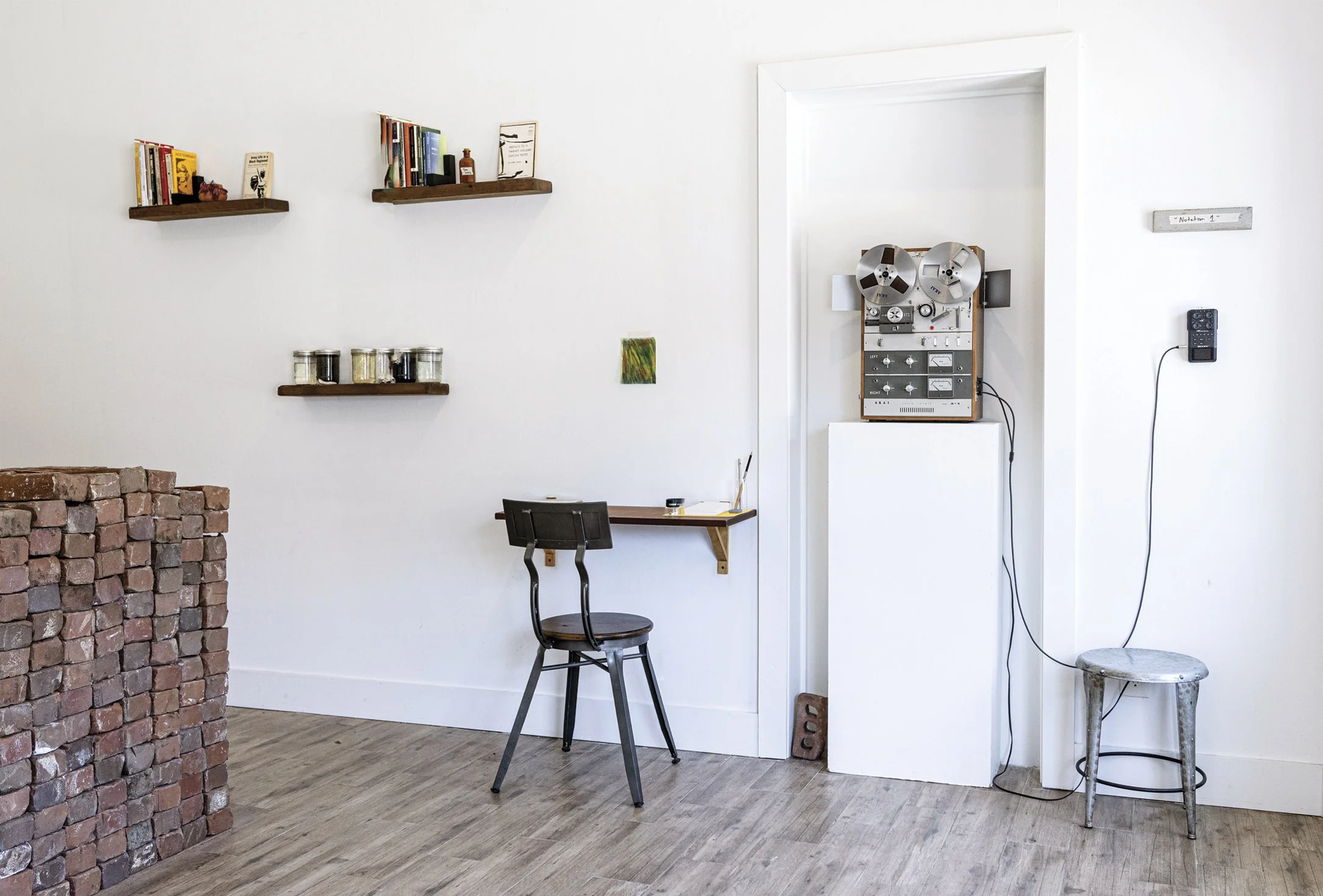
Installation view, After Stone, After Ruins (Notation 1), on display at Cleo the Project Space, 2026. Courtesy of the artist.
LL: Yeah. I mean, I have rules for those other two. I want them to be very dim-lit. This one, I'm allowing it to be in process because I feel like the space is in process. But the ones in Atlanta, they are stretched and framed, and that space will be dimly lit. And I've been doing them for each site. This one was based on Ebenezer Creek, and I could only get there via kayak. So I was only able to get water from that site, not any soil. It’s based off memory of how we were moving through Ebenezer Creek to get to Ebenezer Crossing. I was thinking about the areas where there was lots of water that kind of widened. That's where I put a little bit more cyanotype versus the Van Dyke. Where there were lots of areas where there was maybe small passages we had to kind of move through, that's where I put a lot of the Van Dyke.
The other two — one was specific to Riceboro, Georgia, and the third one was specific to Brunswick, Georgia. And it was based on these sites that I have been traveling to over the past month to do some research and extract soil from. The two that are in Atlanta, I did these topsoil pickups in Brunswick and Riceboro, and I would gesture and spray the soil on top of the canvas. Then, I would follow the path of the soil with the chemicals, and that's how I created these interesting pieces. So they're abstract, but they also look like maps.
So yeah, doing this gestural laying of the chemicals via memory, I'm really happy with how these turned out. I didn't know how they were gonna turn out, so it's been really interesting.
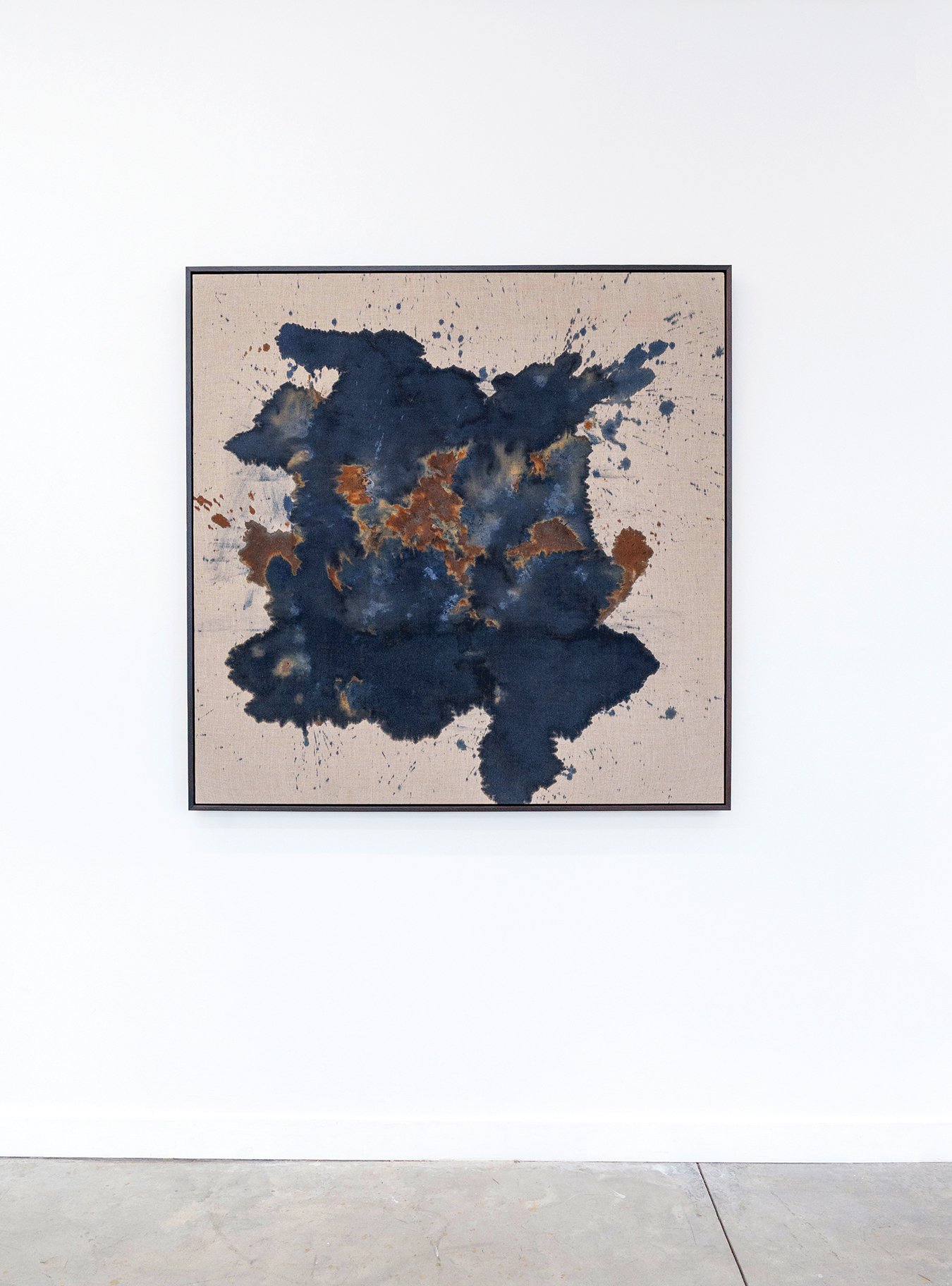
Installation view, After Stone, After Ruins (Notation 2) on display at Atlanta Center for Photography, 2026. Courtesy of the artist
TM: I like that, going into it, just open, not knowing.
LL: Sometimes people are a little scared, the institutions and the galleries. They’re like, ‘what are you doing?’ I'm grateful for the people who trust me.
[We turned to the collage of photographs.]
LL: Another thing I was interested in doing was just documenting via photographs. So I'm thinking of these things that are like maps as anti-photographs because it doesn't resolve to an image. But I did also want to have images of these sites I was visiting. I was interested in Riceboro because of the baptism trail. In Brunswick, I was interested in going to see Beverly Buchanan’s Marsh Ruins. I also spent some time in St. Simon's to visit Igbo Landing and realized that it's private property. So I wasn't able to really see anything there, but it was nice to at least go to the Marsh Ruins and that being, like, a space of honor and reverence for Igbo Landing. Then also, in St. Simon's, were the tabby houses. That was really interesting to see those structures and also see where it's at: behind an apartment complex. So weird. Georgia is just a weird place.
When I asked Le’Andra about Nancy Holt’s artistic interventions referenced in her work, she spoke about Holt’s Stone Ruin Tours, describing them as “guided tours via videos…sometimes language,” where Holt would move through landscapes, letting stones become markers. Le’Andra was drawn to how Holt invited viewers into “the process of your own kind of traveling,” creating an “abstraction of a guide,” less about destination and more about inquiry. That spirit lives in Le’Andra’s field recordings, which she described as a map, capturing her “internal processing of confusion and grief and sadness, but also joy,” in real time.
TM: Your residency here, is this your first time in Savannah?
LL: No. Last time I was here, though, was in 2019. So seven years ago. I was born in the Bronx, New York, and me and my mother moved to Georgia, Stone Mountain, specifically, in 2000. And I spent like 15.5 years in that area. I would come to Savannah here and there, but I was young and not really paying attention to anything. So it feels nice to return with this newfound understanding of history here.
TM: Do you often collect earth, dirt from places?
LL: No, this is my first time, and I am obsessed. I'm like, I’m gonna be that person who just has jars of everything. We had a group of middle schoolers come in while everything was still in process, and one of the girls was like, so are you the earthy type? I was like yeah, I kind of like trees. It was so funny.
TM: Is that red clay? [I pointed to a dirt road in one of the photographs.]
LL: No, no, no. They put mulch down to provide this walkway to the trail, to make it safer. Also, I don't know if you've ever been to Berlin or any part of Germany, but it was interesting getting here to Riceboro and seeing these trees. There's a similar site in Berlin that's right outside the city where the Nazis met to make the plan for the concentration camps. I got a chance to go to Berlin for the first time officially in 2024. I remember walking down a very similar path near that house where that happened with the Nazis. So when I got here to Riceboro, I saw the trees in this path, and it was like I had déjà vu. [Riceboro] is for me, a sacred space with the baptisms that took place here. Like, the same landscape that I was experiencing, but these places are so vastly different. So, yeah, I kept taking pictures of these pathways and the trees that I was seeing that felt like they were saying something.
TM: How did it feel in your body being in those spaces?
LL: Going to Riceboro, I had moments where I was extremely happy to be there. Then I went the day after Alex Pretti was killed in Minneapolis. I was right above the water on this little bridge, crying. These fishermen came and saw me crying and asked if I was okay. I was like, ‘I'm good.’ There were moments I felt really awake, present. Ebenezer Creek, that was a really rough day. I had five layers on and was still cold. It was like 35 degrees on the water and we were out there for four hours on a kayak tour. I was on this mass burial site and emotionally trying to process, but also my body kept being like, I'm cold. I got back to where I'm staying, took a hot shower, got in bed at 6pm, and I was just like, I can't do any kind of conversation with people. I need to sit and be in this feeling and not even name it. Just let it flow.
When I first got here, I did my online searches about Ebenezer, and I was told there was a pathway. So I put in the coordinates and when I got to the pathway, it was private property. That whole neighborhood is rough. Houses are in ruin. Trump flags everywhere. Do Not Tread on Me flags everywhere. Confederate flags everywhere. I mean, there were like 20 houses back to back to back with this same array of flags. And this guy's property, in particular, was right across from the pathway that I would have walked to get to the crossing. So it was a signal for me, of like, you are not walking there. I remember taking a picture of it, and then the next roll of film that I shot — on this slide film — at Ebenezer Creek, it was literally the first roll, was this glossy, orange-y brown, very murky. That water is the same color on Ebenezer Creek. I was like, wow, I think I want to mix these two together, you know? This person who's kind of staking fort in this land, even though he may think he has agency and power in this way, it's a stained experience. The staining from this water and this site, you can't get away from that.
TM: What about the bricks?
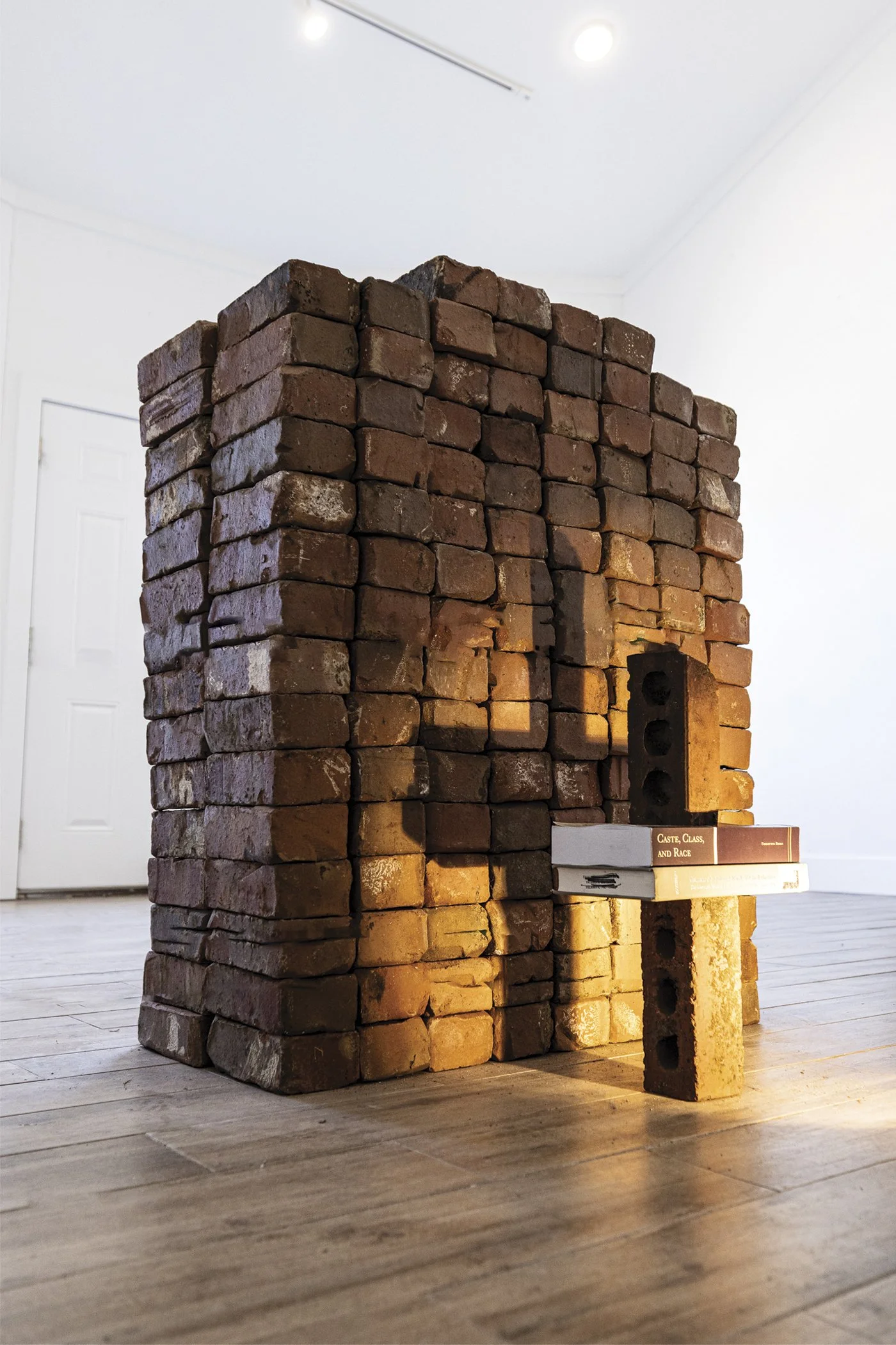
Installation view, After Stone, After Ruins (Notation 1), on display at Cleo the Project Space, 2026. Courtesy of the artist.
LL: I was also doing a few tours in town to learn more about Savannah and learned about Savannah grays. I don't believe these are Savannah grays, but they are vintage red bricks. But I was interested in this idea of Savannah post-enslavement, being built on the backs of black folks, then considering the present-day displacement of so many communities. Learning also about Yamacraw Village, and the demolishing and development of a space, but where will the residents go? So thinking about a city that was built by a community of people, but them not having that care reciprocated, and considering what that means. I picked up these bricks to iterate that. Also, there are 250 of them, tying to the 250 years of independence of the United States. But, like, where are we as a country? Not a lot of people can celebrate that because we haven't really made progress or we have made progress, but not enough because it's all these things that are backtracking and being erased of how we understand who we are as a nation — and the history of that nation being really fraught. There's also people talking about how empires usually fail after 250 years, so I have these bricks outside of the 250 scattered around, thinking about what happens after.
TM: I’ve heard that too. I was like, ‘do I invest for retirement or will I lose it in the collapse?’
LL: That's what I'm dealing with too. YOLO every day or do I actually save? I need somebody to tell me the plans.
TM: Ain't none. It's just like this [Van Dyke] process. We just gon’ have to see.
LL: [laughs] We gonna have to just wait and find out. I wanted to also create this moment in the back with the cross. I did this tour and this guy was talking about how Savannah was a huge place, in regards to our understanding of slavery and the push forward with it, even with the cotton gin. But considering the independent black church and how many free people in Savannah during slavery were part of churches, and that was the safe haven. Some people don't like that I say this, but there's this interesting power dynamic in organized religion where I feel like it's another form of confinement. So people had the safe space, but it was also under the guise of being taught from a white lens. And a lot of the cultural experiences that we had from Africa that we brought over were erased in some ways.
Everyone keeps saying that we're in a civil war. Like, we're right there. Someone I was talking to about it was like, I think it's more so a war on religion. You have Christian nationalists that are far-right conservatives, Trumpers, and they base everything they believe in off of religion and the ideals of these thematics in religion. And that's where the hate comes from, of, like, this person doesn't belong here. They don't fit into this thing we understand to be true and pure, which we've heard that before. So I've been considering how these things all repeat, but in different tonalities — and how do we continue to try to unravel that and understand it so we can be better prepared for the fight against it?
TM: How do you think your “accidental” entry into becoming an artist shape the way you approach art?
LL: It shaped it in a lot of ways. I remember when I first learned about having to choose something outside of our declared major. I was like, ‘I'm not good at anything else but basketball.’ The art college would take trips like every other month to New York. I have family in New York. That was the only reason I really did it. But also, ‘this could be fun.’ I hated my classes though, because we studied artists that I just couldn’t resonate with, you know? No one looked like me. Everyone in the class is white. I was at a PWI, and I was doing terribly. Then we got into a contemporary art class, maybe in my sophomore year. I remember learning about Marcel Duchamp who got famous because he put a urinal in a space. Like, the audacity. But if he can have that audacity, why can't anyone else? From a young age, I didn't think I had any talent because I couldn't paint and didn't really know how to draw. I used to write here and there, so I felt like I had a good understanding of language, but I had professors telling me that I was a terrible writer. So I didn't think I had any skills to really be in that world of expressing myself. Then I started learning about these white guys who were doing it — like Dan Flavin using fluorescent light tubes and putting them on a wall and saying it’s art — I was like, okay, these guys are using everyday objects and just changing our perception about it. That's what changed my understanding of what was possible within the arts.
It’s not necessarily about talent. I think it's more so about thought and the way that you are able to take thought and apply it to something. And in that, also allowing someone to enter into that space and maybe leave with a different perception of what you're presenting to them.
TM: You referred to basketball as a past life once. Did you have to grieve that?
LL: Yeah, it was a deep grief. I still have moments. Basketball was my entire life. From the time I was six, I started playing basketball. People don't talk about this, but most coaches are not kind. We had a coach at Bucknell, who was emotionally abusive, which carried over into physical abuse because we had to train under her. If you didn't follow her rules, she would demolish you physically. You would be working out five times a day to the point where you can't feel any part of your body. It was, like, the most depressing time of my life. I tore my ACL, which is terrible, but I call it my saving grace. It was my junior year and I realized that I wasn't going to come back from that. So I started picking up photography, and I became obsessed. It was, like, this obsession from being in the gym all the time carried over to the obsession in the darkroom. So that's where the actual act of making work started.
TM: So much art comes from pain.
Your videos often feel almost still, until something subtle shifts. In that split second of realization, what are you hoping happens inside the viewer?
LL: I started off in photo, but I was becoming really frustrated with the still image. It's a thing that we all know as a document of truth. But what happens before and after, and why are we not getting that? It doesn't feel like we're getting the whole story, so is this actually truthful? Then we have all these things that are manipulating now. So I started getting into video because that was the question that was coming up for me: how do you document truth? The real truth? And video, to me, felt like that. I was also thinking about time as a medium, and thinking about how you slow down time, and if you are slowing down time, it also creates this opening. It's similar to art chapels. People will just sit in front of the painting for hours and allow their eyes to open up to the different arrays of how the colors are holding. I went to Rothko’s chapel in Houston and Agnes Martin’s in Taos, New Mexico.
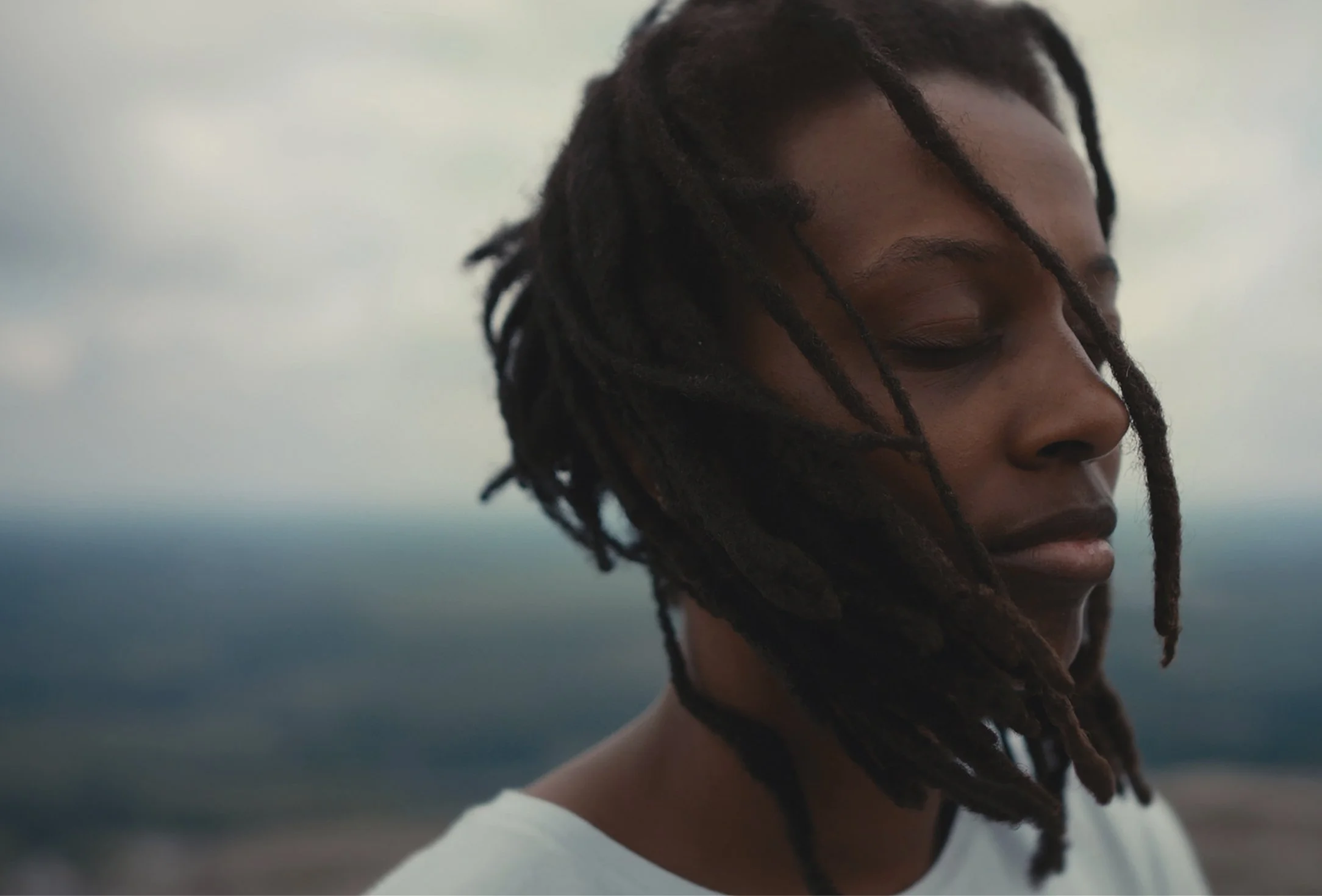
Monument Eternal, 2024, 00:07:10 Single Channel Video, Audio. Courtesy of the artist/HERE Productions.
I was interested in how painters were utilizing time almost as the secondary medium, and thinking about how you can do that with video. We're so used to video being instant on our phones. We watch, then 15 seconds later, it's done. And I'm like, what if we slow it down? You almost think you're looking at something that's in stillness, but it's actually moving. There's so much authenticity to that because if you think about our bodies, that same thing's happening. Even when we're still, our bodies are moving. So I wanted to force people to consider the importance of that — slowing down and understanding that stillness is not always still. It's always something happening, and you have to pay attention to understand what's happening.
Stanley Brouwn is a very interesting artist. I read this book called Tell Them I Said No. It's a book about artists who have shied away from the public eye and they've done this in different ways, some in tragic ways, and others have just been in obscurity. So I became interested because he was creating works that didn't exist [chuckles] and I say that with a grain of salt and also with an asterisk.
He has this piece that's at an institution called Dia: Beacon in upstate New York right now. I've read about this piece, but I've never actually seen it or experienced it and it's called How Empty is this Space? And I was really drawn to that title and in the piece he has nothing in the space. It's just a blank space. A large square room, blank white walls so it's very cold. There's nothing to really experience. But in the text that explains the piece, he's basically alluding to the fact that even when something feels like it's not there, it is; it's beyond our comprehension.
He talks about the idea of astral traveling. He references Sun Ra in this idea that even if this space feels empty, there's something still present here. We have to just find it sometimes in the depths of our own soul, within ourselves, and I found that to be really interesting in considering the sites that I've been visiting. There is a sort of emptiness for a viewer who doesn't understand the history that has occurred. There's nothing really there. Sometimes there's no marker, there's nothing, it's just land. And if you didn't know what happened, you would just move through the land with no knowledge of what you were experiencing. But there is something deeply ingrained in the land, and if you take the time to sit with it and allow for it to move through you, the space becomes less and less empty.
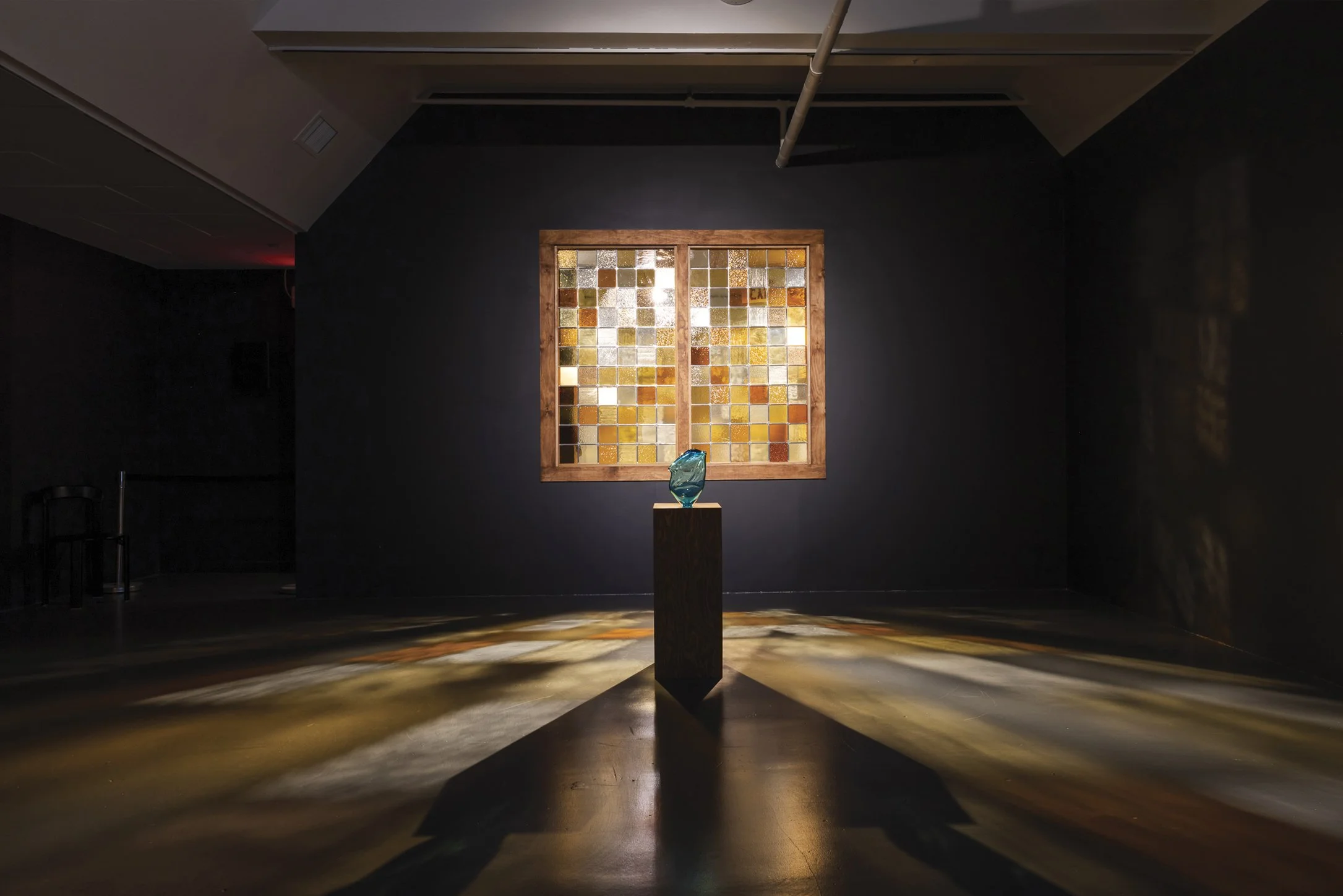
Installation view, Do you know this place since your breathe is no longer here and A soft place to land. Photo by Chris Uhren. Courtesy of the Pittsburgh Cultural Trust
I had that experience with Stanley Brouwn's work, walking through this empty space when I actually started thinking about what was outside of the building: the sky, this grand sky, the clouds, even the sun beyond the clouds, and then thinking about the space beyond that. The space felt less and less empty and cold, and it felt almost like a warmth that was coming over my body, which was quite interesting when I first experienced that work in person.
So I was really wanting to key in on that, this idea that space is never really empty. There's never really an absence, there's always a presence there and we have to do the work ourselves to really find that presence, and consider what that presence means when it's not seen. A lot of times, specifically in our generation, we have to see something in order for it to be true and I believe it's important for us to move outside of that thinking and realize that not all things want to be visible, not all things are made to be visible. Some things are hidden in plain sight and it's up to us to really kind of consider what it means to uphold that hidden nature. But also to find other ways to excavate what this thing is still trying to tell us, even if it doesn't want this visibility.
And that feels special to me, and also resonates in regards to the human experience of considering what high visibility, this kind of extreme gaze, has done to our people — not just historically, but also thinking about in today's world. It's caused a lot of mental turmoil, emotional turmoil. And sometimes we have to push or pull away from that in order to really understand what it means to be present and grounded and be here, living in this world today.
TM: How do you take that practice of slowing down (and attending to what isn’t immediately visible) out of the gallery? What does that look like in your day to day?
LL: That’s a good question. When I lived in New York, it was really difficult to get into that practice. The only time I ever had it was when I was making my work. I moved to Tulsa in January 2024 for this fellowship I'm still a part of, and Tulsa's slow. There's not much happening. Every day and every night, I had to really sit with myself without making work, and that was different for me. I'm not like a meditation person, but I realized that there are ways that I have been meditating in the work I was making. Now I'm able to do that in other aspects like going to a park or some part of nature and just looking at the way water moves and looking at the way trees move. So when that student said I'm earthy, I was like, I have become that because I do kind of talk to trees. I go and I just look at them and I listen.
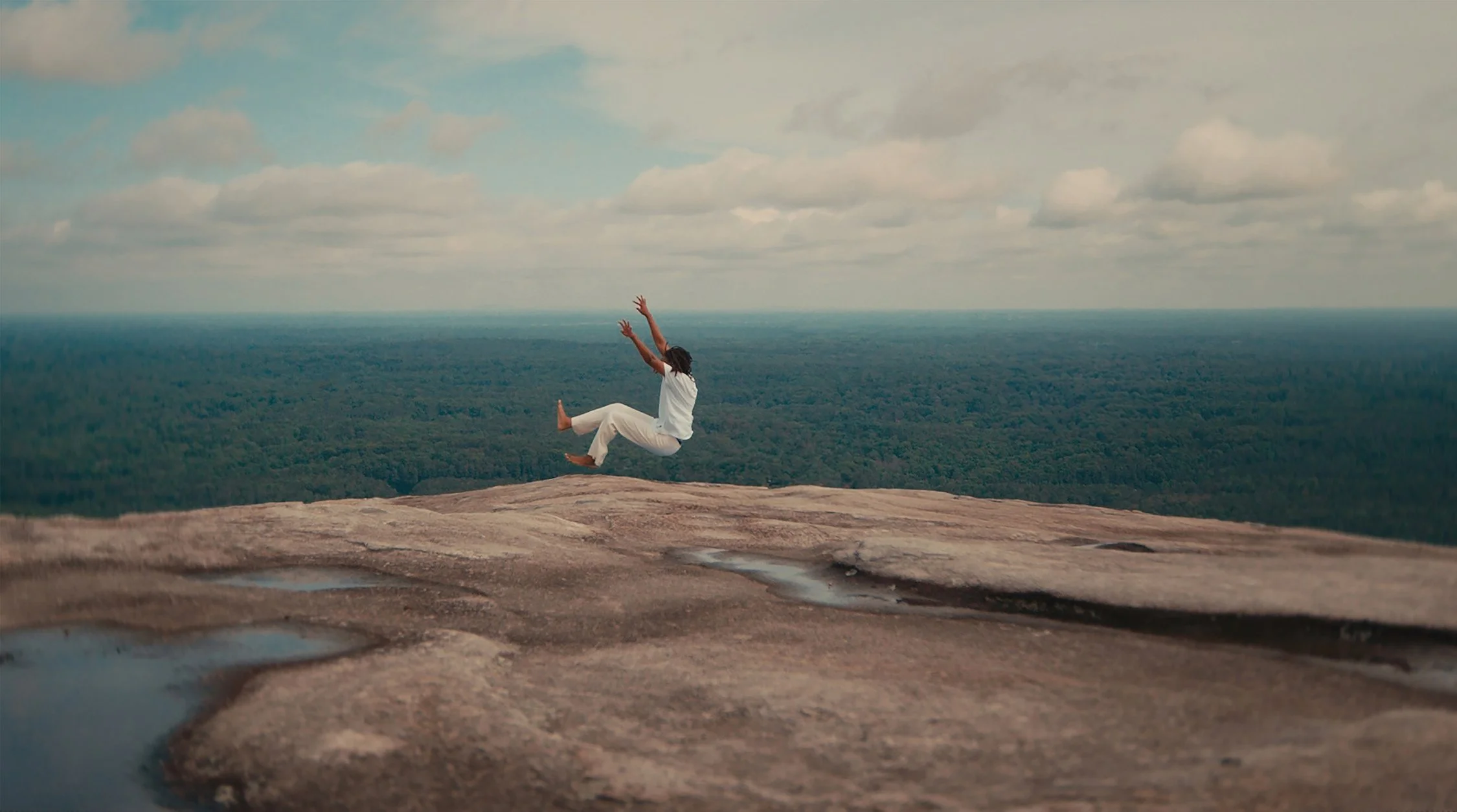
Monument Eternal, 2024. 00:07:10 Single Channel Video, Audio. Courtesy of the Artist/HERE Productions
TM: Look at that Bronx girl talking to trees.
LL: [laughs] I was around cement all my life and now I'm over here, earthy. I think it's carried over recently with just my lifestyle in slowing down and having that as like a routine.
TM: That makes me consider the one way meditation is taught to us versus what it is. My granddad used to fish. I'm pretty sure that was meditation. My grandma would close her eyes and say she wasn’t sleep, just resting her eyes. Baby, that was meditation.
LL: Yep, yep. Meditation's always been pushed on us as this thing you have to really do, but I think it just comes from routine and slowing down. I have a little studio space in the back of the house I'm renting and a good friend is using it as a workspace. He gets there at like seven in the morning and he mentioned to me, he notices when I'm up, because my blinds are up, but when I’m resting, they're down. And he was like, “girl, the other day, I was there at 10am and your blinds were still down. What are you doing?” I was like, “slow morning, slow morning.” We gotta slow down.
TM: Your own body is often a starting point for your work. Is that a responsibility? Power? Is there difficulty that comes with using your own body to explore visibility and space and survival as a queer black woman?
LL: Good question. When I was in school at SCAD [Atlanta] we had this thesis work and I was doing this landscape based on shootings I had experienced in my lifetime that took the lives of black men and women. One of them was Amadou Diallo. I was maybe seven or eight when he was brutally murdered, shot 40 times, and the cops got off. It was also around the time with Mike Brown, Trayvon Martin. My professor, Allen Cooley, asked me, “Where are you in work?” I didn't make work for like two years because I could not answer that question. About a year after I graduated, I moved back home to New York. I was in Brooklyn and trying to figure life out, working a 9 to 5, and I was still going and seeing art, but I wasn't making anything. I went to a show at MoMA PS1, and this artist, Vito Acconci, I’m not fond of his work, but that show really moved me. You walk into all these rooms and you're seeing him in front of a camera and he's doing all these movements and it's just his body present, every single space you walk into. What is this all about? But every single time I saw him, I heard him, I felt him, and I felt like I was inside his head. I understood that this movement was a release of some sort, and it's cathartic, you know? I thought it was important for me to try to embody this idea of release. That is how I show up in work. I couldn't express my feelings in the photographs I was taking where I wasn't present in them. I was trying to, but the camera can be pretty violent as an object and the way it has historically documented black people, even today, you know? And I was like, if I can put myself in front of the camera and do the same, it's almost like a self-portraiture of sorts — and do these movements where I'm releasing and expressing, that feels really vulnerable. But there's also somewhat a barrier where I'm really asking someone not to just look at me, but to engage with me, become an active participant too. By making this concession to slow down and spend time, you're offering yourself up as not just a witness, but a participant. So yeah, to answer your question, I think it has come slightly easy to do that because I'm also asking a lot of the viewer.
TM: I remember watching one of your videos, and there were moments I wanted to fast forward because nothing was happening. You’re nudging us to sit with the discomfort as a participant.
LL: Yes, yes. I have this one piece that when you look at it, if you know nothing about what you're looking at, it's just blue screens that move slowly and they change colors, and it's based on Dreasjon Reed in Indianapolis. He was on Facebook Live when he was shot and killed by police. He was running from police, then the act happens and the phone drops. The front camera that was facing him is now facing up and you see the sky, and then the sun hits the camera and creates this lens flare, and there's a small moment of the blues changing different colors. And so I extracted that small moment. I watched it twice. The first time I watched it, I was focused on what the hell just happened and my body was like fiery. The second time I watched it, I was transfixed by it, and all of that fire just released. This is what people mean when they say that beauty persists through the violence, through everything. There are these moments, little glimmers, where we can see that there’s still hope and beauty in the world. So I took that little moment, slowed it down, blew it up, and you see these blues changing colors. So if you're just walking by, you're like, okay, this is blues. But if you actually sit with it and listen to the language I'm speaking on top of the blues, there's a story I'm telling about this moment. We are so quick to want to find resolve that we totally dismiss the process of understanding. And that's what I'm trying to get people to sit with because that's what I'm doing. I'm trying to process an understanding and I want you to be in that same space with me.
TM: You were on a panel organized by the Tory Burch Foundation and mentioned that during the three-week performance of brown, carmine, and blue [which won the $200,000 juried Grand Prize at ArtPrize 10], you would sometimes cry. Was that joy, pain, gratitude, empathy?
LL: Yeah, that performance was a hefty one. I had these heavy cinder blocks and I was building these kind of like monoliths and they were eight feet tall, maybe three-four feet wide. And I was slowly moving these bricks. The first day, I did like 12 because they're 30-pound bricks and I'm moving through this sort of abandoned space barefoot. There are people walking around, watching me. One guy put a flyer on the brick as I was moving. So it was like a level of … not a lot of care and respect from the people there experiencing the work. Towards the end, I broke down crying because I was just grateful that I actually took the time to understand these feelings of invisibility that I think we all experience at different points in our life, and how that weight builds and becomes a weight that you can't even understand where it’s coming from. I've lived my life dealing with anxiety and depression, and when I have these depressive episodes, I have to remind myself that this is not just a one-off thing. This is layers built from years and years of experiencing something that you shouldn't have to experience, but it's coming from a system. And so, in that moment, I was really thinking about the weight of invisibility and how we have to process what it means to move through a world where it's not just about not being seen. It's about not being cared for, not being respected, not being acknowledged even, you know? When you think about all these things that we're navigating from history, present day, even our own kind of family dynamics, sometimes you don't even want an apology or reparation. I just want it acknowledged that this happened and not be like gaslit or manipulated to believe that it's not an actual experience. So, with that piece, that was the layers of understanding the invisibility and what that has meant for me.
TM: That’s powerful. Makes me think of people standing on corners, asking for money, and how most try to avoid making eye contact. The people cleaning our spaces too. Our enslaved ancestors’ invisibility. The invisible labor of mothers. But I never thought about it as a weight. LL: The bricks, for me, was the weight personified. Also when I started seeing it stacked and seeing how huge it was, that's what really took me back to … I've been holding these things for so long. And you don't really understand the significance of it until you can understand the weight of it. So that was a really pivotal moment in my life.
TM: What stories about success or about being somebody did you have to unlearn?
LL: Oh, my gosh. As a kid, my late grandmother on my mom's side would always tell me, “you gon’ be somebody, you gon’ be somebody.” It felt like a mantra that was so affirming. We think about black excellence as like Barack Obamas and the Oprah Winfreys, people who have paved a new way for how we understand blackness and how black people can make it in different industries. And then I got to a place where I was like, I don't think that’s what my grandmother meant. I don't think I’m going to be the singular individual on a pedestal, and I don't think I even want that. What my grandmother meant about being somebody is just being true to who you are and being okay with being ordinary, and that being enough. It’s about doing the small things every day that really ground you back into where you are, ground you back into your community, and that even if it's not seen, it's still something. I had to really, really, really tune into that. And I'm still tuning into it today.
I think a lot about where we're at now as a nation. We have a government with one president, but I think we now need, in this aftermath of 250, a collective voice. People who have given up the ego. It’s an ego death, because you are allowing yourself to be present with a group of people coming together to work towards similar goals, but you're not over here like, you need to believe what I believe. No, we're in this together. It's not about me or being this monolith. It’s about being grounded in who you are and because of that groundedness, you can be somebody for a collective of people that needs you in your community.
TM: The Serenity Prayer urges acceptance of what cannot be changed and courage to change what can. Angela Davis remixes it: “I am no longer accepting the things I cannot change. I am changing the things I cannot accept.” What does that scale of accepting and resisting look like for you?
LL: That's a question that I think we just live with. I was talking to a friend about how institutions are going to be institutions. They're going to do what they’re going to do. And we were talking about discernment. When do you know that I need to do this thing and I'm gonna push back in the institution? Even though I know it's gonna become a stress, this thing is that important. And then having discernment to realize when, actually, this is not healthy. Even though I need to do this thing, is there another way I can operate this thing without being in the institution and dealing with all these unhealthy and violent ways that they operate? So yeah, I think about that as a scale of discernment. Because, at the end of the day, some of these things are beyond us. There's so many layers and levels to, excuse my language, the fucked up nature of a lot of these issues that we are seeing. And we are only one person. I want to do my best in everything I can do, but I also have to try to figure out ways to navigate what it means to care for self. Because going back to that being grounded in who you are, if you are not caring for yourself, how can you give back to your community in the small ways that are actually making a difference?
How do I soften the fire so that when it does start to come out of me, it is not coming out as fire but as maybe smoke that’s kind of dissipating into air? And so people who are experiencing my work don't actually feel the fire. I'm not trying to perpetuate the harm that I’m experiencing as I'm navigating these histories and these narratives. I don't want to perpetuate the same anger that I feel. I still want people to understand the context. I don't want to diminish that, but I want to soften the entryway. It gets really hard being the vessel holding the fire and trying to put it out before it comes outside of me. How do I allow myself space not to always hold the fire? When I’m working on projects, I'm really in it. But outside of those, I have been taking a lot more time to do things that don't require an end result. It doesn't have to be productive. Just do things for the sake of doing them, and also allowing myself a lot of time to rest.
TM: A lot of northerners look down on the South. Call us country, backwards, slow.
LL: [laughs]
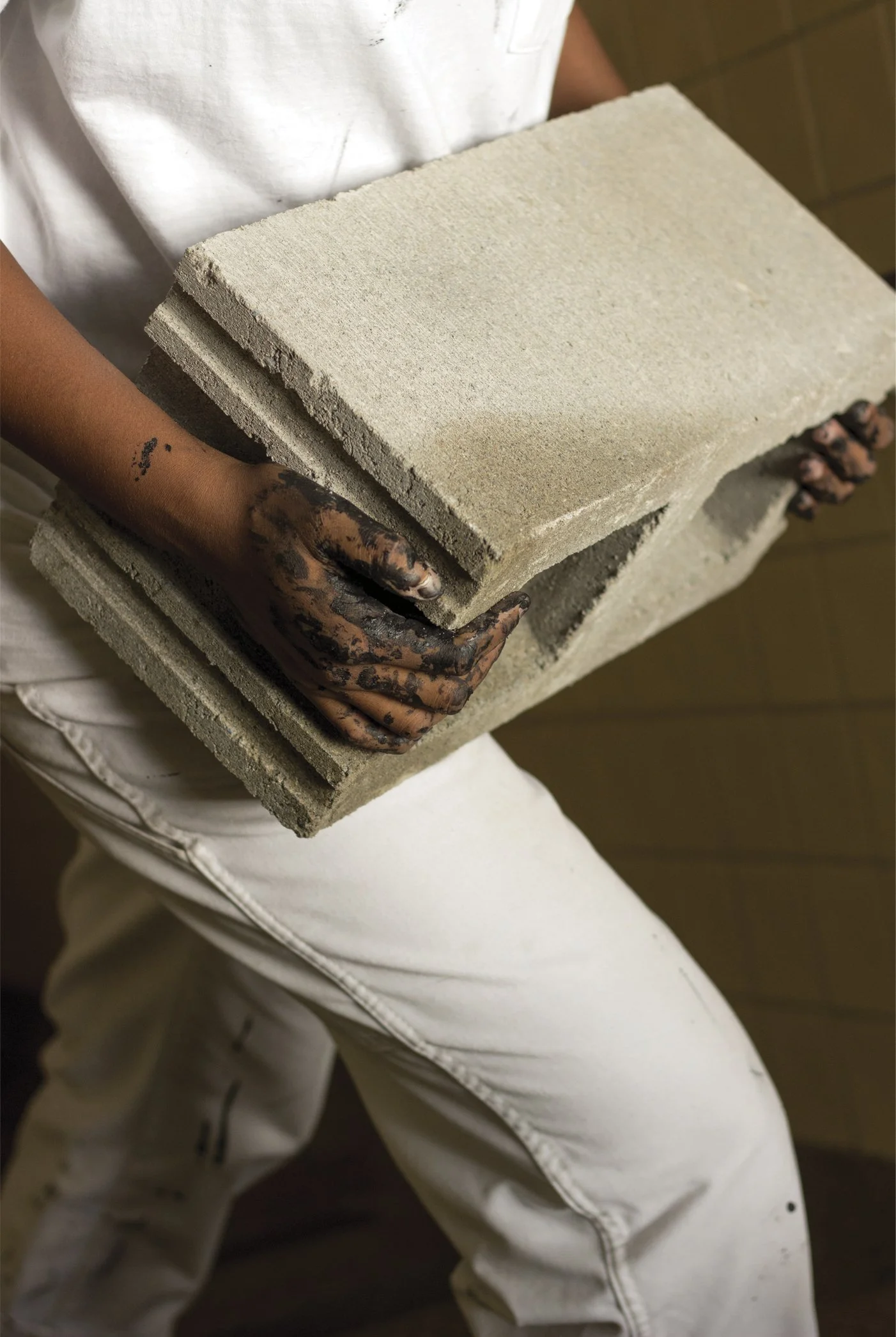
brown, carmine, and blue, 2018. Durational performance
TM: But we all got something for each other. What do us Southerners have to teach the North? And what does the North have to teach us?
LL: The South, I think, has to teach the North about slowing down. And not just slowing down, but not always having — going back to this discernment scale — not always having to fight for something, also not always having to be rigid. I think about my mom a lot in that way. She was a hardcore Bronx girl. When we moved to Georgia, it was a big shock to my mother, you know? I remember hearing her talk about job interviews where she was like, they expect me to be docile. And my mom would never be docile, but, you know, it was her learning that she didn't always have to, like, combat the thing. And she's been in Georgia now since 2000, so 26 years. I thought once I left to go to school, she was gonna go back up North, but no. She loves it. I feel like there's been a softening of my mother by becoming a southern woman. I mean, she’s still BX, BX, but there's been a softness in her that’s really quite beautiful. And sometimes that softness also, I think, started from a place of fear, but I think now it's more of a softness that is coming from an understanding and being settled in oneself.
I think the North can teach the South a lot, too, about the importance of this statement that nothing is impossible. When I left Atlanta to go back up North, I felt like everything was possible. I feel like that's New York, just in a nutshell, because it was like the center of every single thing that's kind of thriving. People in New York have this thought that if I'm here and I'm making it, I can make it anywhere. You know the saying. And I think that mentality is so beautiful and I know why that is a mentality there, because it's so difficult in New York. But what I hope that the North can teach the South is that that mentality also exists here too. Like, if you can make it here, you can make it anywhere. Everything is possible, and that comes from a space of just dreaming.
TM: Ain't you just an embodiment of both?
LL: [laughs] Yes.
TM: Last question. What about Savannah and coastal Georgia feels familiar to you and what feels like an invitation that you haven't fully explored yet?
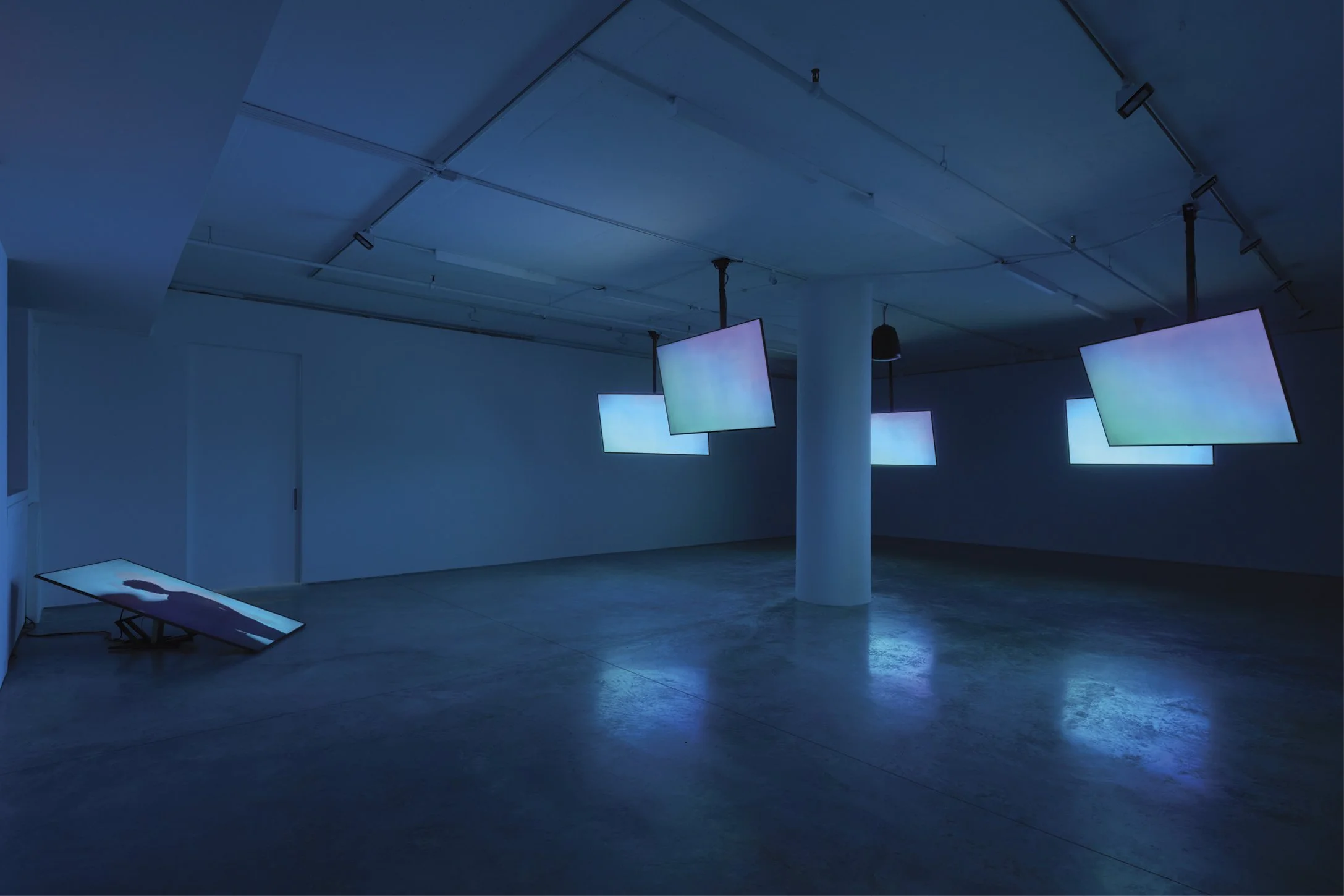
There are other hues of blue, 2019/2021. 6-channel HD video installation, 01:03:17, overall dimensions variable
LL: Oklahoma and Georgia have a lot of similarities — historically, and also black history and native history. Beverly Buchanan has a sculpture in Macon near the Ocmulgee Mounds. Macon is the ancestral land of the Muscogee Creek people. Knowing about Muscogee Creek in Oklahoma and meeting black native folks who come from freedman of the Muscogee Creek, and realizing there are stories that I think have been told, but [those stories] don’t distinctly connect Georgia and Oklahoma as these sites that have this kind of connective tissue.
Savannah feels so important to me. I feel like it’s a mecca for understanding black history. And I also feel that about Tulsa. I'm excited to be back on the waterways here when it's warmer [laughs] but to also start digging into black native history here. Indigenous practices really helped me in my understanding and influence of slowing down and the softness we talked about. I'm really interested in coming back and trying to figure out, like, what is this connective tissue that I'm feeling between these two states, these two cities, these two sites, and what can I learn from that?
###
MORE FROM IMPACT …