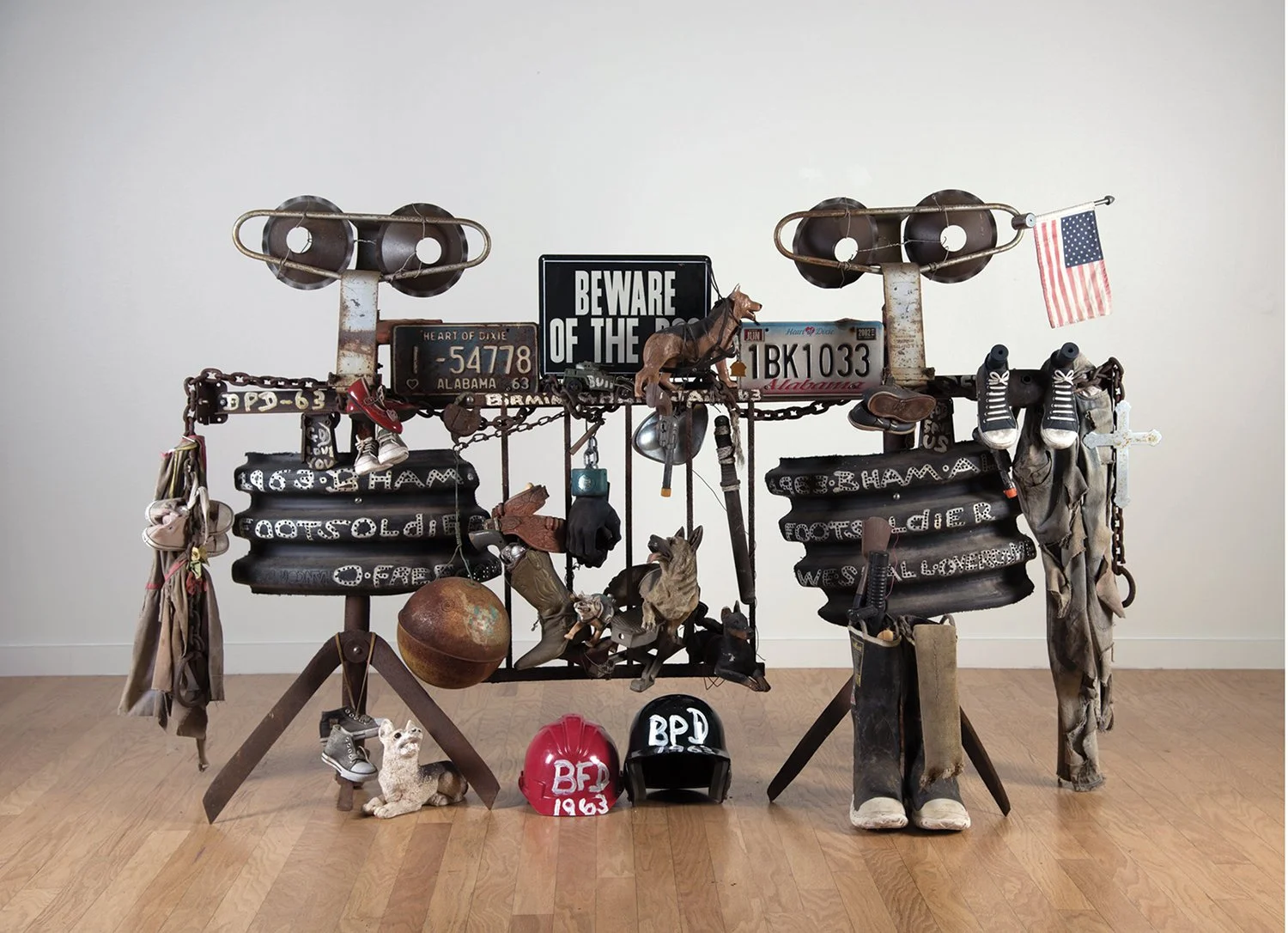
Joe Minter (born 1943), ’63 Foot Soldiers, 1999. Found objects, including old Alabama license plates, shoes and boots, toys such as plastic dogs and guns, chains, clothing, an American flag, a metal grate and miscellaneous metal parts, paint, plastic hats, and tires, 49.5 × 82 × 32 inches; Collection of the Birmingham Museum of Art; Museum purchase with funds provided by James and Elizabeth Outland, 2019.1, © 2026 Joe Minter / Artists Rights Society (ARS), New York
When I walk into an exhibition, I’m usually thinking about the artist. Why did they make this? What were they trying to say? What was happening in their life or in the world when they made it? Sometimes I’m studying technique or just letting the piece speak to me. What I haven’t always thought about is the person who decided I would encounter this work in this room, beside that work, at this point in the exhibition. By the time we see it, a long series of choices have already been made. We arrive at the show and experience those decisions without realizing they were made.
That’s why I wanted to talk to curators Jade Powers and TK Smith. Jade, the Hugh Kaul Curator of Contemporary Art at the Birmingham Museum of Art, and TK, an independent curator, writer and cultural historian, approach the work from different positions, but throughout my conversations with them, I kept hearing their ideas reach toward one another.
I interviewed them separately, but I’ve placed them in conversation here. I suppose I've done to these conversations a small version of what Jade and TK do with art. I've selected, arranged, and left some things out. I’ve curated them.
If I’ve done my job well, the next time you walk into a museum or gallery, you’ll still see the artist but you might also start looking for the curator’s hand.
Coming From Where I’m From
Jade and TK are both Midwesterners with Southern roots. Jade grew up in Indiana, with family ties to Mississippi and Tennessee. TK is from Waterloo, Iowa, with roots in Mississippi and Louisiana. Neither, though, started out imagining a career as a curator.
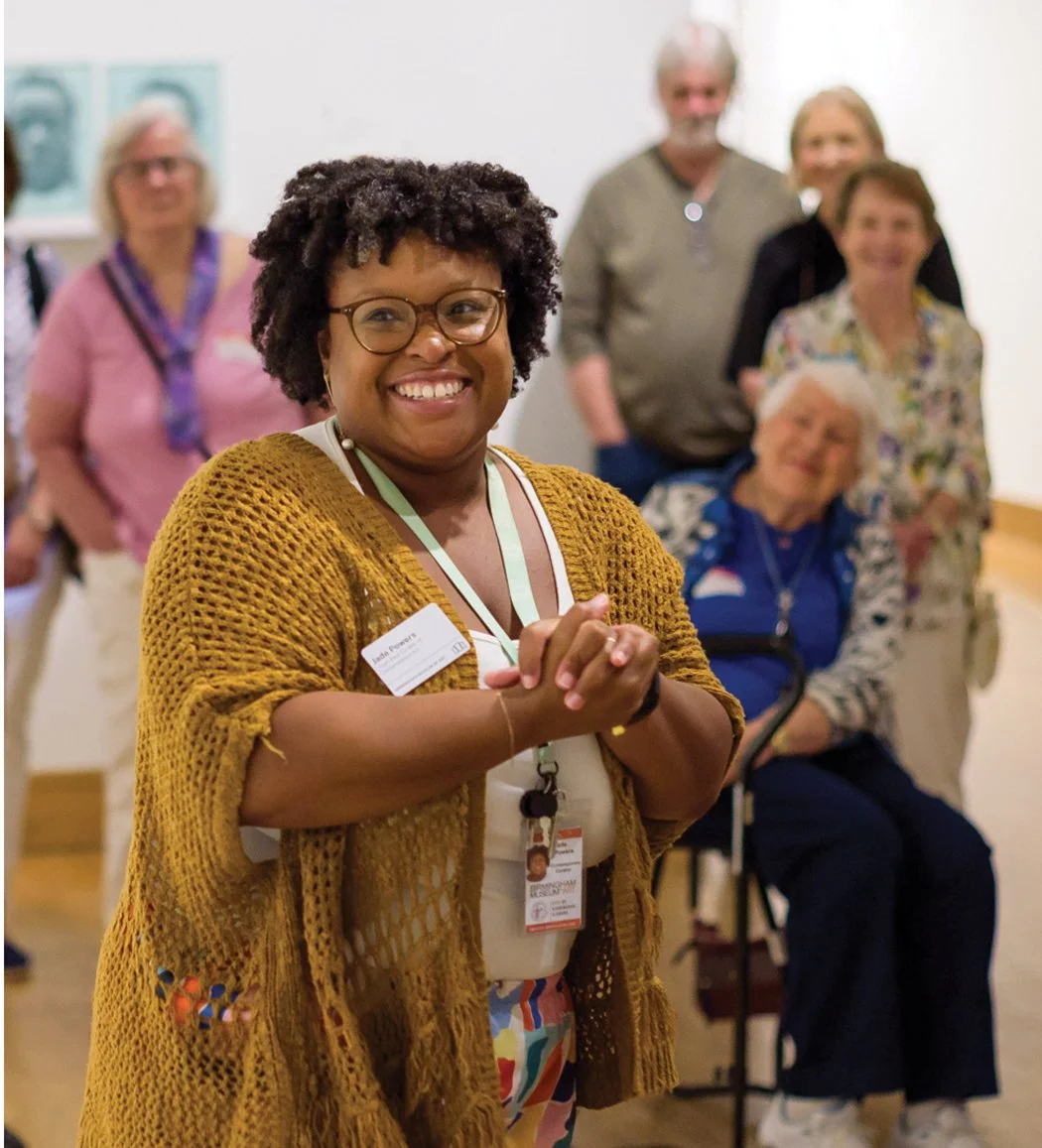
Jade Powers, courtesy of the Birmingham Museum of Art
Jade once imagined herself becoming a professor of religious studies, focusing on religious iconography, which is concerned with how objects and images carry meaning beyond their literal appearance. Listening to her describe her curatorial process for an upcoming exhibition called Roll Call, I instantly peeped the connection between that earlier ambition and what she does today.
Jade Powers: At the forefront is research. I spent a lot of time reading different publications that we produced about our collection, about the collecting history. I also read several books about Birmingham, and our community partner committee and many of our longtime museum staff, all based in Birmingham, have been really wonderful in giving context… then also thinking about the feeling that you'll have when you're in the space.
The subject may have changed, but the questions of interpretation, context and meaning remain.
TK's route wasn’t as direct. He first wanted to be an artist. Then an architect. Discovering Thurgood Marshall made him consider law. When the grandmother of a close friend developed brain cancer, he began thinking about medicine. The possibility that kept resurfacing, though, was librarian.
He’d worked in libraries in high school and returned to them after college. He loved books, of course, but also the public service of libraries. Octavia Butler spent much of her childhood in libraries, calling them “America’s free universities;” Malcolm X used the prison library to re-educate himself; and Maya Angelou called the library “a rainbow in the cloud,” a place where she felt safe. As TK put it, “libraries are just as much community centers and daycares.”
Then he interned at the Contemporary Art Museum St. Louis, and began to recognize another institution capable of doing much of the same work.
TKS: I was like, oh, this is much more active knowledge sharing. This is similar work, but it's working with artists, doing programs and having talks. Museums, they do art, first and foremost. They do performance, they do theater, they do lectures, they do book talks, they do workshops. Museums have the capacity to do so much. I need to be in this space.
Today, when people ask what exactly a curator does, TK returns to America’s free universities.
TKS: I'm like a librarian, but for art. I'm trying to keep art and cultural experiences free and accessible to publics and translate them for publics.
The Makings of You
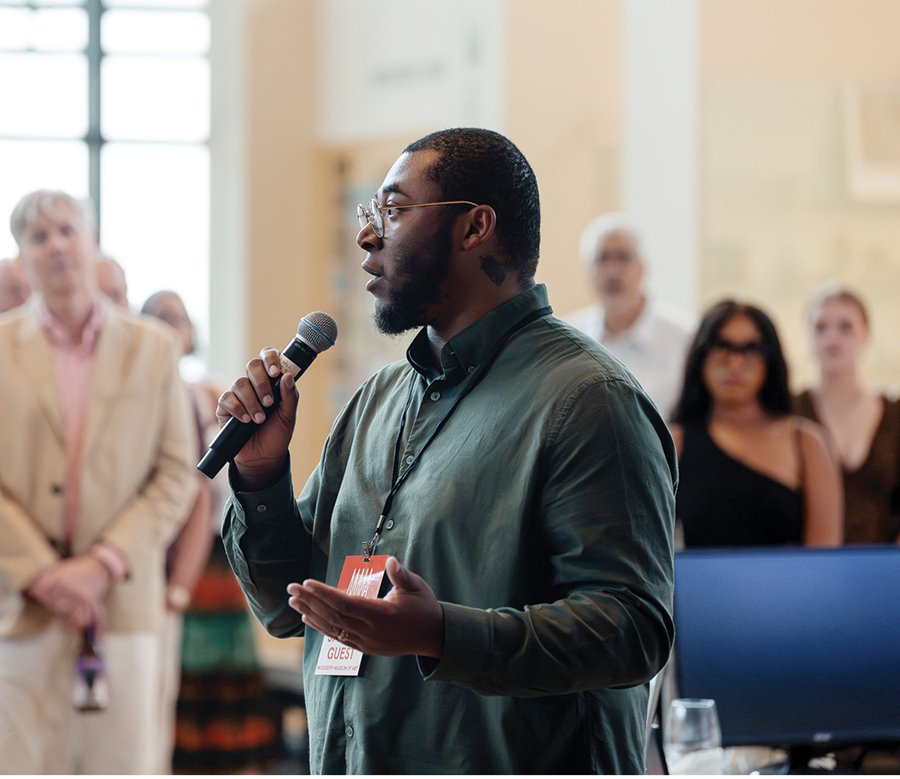
TK Smith, courtesy of the Mississippi Museum of Art
Neither Jade or TK fell in love with museums because they loved looking at art. For Jade, curation extended her interest in interpretation and education beyond the classroom. For TK, art could coexist with scholarship, service, community and preservation. They weren't simply looking for a way to see culture. They were looking for ways to help people encounter, understand, and carry it. TK laughed when I asked what people misunderstand about his job.
TKS: No one will ever know everything that I do. Everything that I do is project management. Everything is budget management. Everything is mediation and social work. I'm making sure artists eat. I'm making sure artists are paid fairly. I'm making sure things are legal. I'm shipping things across the country, sometimes to other countries. I'm planning programs and arguing with scholars and trying to look decent all the time and researching archives. Like, nobody knows the full extent of what it takes to make sure the sausage gets made.
I was trained to believe that if the curator did their job, you don't see their hand. You just see the art and the art is accessible. And that's the sign of a good, thoughtful curator.
That made me think of music production. Take Juvenile’s “Back That Azz Up.” Juvenile and Lil Wayne gave us lyrics that decorated an era — from the whole ’99 to the 2000. But Mannie Fresh helped create the experience: that unmistakable opening that gives you time to get to the dance floor before the beat drops, then the turntable scratching lets you know it’s time to really start backing it up. We hear the words, but we’re moving inside a world that Mannie designed.
Curation works something like that. The art belongs to the artist, but the way we encounter it has been shaped before we ever enter the room. We may not consciously notice the person making those choices, but an invisible hand is still a hand.
TKS: Everything makes the meaning. How high you hang something changes who feels like they have access to it. Making something “please touch me” changes how people approach an object as opposed to stanchions or ropes in front of it. Even framing something changes it. Things that are framed seem more important than things that aren't framed.
And it keeps going. A sculpture on a four-foot pedestal asks something different of your body than one five inches off the ground. TK might want you to get down closer to an object, or have to look up at it with a certain reverence. He considers whether you can walk around it and see its back. How much light it gets. What you saw before you reached it. What you'll see after.
Even language is part of the experience. For TK these seemingly small decisions circle back to a larger question: Who is this exhibition actually for?
TKS: If you are showing an artist who speaks French, why is French not also accessible in terms of the text? If you're talking to a community in the South, why would you say certain things as if you need to teach the South about itself? You don't need to teach the South about itself. It knows what it is. Who is the show for?
Who is this for? is a critical question for anyone making something for other people. A chef can make an extraordinary meal, but knowing who they’re feeding determines what extraordinary looks (and tastes) like. I wish I could serve my deeply Southern family gazpacho at the reunion.
A teacher can know their subject inside and out, but knowing their students should shape how they teach it and what examples they reach for; that can make the difference between information being delivered and being learned. A writer can have something brilliant to say, but knowing what their reader already knows and feels can make the difference between words that are merely read and words that stick.
TKS: You gotta think about how people are going to feel when they walk in and out of this space.
Jade returned to feeling, too, when she described her process for Roll Call. Her research into the museum's collecting history and Birmingham itself helped her shape the exhibition, but research wasn't the end of the process.
JP: The work fell into place with the research about the specific works, but then also thinking about the visual connections that they'll make... and thinking about the feeling that you'll have when you're in the space.
Everything in its Right Place
Roll Call: Two Hundred Years of Black American Art at the Birmingham Museum of Art draws from the BMA's permanent collection of more than 1,000 works by 250 Black artists. The exhibition spans two centuries and is organized into four thematic sections that consider not only Black American art, but the museum's own history of collecting, community partnership, freedom and place.
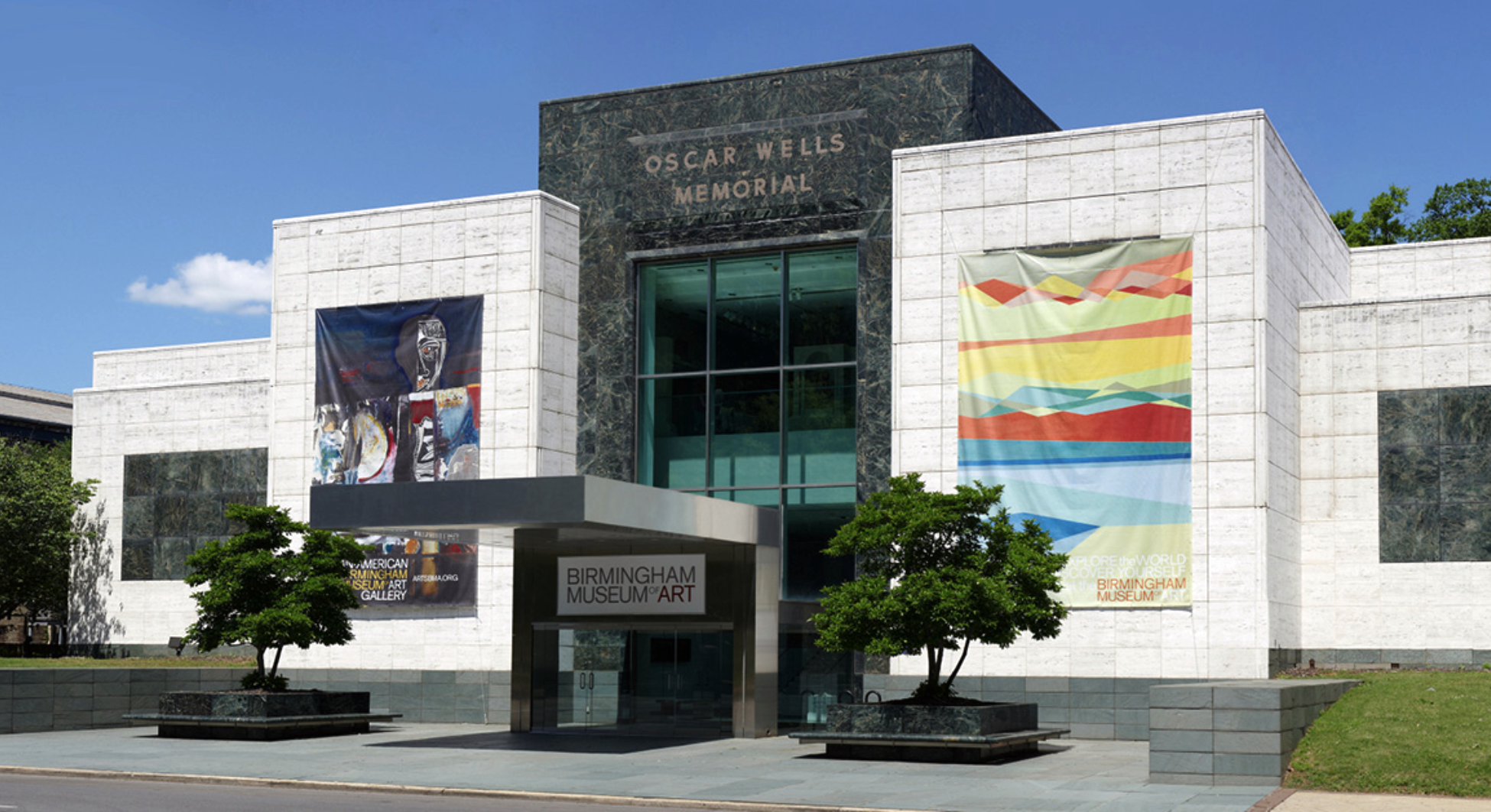
Birmingham Museum of Art. 2000 Reverend Abraham Woods, Jr., Blvd, Birmingham, AL 35203
Trelani Michelle: When I first heard the title of the exhibit, I just started singing, “Shabooyah, sha-sha-shabooyah, roll call!”
JP: I love it. Yes, yes.
TM: Did you hear or sing that growing up and what does “roll call” mean here?
JP: I did, yes. The Birmingham Museum of Art has this wonderful collection of Black artists, and as you're listing or thinking of Black artists, you can check them off. This is a teacher's list. We’re calling off who's here and we have that representation.
TM: If the exhibition had a playlist, what would some of the songs be?
JP: The first thing that came to mind was Donny Hathaway’s “A Song for You,” but now I'm thinking through to make sure the words match. But the sound of that, just how emotional that song is and thinking about like, “I've been so many places in my life and time. I've sung a lot of songs and I've made some bad rhymes.” And that’s really what this show is.
TK, meanwhile, had recently closed the Oregon Contemporary Artists' Biennial: The Price of the Ticket, an exhibition exploring place, power and promise against the backdrop of the approaching 250th anniversary of the signing of the Declaration of Independence and the long history of struggle over who has actually received the rights and protections it promised. The title comes from James Baldwin's unfinished project of the same name. When we spoke, he was working on the book that will document it.
Two exhibitions. Different source material and circumstances. But both required the same deceptively difficult task: How do you take many individual works, each carrying its own meaning, and make them speak together without drowning one another out? For TK, the answer brought to mind memorable scenes in The Queen's Gambit, the miniseries about chess prodigy Beth Harmon.
TKS: So you know when she gets high, high, high, high, high? And she's laying in the bed and the chess pieces are moving above her head? That's how I describe how I curated the Oregon Contemporary Artist Biennial. It was me confronting the work, living with it in the space and laying on the ground and shifting things in real time to make sure that the colors were not just pulling from each other, the sounds were not pulling from each other.
Thematically, as you moved along the gallery, things built upon each other as opposed to pulling away from each other. And so by the time you get to actually firmly placing a thing, it's finding the right spot for everything so that the whole exhibition sings. And I think that that is the most creative part of what I do.
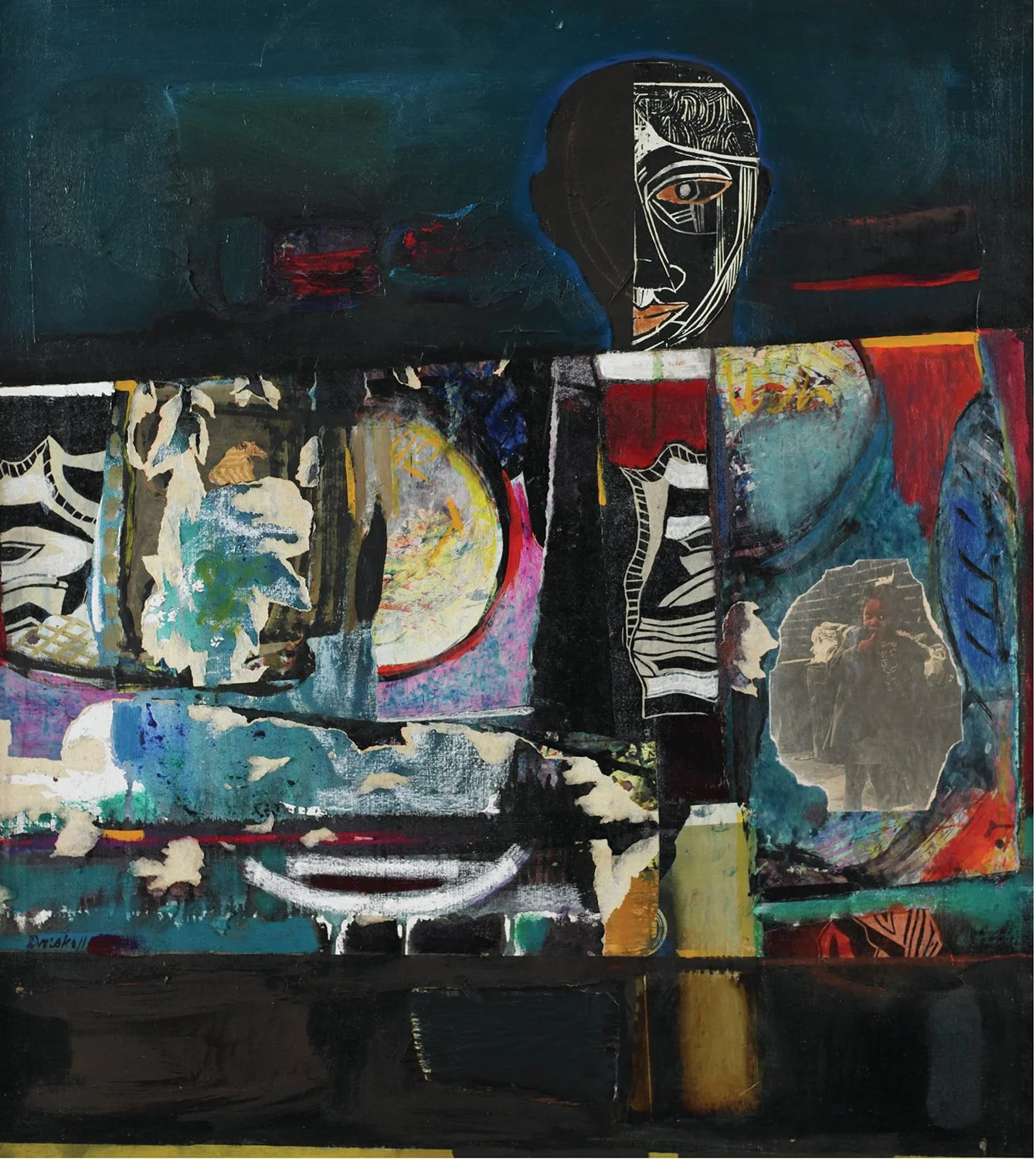
David Driskell (1931–2020), Ghetto Wall #1, 1971. Oil and collage on canvas, 40.25 × 36 inches, Collection of the Birmingham Museum of Art; Gift of the 1972 Festival of the Arts and A. G. Gaston Purchase Award, 1972.8, © The Estate of David C. Driskell. Courtesy of DC Moore Gallery, New York
Jade's experience with Roll Call reveals the other side of that process. Sometimes finding the right place for everything means accepting that everything can't have a place.
JP: I mean, it’s almost 6,000 square feet. It's a large space, but I started and it took me forever to get the checklist down. I had, like, 125 works, then I met with our design team. They're wonderful and really tried to figure out how to get everything in there, but it felt really tight. To have to cut it down has been the hardest, but, truthfully, that’s a good problem to have.
Cutting meant asking questions that sound similar to TK moving his imaginary chess pieces.
JP: Are there works in this exhibition that are telling the same story? Should we do one work versus the other? Maybe one work has never been seen before or one work has been seen in a particular context. What does it mean to change the context?
Feelin’ It
Knowing who will enter the room is one thing. Considering what you’re asking of them once they get there is another.
JP: I want them to feel impressed. The Birmingham Museum of Art really does have an impressive collection, not just for the American South, but truly more broadly… We really have such community backing to have such a strong collection. So I'm hopeful that when people are in the exhibition, they'll say, “Oh wow, I didn't realize the BMA had work by this artist,” or “Oh, didn’t I just see this artist doing something on social media or doing something at the Whitney Biennial,” and realize that their local Birmingham Museum has wonderful works that are represented elsewhere.
She wants them inspired, too, by the lives behind the names: Hayward Oubre, who taught and helped establish art departments at HBCUs; John Rhoden, the first Black American artist to win the Rome Prize; Meta Vaux Warrick Fuller, whose work preceded what would become the Harlem Renaissance.
Then I got more specific.
TM: What do you hope Black visitors will experience?
JP: I hope that the Black visitors also feel inspired and impressed. And comfortable. I hope that they see this exhibition and, more broadly, the museum as a space that is welcoming to them, that is telling Black stories.
“Comfortable” carries a little more weight when you know the history of the building she’s talking about.
JP: It was really important to me to keep some of the works that are always on view throughout the museum, to keep those there so that people are seeing a continuous story — not just the story of the works that are in Roll Call. You’ll step into our British gallery and see work by Titus Kaphar, or you go upstairs and you're thinking and looking at Wedgwood and ceramics, and you see work by Larry Allen. I just wanted there to be this continued representation.
TK pushed this idea of curatorial care further when he told me about an exhibition he'd visited that he “infamously did not like.” The exhibition centered grief of a particular community and moved visitors through death, violence, war, chattel slavery, maternal grief, environmental grief, even the deaths of children.
TKS: It was so difficult to get through that whole show without crying because there was grief on almost every level… If one grief doesn't get you, another one will. There was just no space for that community to not be a spectacle as well. The people who are not part of that marginalized community come into that space and they witness the mourning just as much as they witness the work. And to me, that felt so underhanded and cheap and just extracted.
You can research a community thoroughly, represent its history accurately, select powerful work, and still create an encounter that takes more from people than it gives them. I realized that’s another layer of the curator's job: asking what the work means and who it’s for, but also what am I asking of the people who come here and have I made room for what that asking might do to them?
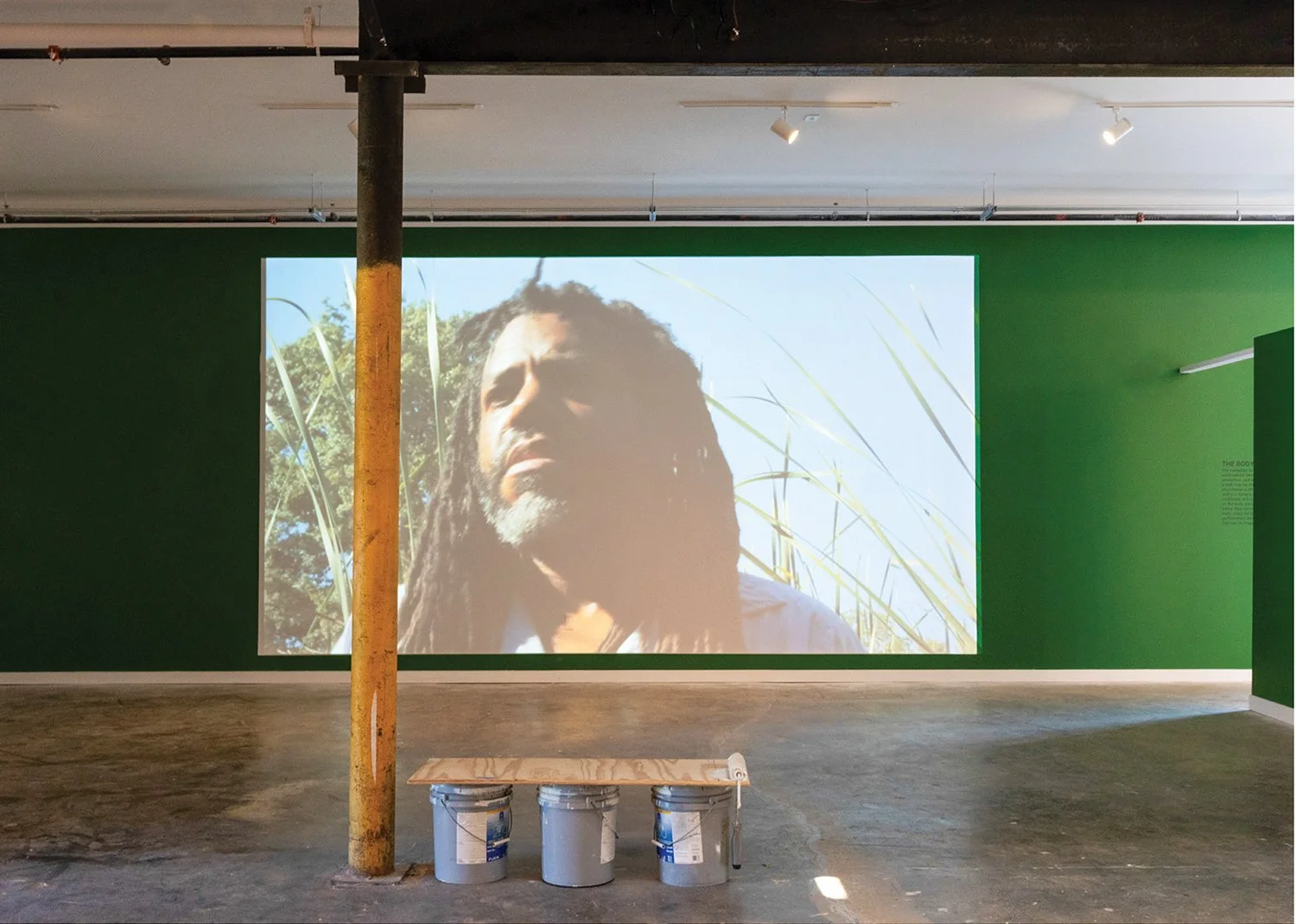
Todd Anthony Johnson, FIELD HOLLA, 2015. Video, 6 minutes. On display at Stove Works in Hand To Mouth, Curated by TK Smith. February 9 – June 22, 2024.
Tell It Like It Is
If every curatorial decision carries meaning, so does an institution’s history of decisions. The Ground We Stand On, the first section of Roll Call, looks directly at the BMA’s own collecting history, including its earliest acquisitions of work by Black artists. That history is complicated.
JP: That’s something that we talk about in the publication and something that is highlighted a bit in the labels, thinking about the museum opening in 1951 but the first work not being acquired until 1971, and there were 12 years when all citizens of Birmingham couldn’t come to the museum every day that it was open, only on Tuesdays. That’s a really important truth to reckon with.
TM: Whew! Anything about those early acquisitions, to you, reveal the museum's values or maybe even its blind spots?
JP: Yeah, so, the very first work that the museum acquired was a gift in 1971 by Henry Ossawa Tanner. Then, in 1972, we acquired two works: one by Jacob Lawrence and one by David Driskell. The David Driskell piece was a gift from a purchase prize from A.G. Gaston, a prominent Birmingham businessman and civil rights leader. I think that history is worth noting because it speaks to the ways Black community members have helped shape the museum’s collection over time. The Jacob Lawrence piece was a museum purchase, so we purchased that outright. So I think that really shows that the museum, even in 1972, was recognizing what a strong artist Jacob Lawrence was and how important he would be to the canon of art history.
We showed work by Corietta Mitchell, who was a really important artist working in Birmingham, but we did not collect work by her at the time of the show, and we still, to this day, do not have work by her. The same is true of Howardena Pindell, who we showed in the early 1980s, and we do not have work by Howardena represented in our collection. And we talk about that in the publication, you know, opportunities where we fell short and how we're working to add pieces by both of those artists to the permanent collection.
TM: In The Ground We Stand On, you're looking at some of the foundational moments in the museum's own collecting history. What responsibility do you think museums have to revisit and reinterpret their own histories?
JP: I think that's incredibly important, and I think it's so important that museums try to do it with an unbiased lens. It's so easy to say, “Well, the Birmingham Museum of Art was a department of the city, so there could only be one day that Black visitors could come, because that was the law.” But really being able to look at that and say, “Just because it's law doesn't mean that it's right.”
The Ground We Stand On asks us to reckon with what an institution has done over time while Ujima: Collective Work and Responsibility turns our attention to who has helped it do the work in the first place.
JP: For me, I'm thinking about collective work. We have, currently, support groups and we have, really, since the beginning of the museum, had at least some type of group that was interested in a type of art… There are times where community partners and community work came together to acquire a piece or, alongside the curator, recognize a gap in the collection and then help to raise funds to acquire work.
The Roll Call publication, like the exhibition, covers 200 years of Black American art. Jade invited a number of scholars to contribute to it, including TK. I wanted to know what TK's voice, and those of the other contributors, added to a story this expansive.
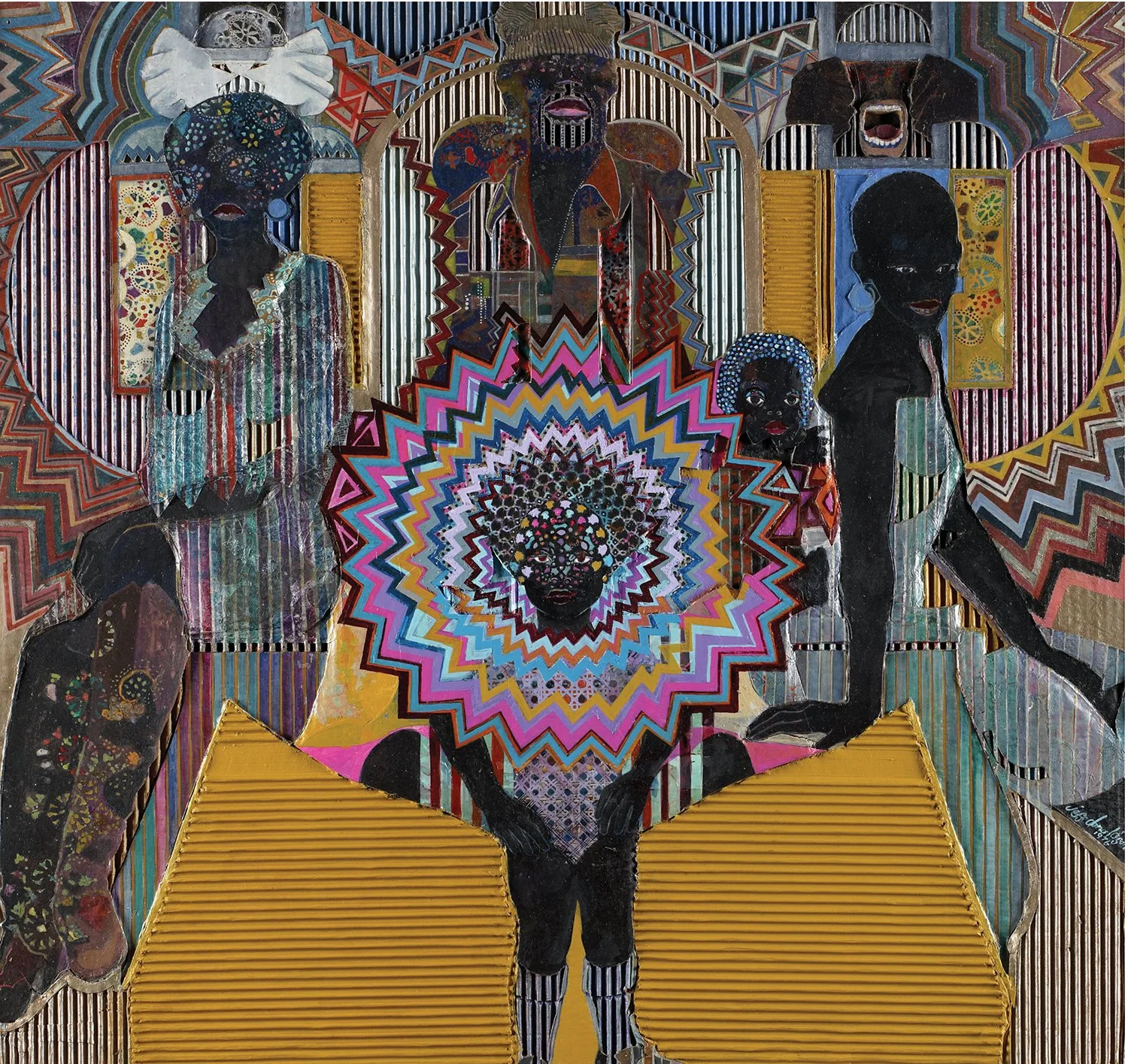
Jeff Donaldson (1932–2004), Eminence, 1976. Acrylic and mixed media on corrugated paper board, 32.75 × 34.75 inches; Collection of the Birmingham Museum of Art; Museum purchase in memory of Lillie Mae Harris Fincher with funds provided by the Sankofa Society, 2009.11 © Jeff Donaldson. Courtesy of Jameela K. Donaldson
JP: TK is incredibly thoughtful, and having his voice in the publication is such a gift. The way he engages with material and history, while also thinking about monuments and their lasting impact, brought a really important perspective to the larger story we were trying to tell. TK wrote about Diedrick Brackens and Demond Melancon, two artists whose practices are deeply engaged with traditions, history, and memory, and he really shone a light on the ways those ideas continue to evolve in contemporary practice. More broadly, having voices from different scholars and writers throughout the publication allowed us to move beyond a single narrative and show the breadth and complexity of Black artistic production represented in the collection.
For TK, the question of what gets preserved doesn't end when the exhibition comes down.
TKS: I fucking love a dusty, musty, in-somebody's-grandma's-basement historical find. You're going through albums, scrapbooks. You're reading people's journals, you can't read their handwriting barely. Those things excite me as a scholar.
But his love for archives comes with a healthy distrust of them, or what we've been taught counts as one. Historical repositories, TK told me, are full of “gaps and holes and misreads,” particularly when it comes to communities whose relationships with the institutions doing the preserving have never been particularly good. In his own family, one of his ancestors changes race from one census to the next, not because anything about the ancestor changed, but because the people responsible for creating the official record made their own determinations.
TKS: We're not just trying to repair this thing and make it a place of value for everybody. We're also trying to decenter it as the only place in which our culture can live and thrive in the long run. It's not just Yale's art museum. It's not just the Smithsonian or the Schomburg. It's also your local historical society. It's also the Black church in your community. It's also your grandma who has that wall full of photos, that when you start to take those photos out, you start to find older photos, school photos stacked on top of each other or newspaper clippings. People built their own archives of their lives, and all of those archives are valuable.
That made me think about my late Uncle Larry, our family’s archivist, though neither he nor probably anybody else would've called him that. He was drunk most of the day, bummed cigarettes, and lived in an overstuffed motel-turned-apartment. And in the middle of all his “stuff” was our history: His mother's usher plaques. Newspaper clippings. Photographs more than 70 years old. And, just as important as the photographs themselves, he knew who the people in them were.
Even the hoghead cheese and crackers he ate in that little apartment belonged to something older. His mother — my grandmother — ate them. Her mother ate them too. Most folks wouldn't have walked into Uncle Larry's place and said, “Look at this archive.” But that's what it was. He had made decisions, intentionally or otherwise, about what wasn't going to be thrown away. Sometimes the person keeping the record doesn't have a title. Sometimes the archive doesn't have climate control. Sometimes it just somebody's stuff, or lunch. Until somebody comes looking…
In graduate school, TK went looking.
TKS: I took this research money and I was like, “I'm going to write a paper on Iowa, and I'm going to travel around my state. And I'm going to find out the history of this riot that happened in 1969, and I'm going to find some material evidence.”
I go to every cultural repository in the state, pretty much. Not one trace of any material evidence from the riot, except for the photographs of newspaper clippings. No signs, no posters, no personal photographs collected from the community. No photo documentation of the damage to buildings, no building damage reports, nothing.
In the process of doing this research, I found there were almost 12 independently owned Black news publications in Iowa in the 20th century. Who would've thought? And to also find out that riot that happened in 1968 was one of several riots that were happening in Iowa, over and over and over again throughout the mid-20th century.
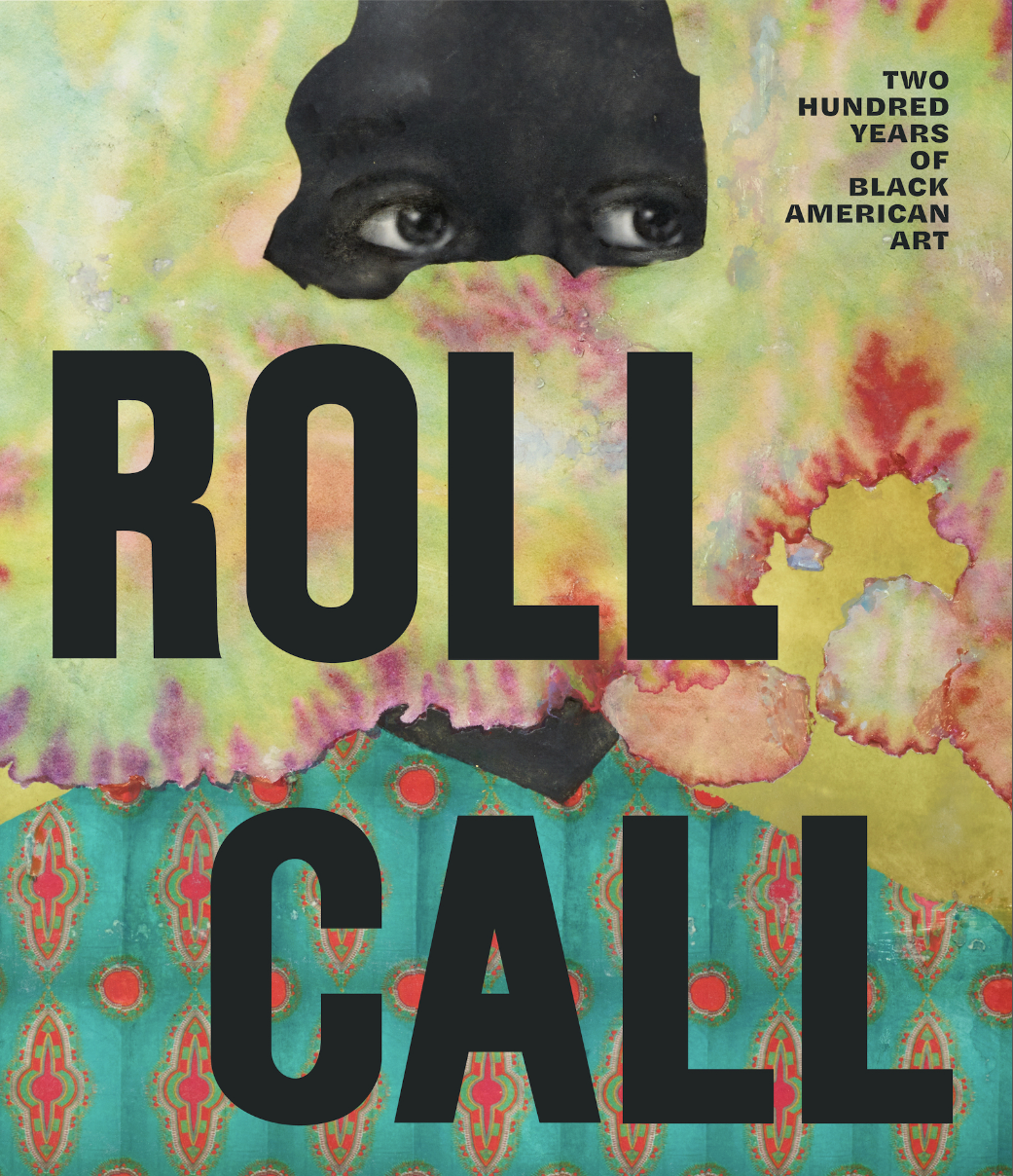
Roll Call: Two Hundred Years of Black American Art, Edited by Jade Powers and Katelyn D. Crawford
I'm looking at one, but it's just the tip of the iceberg for my hometown's history. There were so many more [riots] that people have been traumatized by and still live with the trauma from. And so even though I didn't find anything, I was able to learn so much more about the place that I've come from, just from doing that work. And there was nothing there, right? It was talking to grandmas and going to churches, finding the one person who lived across the street from the school when the riot broke out that's still living, and recording those audio histories and putting them somewhere safe and having them ready for when someone comes looking.
TM: Somebody saved something.
TKS: I just gotta find them. And it might take me the rest of my life.
Preservation raises another question: How did we decide what was worth preserving in the first place?
TK has a phrase he returns to in his work: “remind people who taught who what.” He was talking about lineage — the importance of tracing knowledge back through the people who passed it along. An artist didn't simply arrive at a technique, tradition, or way of making. Somebody taught somebody, who taught somebody else. But as he talked, the idea of lineage expanded.
TKS: Somebody has done the work of teaching you what beautiful is. Who did that? You ask artists all the time, “When did you first want to become an artist?” and they'll say something like, “Well, I was in the library and I found this book of Picasso's work.” But is Picasso the first beautiful thing you've ever seen?
Of course not. Before Picasso, there was somebody's living room. Somebody's Sunday clothes. The way somebody plated the food or curled a little girl's hair or arranged the furniture nobody was allowed to sit on. There were colors you learned belonged together and others you were told did not. Somebody, somewhere, was teaching you what was beautiful before you had the language to call any of it aesthetics.
I thought about a passage in Audre Lorde's Zami. As a little girl in Harlem, Lorde was fascinated by a woman in the neighborhood named DeLois. DeLois didn't straighten her hair, had what young Audre saw as a “big proud stomach,” and she seemed to laugh with her whole body. Lorde wrote that DeLois moved like she imagined God's mother would move. She adored her!
Then one day, a driver passing by yelled at DeLois to hurry up and hurled insults at her, mocking what young Audre had been admiring: her hair, her body, the way she looked. Audre had already decided DeLois was beautiful. Then somebody else tried to teach her that she wasn't.
TKS: There's so much more work being done from generation to generation sharing what is beautiful, what is ugly, what is safe, what is proper and not proper, what is delicious. There are some people who I know who are like, “They are not real greens if there's not ham hock in it.” And there are some people who are like, “I don't eat pork and my greens need smoked turkey.” And there are some people who are like, “My ass don’t eat meat.”
Value can't be hierarchical. It can't always come from the institution back to us as subjects within a colonized place. We also push what is important. If you value your grandmother's archive just as much as you do the one at the Schomburg, you'll start to treat those objects differently and they'll move differently through the world. The things that end up in estate sales might not end up in estate sales because somebody valued that it transitioned from one name to another.
We also inherit ideas about places, too. Sometimes long before we've ever set foot in them.
JP: What I knew of Birmingham was rooted in Civil Rights history and segregation. Then, moving to Birmingham and living here, you see that history, but you also see so much more. You can be in a building that you recognize from a history book, but now there's a coffee shop or a restaurant there. Families are creating new memories in these places.
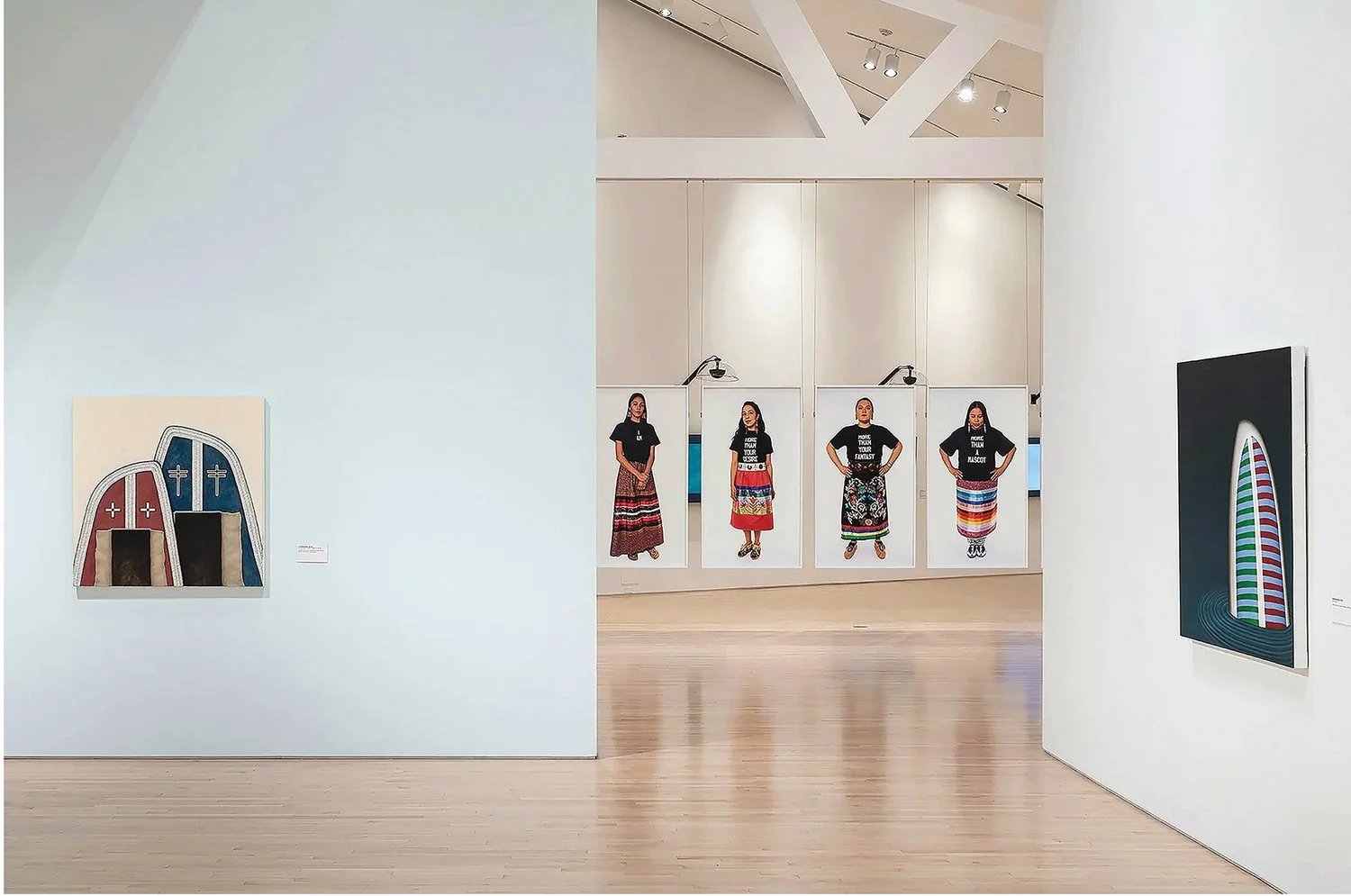
Dyani White Hawk: Speaking to Relatives (Installation view), 2021. Curated by Jade Powers. Charlotte Crosby Kemper Gallery, Kemper Museum of Contemporary Art. Photo by E.G. Schempf
I wonder how many places we've frozen in the same way. A hometown we haven't lived in for 20 years but still describe as if it hasn't changed since we left. A neighborhood we were taught not to go to. A city we know almost entirely through headlines. A whole region we've reduced to the worst thing that happened there. Sometimes we inherit our understanding of a place before we ever, if ever, experience it.
Jade’s more layered understanding of Birmingham made its way into Roll Call, particularly its final section, In the Heart of It All, which uses works rooted in Birmingham and Alabama to consider how place, local history and culture connect to larger American stories.
JP: I wanted to make sure that that section wasn't only thinking about the Civil Rights Movement. There are depictions of the Civil Rights Movement, truthfully, throughout all four sections, but I didn't want it to feel like Alabama is only known for one thing.
Instead, she made room for celebration, for artists who built important institutions in Alabama, for creativity and the fuller life of a place that has existed before, during and after the historical moments for which the rest of the country knows it.
To Be Young, Gifted, and Black
Jade’s In the Heart of It All had me thinking about the responsibility that comes with representing a place, especially one as complicated and too-often flattened as Birmingham.
TK faced a version of that responsibility on a much more intimate scale. Before our conversation, I’d watched an interview where he talked about curating the work of Roland Ayers, a Black artist and printmaker who died in 2014. TK had gone through Roland’s journals, studied his work and pieced together a man he would never have the opportunity to sit across from and ask, “Is this what you meant?” Word to Erykah Badu, artists can be sensitive about their shit.
TM: Is it intimidating, exciting, or both to speak for artists who are no longer with us, who we’ve never met, and especially when their own narrative isn’t well-documented, if at all?
TKS: When it comes to doing a show of an artist who’s no longer here and can’t speak for themselves, it’s harder because you’re typically doing it in an institution that’s trying to correct a historical wrong. They are not necessarily invested in the artist or the art.
They’re not thinking of Roland as a whole person. They’re not thinking of Roland as a member of the community. They’re not thinking of Roland as a prolific printmaker, even though he was all those things. They’re thinking of how this show is going to look optically in their schedule and how it will repair a kind of historical negligence.
I kept insisting that we call him a Black artist and not an African-American artist because in his journals, he said, “I am a Black man.” He didn’t say, “I’m an African or Afro-American man.” If he said that, that means we say that. Because if he was here, he would say, “Change that,” right? It’s just as simple as that.
It wasn’t only an intellectual responsibility for TK either. There was something almost devotional about the way he approached the work.
TKS: I was like… hopefully this is the first show of many that may happen, but if it’s the last show, let us do him some justice.
“If it’s the last show” raises the stakes. Because if nobody comes behind you, your interpretation may become one of the few public records through which somebody else eventually encounters this person. And TK knew he was bringing something to that responsibility that the institution itself could not.
TKS: I couldn’t let this institution not have my personal Black perspective on this Black male artist who was no longer with us.
And thank God the institution had it. But his words made me wonder about the possible burden on the other side of that gift. TK is a Black curator. Jade is a Black curator. Their Blackness is part of what they bring to the work. But when does perspective become assignment? When does what you uniquely bring to the room become what you're expected to carry in it?
TM: What do you hope Black curators soon no longer have to explain or do?
JP: I hope Black curators no longer have to explain why Black artists, histories, and communities belong in the larger story of American art. I also hope we no longer have to carry the expectation that we are the sole voice or representative for Blackness within an institution. Black curators should be able to curate broadly — to follow our intellectual curiosities, take risks, and engage with artists and ideas beyond what an institution may perceive as our “area.” I would love to see a future where this work is understood as part of the fabric of American art history rather than something that has to continually be justified or explained.
Jade is asking for freedom from assignment: to be a Black curator without Blackness becoming the boundary of our curiosity. TK’s hope pushes against a different constraint: scarcity.
TKS: I hope we don’t have to compete with each other. I would like there to be an art ecosystem where there’s plenty. We function from a space where there’s plenty of room for multiple curators asking multiple questions, on multiple levels, in multiple institutions, and we can support each other and build on each other. And we’re not ever taking from each other. There truly is plenty. The earth is an abundant place. Culture is an endlessly, endlessly producing fountain. You can always make something new out of what we’ve been given.
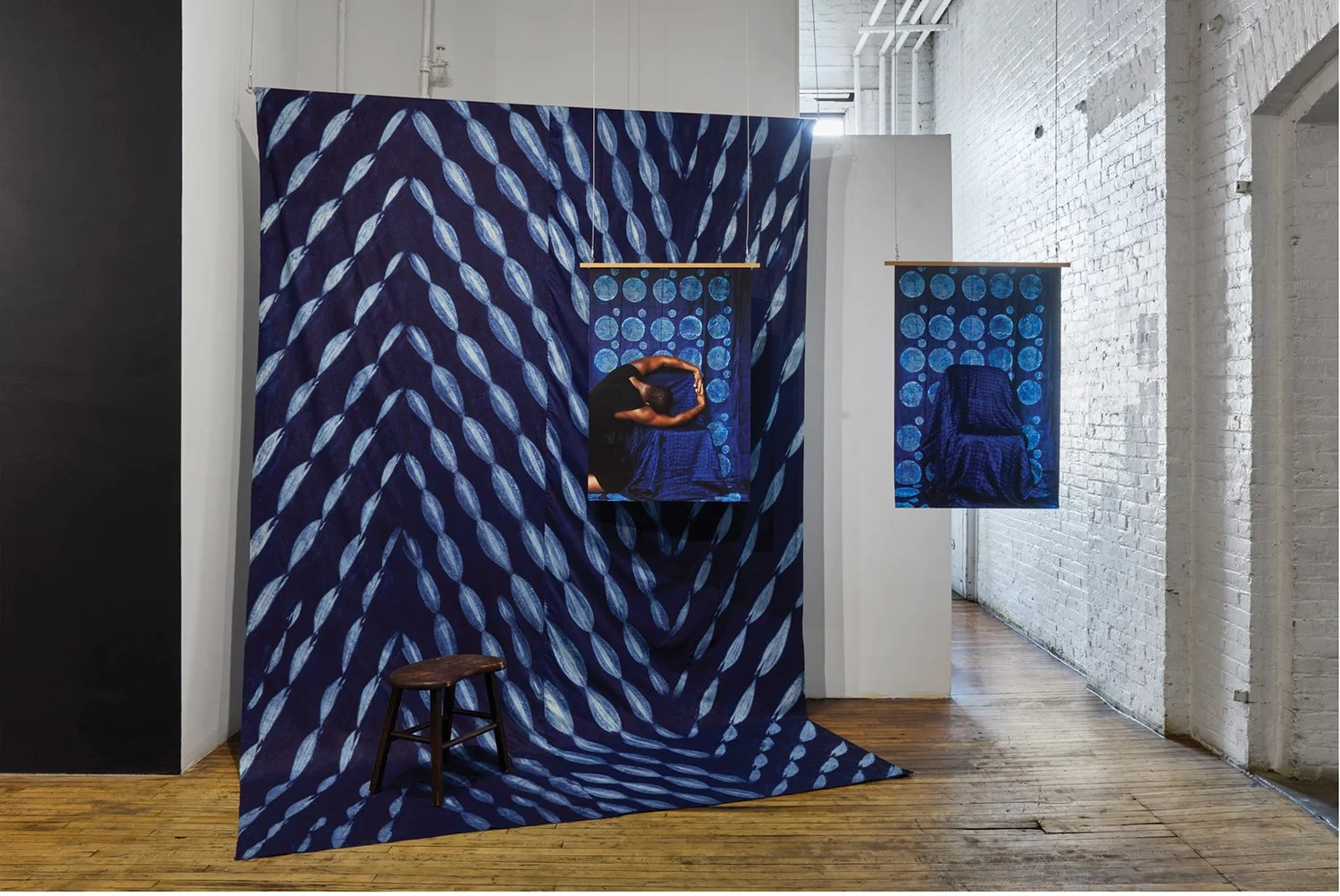
Carried Over (Installation view), 2025. Curated by TK Smith, ISCP’s Second Floor Gallery. Photo by Martin Parsekian
I’m in the process of curating my wardrobe. One prompt asked me to imagine everything in my closet disappearing and name the five pieces I’d replace immediately. Supposedly, the answer reveals your fashion statement. I remixed the question for Jade and TK to learn what their answers might reveal about their curation statements.
TM: What if you woke up tomorrow and discovered that every show you’ve ever curated had been a dream? None of them actually happened. Which three would you have to recreate?
JP: 1) The Shape of Abstraction: Selections from the Ollie Collection at the Saint Louis Art Museum. While I did not curate the exhibition, it was deeply important to me because I served as the Bearden Fellow at the time these works were acquired by the Saint Louis Art Museum and had the opportunity to research the collection of Ron and Monique Ollie. I am so honored by their support and grateful for their mentorship. That experience really shaped the way I think about collecting, relationships, and the importance of bringing different narratives into the museum.
2) Dyani White Hawk: Speaking to Relatives because Dyani is such a thoughtful artist who has really mastered a way of engaging people with challenging subjects through beauty. She is a joy to work with, and I am so glad the exhibition was able to travel from Kansas City to Denver. I am also incredibly proud of the publication we produced for the exhibition and the opportunity it created for deeper engagement with her work.
3) Joiri Minaya: Divergences, that site-specific commission really focused on Missouri and Kansas history, and I appreciated how we were able to create multiple ways for people to engage with the work while also connecting it to local histories and Kansas and Missouri school curricula. I loved the challenge of thinking about how a contemporary artist could activate a particular place and invite different audiences into that conversation.
Jade’s three choices reveal a curatorial practice shaped by relationships and a desire to make scholarship meaningful to the people it reaches. TK’s choices feel more personal: a curatorial practice rooted in home and becoming, where relationships and care matter as much as the work itself.
TKS: 1) Looming Chaos, which supported multi-disciplinary artist and educator Zipporah Camille Thompson. It was the first show that I did that was, like, you're actually a legitimate curator. We commissioned five new works, large-scale works. We produced the artist's first catalog. I learned so much about this field and this job working on that show because it was really just me and the artist, and it is such a privilege to just be left alone with my budget and the artist. And the artist was so open. I got to sit with her in the studio, I got to be with her in the process of making her ideas real… to witness the whole idea to materialization. It was also my first big book. It was everything for me. And I think it defined me to my public. People still think of me from that show. And so, career-wise, it has helped make me the curator I am today.
2) The Mississippi Invitational. As someone whose people are from Mississippi, but I'm not from Mississippi, I’m from Iowa, it meant a hell of a lot to be asked by a cultural institution in my family's home state to do a biennial. The curator who selected me… was a curator who had seen my work and appreciated my work and wanted to give me the opportunity. They had no idea my people were from Mississippi. And so when we drove around the state and I got to see the state, one, as a full grown adult, but also, I got to introduce myself to my family's home as a professional.
Emotionally, it was so important. So putting the show together was important. I couldn't just slap together anything. Like, I wanted to make sure if any word got back to my family, it would be nothing but pride. It would be nothing but them seeing themselves reflected back at home. Because they've all migrated to Iowa, right?
The show's theme was called “Call Home,” and we took “home” from like the physical, a place of confinement, because this was the first invitational after Covid. There were a lot of artists who were dealing with the idea of being confined within a physical home. And then the kind of broader idealistic ideas of home — like Mississippi as the home or the South as the home or a certain aesthetic, a certain smell, a certain feeling. And then home as being your homegoing beyond this tangible place… I'm very proud of that show. All of the artists were incredible. The show was beautiful. I call it the jewel in my crown. I could get the opportunity to curate Whitney Biennial, but that exhibition couldn't possibly be as resonant and personal as the Mississippi Invitational.
3) Hand to Mouth at Stove Works in Chattanooga, TN. That one was before the Mississippi Invitational, after Looming Chaos at the Zuckerman in Atlanta, GA. I had applied to their open call as an independent curator before I was hired full-time as Assistant Curator: Arts of the African Diaspora at the Barnes Foundation in Philadelphia. Stove Works took the proposal and offered me a slot in 2024. I found out I’d gotten fired from the Barnes while I was in-residence at Stove Works, and the residency just said, “You don't have to figure it out right now. You can stay as long as you like.” And they literally sheltered me as I worked on this show. It was so fulfilling putting that show together. It was actively healing me while I was dealing with the trauma and legalities of having worked with my previous employer. It was like all of this resistance that I was dealing with from this mid-sized, respected, well-funded institution was being undone by simple gestures of generosity and kindness in a small southern town that nobody pays attention to, you know? So for me, that was a real decentering because it's the first time I thought, like, maybe I've been working so hard to work in a museum that would never accept the kind of work that I want to do. Maybe I should just be a guest. Guest curators can challenge an institution to incite change on a shorter timeline.
TK also reviews exhibitions, though less often these days. Part of that, he admitted, is the feeling that he should be thinking bigger. I know the feeling. I’ve been questioning my impulse toward bigger lately — more reach, more money, more impact — and wondering how much of it is mine and how much is capitalism talking. TK offered something another curator, Tempestt Hazel, once told him: “Infinite growth is cancer.” Whew.
I was still thinking about that when I asked Jade if being a curator — where choosing one thing often means leaving another out — had taught her anything about making choices in her own life.
JP: Absolutely. I think curating has taught me that choosing something doesn’t necessarily mean everything else is less valuable. You simply can’t give everything the same amount of space, attention, or energy. In exhibitions, you have to make decisions about what belongs in the story you’re trying to tell, and I’ve realized that life works in much the same way. Sometimes you have to be intentional about what you make room for and what you don’t, even when the things you leave out are wonderful. I’ve also learned that a good exhibition (and maybe a good life) needs room for surprise. You can have a plan for what you want to include, but sometimes the thing you didn’t expect becomes the most important part of the story.
Curation, in art and in life, requires deciding what’s enough and what matters enough to keep choosing.
Roll Call: Two Hundred Years of Black American Art is on view at the Birmingham Museum of Art, September 26, 2026 – January 17, 2027.
###